Before you can figure out how to prepare for mediation, you first need a solid grasp of what the process actually involves. It’s not a courtroom showdown or a mini-trial. As an Atlanta personal injury attorney, I explain to my clients to think of it as a structured, confidential negotiation where a neutral third party helps both sides reach an agreement, saving everyone the significant time and cost of a trial. Properly understanding how to prepare for mediation is a key step toward a favorable outcome.
What Really Happens During Mediation
Many clients I work with in Atlanta initially picture mediation as a formal hearing where someone in a robe decides who wins. Let's clear that misconception right now. The reality is far less intimidating and much more collaborative.
Mediation is a type of Alternative Dispute Resolution (ADR), a formal method for settling legal matters outside the traditional court system. The Georgia Office of Dispute Resolution provides excellent resources on this topic. In this voluntary process, you, the other party, and your respective attorneys meet with a neutral mediator.
The mediator isn't there to pass judgment or assign blame. Their job is to act as a facilitator—reopening lines of communication that have likely broken down. They guide the conversation toward finding common ground and helping craft a settlement agreement that both sides can accept.
The Power of Confidentiality
One of the most important elements of mediation is that it is completely confidential. Anything you say during the session cannot be used against you later in court if the case doesn’t settle. This legal protection fosters an environment of open, honest discussion, which allows both parties to explore solutions without risk.
In mediation, you retain control. Unlike a trial where a judge or jury has the final say, you and the other party have the power to agree on a solution tailored to your specific circumstances.
This control is a primary reason why mediation is a preferred step in the personal injury lawsuit process. The focus isn't on winning and losing; it's on practical problem-solving.
The Mediator's Role
The mediator acts as a neutral guide for the negotiation. Typically, the session begins with everyone in the same room to hear opening statements. After that, the parties usually separate into private rooms, and the mediator moves between them, relaying offers, counteroffers, and key messages.
This "caucus" format allows you and your attorney to have frank, private conversations about strategy.
A skilled mediator uses their expertise to:
- Help each side see the strengths and weaknesses of their own case.
- Explore creative settlement options that a court couldn't order.
- Manage high emotions and keep the dialogue productive.
To make this clearer, here’s a quick breakdown of who handles what in the room.
Who Does What in a Mediation
| Participant | Primary Role |
|---|---|
| You (The Client) | Provide facts, make final decisions on settlement offers, and communicate your goals to your attorney. |
| Your Attorney | Advocates on your behalf, presents legal arguments, advises you on offers, and handles negotiations. |
| The Mediator | Remains neutral, facilitates communication, clarifies issues, and guides the parties toward a resolution. |
| Opposing Party | Represents their interests and makes decisions on offers presented by their side. |
| Opposing Counsel | Advocates for the opposing party, presents their legal arguments, and negotiates on their behalf. |
Understanding these roles demystifies the process and helps you focus on your part.
Knowing the structure is the first real step in your preparation. And it's an effective structure, too. In 2022, the Centre for Effective Dispute Resolution reported an aggregate settlement rate of 92% for cases that entered mediation. That statistic alone shows just how powerful proper preparation can be.
Gathering and Organizing Your Evidence
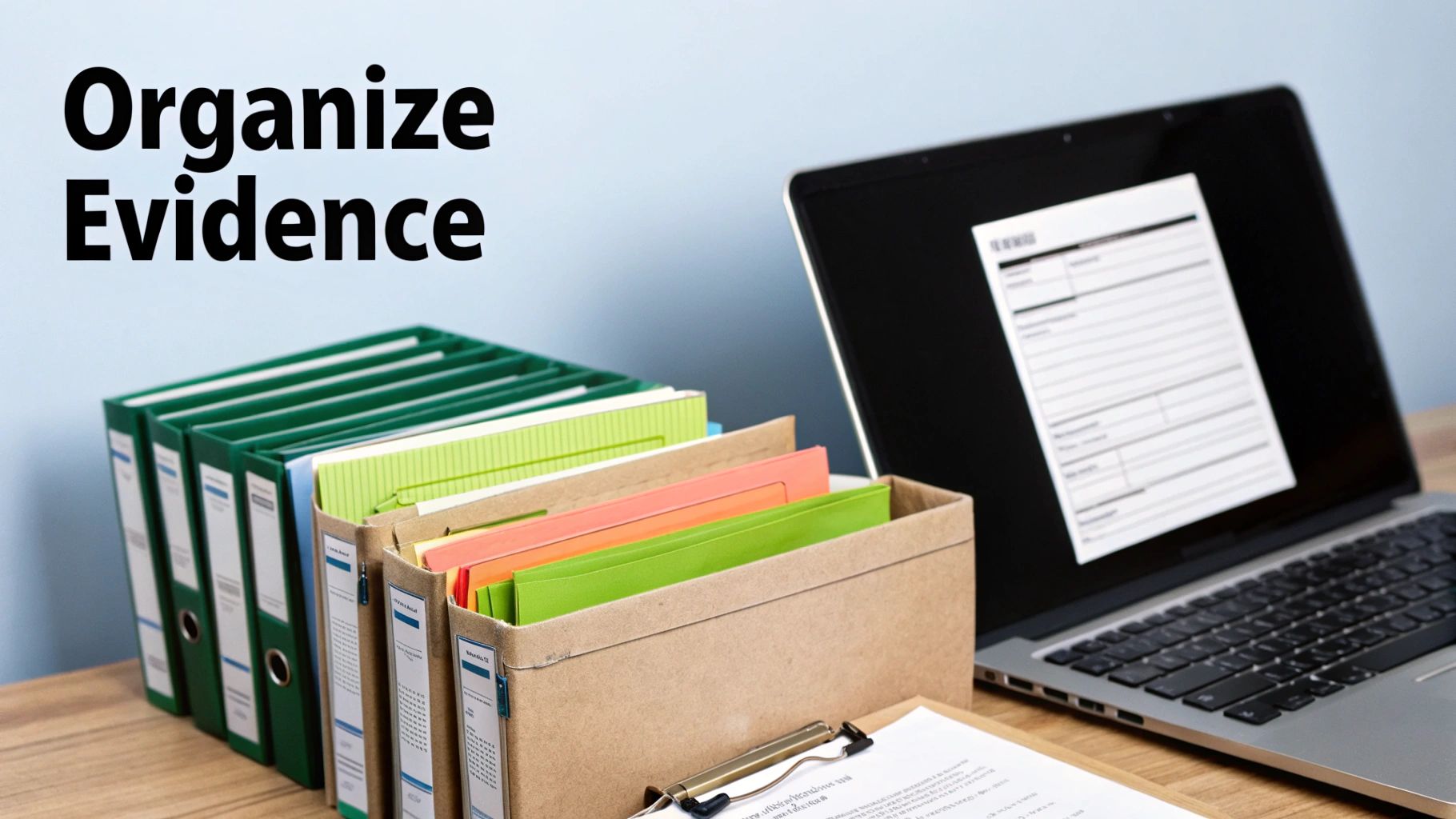
This is where the real work begins. A successful negotiation is built on a foundation of solid, well-organized evidence. It’s not about dumping a mountain of paperwork on the other side; it's about strategically presenting the facts that tell your story and back up your claim.
Think of each document as a piece of a puzzle. Your medical records detail the physical toll of the incident. Photos of the scene paint a picture words can't capture. When arranged logically, these pieces form a powerful narrative that shows the mediator and the opposing counsel exactly how this event has impacted your life.
This level of organization also sends a clear message: you are serious, prepared, and ready to substantiate every single point of your claim.
Creating Your Evidence Binder
I always have my clients build a "mediation binder"—either a physical one or a well-organized digital folder. This becomes our central source for every document we need to justify the settlement we're seeking. It keeps everything at our fingertips so we can instantly pull up proof to counter an argument or prove a point.
Your binder should be divided into clear sections. This structure makes the information easy to find and helps tell your story chronologically, from the incident itself to the ongoing consequences.
The core documents to gather include:
- The Official Police or Incident Report: This is the first official record of what happened and is often a foundational document.
- Photos and Videos: Collect everything. Visuals from the accident scene, photos of your vehicle's damage, and pictures documenting your injuries over time are very important.
- Correspondence: Any emails, letters, or recorded phone calls between you and the other party or their insurance company should be included.
If you have recorded statements or interviews, getting them transcribed is non-negotiable. For guidance on how to transcribe interviews effectively, you can find resources to ensure the written record is precise.
Documenting Your Medical Journey
This section of your binder is arguably the most important. It must paint a complete picture of your medical treatment, costs, and prognosis. Don't leave anything out, no matter how minor it seems.
Start by creating a simple timeline of your treatment, from the first emergency room visit to ongoing physical therapy. Every appointment matters.
Be sure to collect and organize:
- All Medical Bills: This includes everything—hospital stays, ambulance transport, doctor visits, prescription costs, and any medical equipment you purchased.
- Complete Medical Records: These are the narrative reports from your doctors detailing your diagnosis, treatment plan, and future medical needs.
- A Personal Journal: A simple log of your daily pain levels, struggles with daily activities, and emotional state can be a powerful tool to illustrate your suffering.
Key Takeaway: The goal is to forge an undeniable link between the incident and your medical treatment. Your documentation should leave no doubt that your injuries were a direct result of the other party's negligence.
Proving Financial Losses
Beyond medical bills, you need to show exactly how the injury has impacted your financial stability. This is essential for demonstrating lost income and future earning capacity, which are major components of most personal injury claims.
Gather these key financial documents:
- Pay Stubs: Collect pay stubs from before and after the accident to show a clear difference in your earnings.
- Tax Returns: Your past tax returns help establish your average income, especially if your pay is variable.
- A Letter from Your Employer: A formal letter detailing your missed time from work and your rate of pay serves as official confirmation of lost wages.
By methodically gathering and organizing these items, you provide the factual backbone for the negotiation. This preparation gives your attorney the tools they need to fight effectively for the compensation you deserve.
Building Your Mediation Strategy with Your Attorney
With your evidence organized, it's time to build a solid game plan. This part of how to prepare for mediation is a team effort. We'll take your story and documents and shape them into a powerful negotiation strategy. The pre-mediation meetings we have are so important for this work, ensuring we walk into the session as a united front.
Your attorney is your advocate, strategist, and guide. My role is to handle the legal arguments and direct the negotiation. This frees you up to focus on what only you can do: share the real, human side of your experience. We work together to make sure your voice is heard and your case is presented as effectively as possible.
Defining What Success Looks Like
Before we step into the mediation room, we have to define what a successful outcome means for you. This is a personal decision we'll make together, based on the facts of your case and your specific needs. It’s about more than just a number; it’s about finding a resolution that helps you move forward.
We will establish two key figures:
- Your Ideal Target: This is the settlement amount we believe fully and fairly compensates you for everything you've been through—medical bills, lost wages, and your pain and suffering. This is our primary goal.
- Your Bottom Line: This is the absolute minimum settlement you would accept to resolve the case. Knowing this number in advance helps you make clear-headed decisions under pressure and prevents you from taking an offer that isn’t in your best interest.
Establishing these numbers beforehand is a vital exercise. It provides a clear guide for the negotiation and empowers you to respond to offers with confidence, not uncertainty.
Crafting Your Opening Statement
The mediation will likely start with an opening statement. This is often the only chance you'll get to speak directly to the other side and the mediator. It’s not a time for anger or blame. It’s an opportunity to briefly and calmly explain the incident's impact on your life.
Your statement needs to be concise and focused. We'll rehearse it together so you feel comfortable and prepared. The goal is to humanize your experience, moving it beyond just legal arguments and dollar figures. You can find more information about the attorney who will be by your side, Jamie Ballard, and her approach to client advocacy.
The Power of Your Story: Your personal account of how the injury has affected your daily life—your ability to work, care for your family, or enjoy your hobbies—is often the most persuasive part of the entire mediation.
Role-Playing Tough Scenarios
Negotiations can be unpredictable. The other side might ask tough questions, downplay your injuries, or present arguments that feel completely unfair. To prepare for this, we will spend time role-playing these potential scenarios.
This isn't about memorizing a script. It's about building your confidence so you can handle difficult moments without feeling flustered or overwhelmed. We can practice answers to questions like, "Weren't you already dealing with back pain before this?" or "How do we know you won't be fully recovered in six months?"
By anticipating these challenges and preparing calm, fact-based responses, you'll be ready for anything. This practice is a key element of how to prepare for mediation because it removes the fear of the unknown and puts you in a position of strength.
What to Expect on the Day of Mediation
Walking into the mediation room for the first time can be intimidating. Most of that anxiety, I've found, comes from not knowing what’s about to happen. Once you understand the flow of the day, that fear is replaced with confidence. Let's walk through what the day actually looks like, from start to finish.
It's not one long, continuous meeting. Think of it as a series of structured discussions, all designed to inch both sides closer to a resolution. Knowing this rhythm helps you stay focused and composed.
The Opening Joint Session
Your day will almost certainly kick off with everyone in the same conference room. That means you, me, the opposing party and their attorney, any insurance adjusters, and the mediator. The mediator will start by making introductions and laying out the ground rules.
Here’s what the mediator will cover:
- Confidentiality: They'll confirm that everything said during mediation is confidential and can’t be used against you in court later. This is a very important protection.
- The Mediator's Role: They will make it clear they are a neutral party—not a judge—there to help everyone find a solution.
- The Process: They'll give you a roadmap for the day, explaining how joint sessions and private breakout rooms will work.
After that, each attorney gets a chance to make a brief opening statement. This is where I'll lay out the essential facts of your case and our position, just as we planned.
Moving into Private Caucuses
Once the opening statements are done, the joint session usually breaks. You and I will head to a private breakout room, and the other side will do the same. This is where the real work—the negotiation—begins. These private meetings are called caucuses.
The rest of the day, the mediator will shuttle back and forth between the two rooms. They act as a go-between, carrying offers, counteroffers, and messages, all while probing for areas of potential agreement.
The caucus is our safe space. This is where we can talk openly and honestly about the case, discuss offers without pressure, and map out our next move.
The mediator will spend time in each room, listening and exploring solutions. They may challenge our assumptions or point out risks we hadn't considered—and you can be sure they're doing the exact same thing in the other room. Their job is to get both sides to see the case realistically.
The Rhythm of Offers and Counteroffers
Mediation day is a marathon, not a sprint. You’ll have moments of intense discussion followed by long periods of waiting while the mediator is with the other side. This is completely normal. Use that downtime to rest, look over your notes, and talk strategy with me.
It's very common for the first offer from the other side to be insultingly low. Do not get discouraged or angry. This is just a standard negotiation tactic, a starting point. We'll respond with a considered counteroffer, and the back-and-forth will continue, hopefully with both sides moving closer to a reasonable middle ground.
The process itself is also evolving. Technology has become a huge part of mediation, especially with virtual sessions becoming more common. Digital tools now streamline everything from sharing documents to communication, making things easier for everyone. You can learn more about the evolution of mediation and what to expect in the future on toddzimmerlaw.com.
Managing the Emotional Journey
Brace yourself for a long and emotionally draining day. It’s tough to spend hours discussing a traumatic event. You might feel frustrated, tired, and maybe even hopeful, sometimes all at once.
A few tips to help you stay composed:
- Patience is key. Don't rush things or feel pressured into a snap decision.
- Listen carefully. Pay close attention to what the mediator says. They often drop clues about what the other side is thinking.
- Stay professional. Emotions can run high, but it's important to remain calm and respectful. Let me be the one to argue the legal points forcefully.
By understanding how the day is structured, you can manage your energy and emotions far more effectively. This final piece of preparation helps you stay focused on the only thing that matters: reaching a fair settlement that lets you move forward.
Mastering the Mental Side of Negotiation
Figuring out how to prepare for mediation is about much more than just organizing documents and legal arguments. That’s only half the work. The other half is entirely mental. Your mindset and emotional readiness are just as important as any piece of evidence you bring to the table.
In my years helping clients here in Atlanta, I've seen firsthand how stress and raw emotion can cloud judgment during a long, grueling negotiation. The key is to mentally separate your genuine, valid feelings about the injury from the business-like transaction happening in the room. This isn't easy, but it’s an important skill for making clear, logical decisions that will impact your future.
Simple Steps for Practical Readiness
The night before and the morning of mediation can set the tone for the entire day. A few small, practical steps can have a huge impact on your focus and stamina.
I always give my clients the same simple advice:
- Get a good night’s sleep. A rested mind is a sharper mind. Don't stay up late worrying; by this point, we've already done the hard work of preparing your case.
- Eat a solid breakfast. Mediation can be a long day, and you need physical energy. Hunger makes you irritable and less focused.
- Dress professionally but comfortably. You want to project confidence, but you don't want to be distracted by uncomfortable clothing during a ten-hour day. Business casual is usually the perfect choice.
These aren't just minor details. They are part of a deliberate strategy to put you in the best possible mental state to handle the day's pressures.
Setting Realistic Expectations
While we always aim for the best possible outcome, you have to walk into that room understanding that mediation is a process of compromise. The very nature of a settlement means neither side gets exactly everything they want.
Being mentally prepared for this give-and-take is important. If you go in with an all-or-nothing mindset, you risk becoming rigid and shutting down promising avenues for resolution. Our goal is to secure a fair settlement that you can accept, not to win every single point at all costs.
Your primary objective is to make a sound decision that serves your long-term well-being. A successful mediation ends with a resolution you can live with, allowing you to avoid the immense risk and stress of a trial.
The emotional toll of negotiation can be significant. For some, finding resources for managing anxiety can be a helpful step in preparing for this kind of high-stakes experience.
Staying Grounded During the Negotiation
The mediation process is only growing in importance. In the United States alone, the mediation services industry had a market size of $566.7 million in 2025. With the industry expected to grow over the next five years, its role as a primary method for resolving disputes is becoming even more pronounced. This growth highlights why being mentally and emotionally prepared is so vital for anyone stepping into this process.
Remember, the day is a marathon, not a sprint. There will be high points and low points. The other side’s first offer will likely feel disappointingly low—that’s a standard tactic, not a personal insult. Prepare yourself for it and trust the process. Let your attorney handle the legal sparring while you focus on staying calm and centered.
This final layer of mental preparation—managing your expectations, staying calm, and focusing on the big picture—is the last piece of the puzzle. It ensures that when it's time to decide on an offer, you're making a choice based on logic and what's best for your future, not on the fleeting emotions of a very difficult day. Mastering this mental side is a key element of knowing how to prepare for mediation.
Frequently Asked Questions About the Mediation Process
After walking countless Atlanta clients through this process, I've found that many of the same questions and concerns pop up. Answering these upfront can clear away a lot of the last-minute uncertainty that people feel.
Here are answers to some of the most frequent questions I get from my clients about how to prepare for mediation. These insights come from years of guiding people through this exact process, and I hope they give you some extra clarity and confidence as you get ready for your day.
What Should I Wear to Mediation?
This is probably one of the first questions on everyone's mind, but the answer is pretty straightforward. You should aim for business casual.
Think of it like dressing for an important meeting at work or a nice dinner. For men, that usually means slacks and a collared shirt. For women, slacks or a skirt with a blouse or sweater is perfect. The goal is to look professional and show you're taking this seriously, but a full suit isn't necessary. Comfort is also a big factor—you'll likely be sitting for several hours.
Can I Be Forced to Settle?
Absolutely not. This is a very important point to understand and remember. Mediation is a voluntary process, from start to finish.
A mediator has no authority to force an agreement on anyone. Their role is to help facilitate the negotiation, not to act as a judge or make a ruling. You—and only you—hold the power to say "yes" or "no" to any offer on the table. You will never be pushed into accepting a settlement that you don't believe is in your best interest.
Who Pays for the Mediator?
In most personal injury mediations here in Georgia, the cost of the mediator is split evenly between the plaintiff (that's you) and the defendant (the at-fault party's insurance company). Mediators typically charge an hourly rate for their services.
Your attorney will generally handle the payment logistics. It's common for our firm to cover this cost upfront as part of the case expenses, which is then reimbursed from the final settlement amount. We'll go over the specific financial details well ahead of your mediation date so there are no surprises.
The most important thing to remember is that you are in control. The entire process is designed to empower you to find a resolution, not to have one forced upon you.
Understanding some of the legal terms that might come up can also be helpful. If you encounter unfamiliar language, you can always refer to our firm's online legal dictionary for straightforward explanations.
What Happens If We Don’t Settle?
If we can't reach an agreement at mediation, it's not the end of the road. The case simply continues moving forward toward trial. Nothing you said during the confidential mediation can be used against you in court. Your case proceeds as if the mediation never even happened.
Failing to settle at mediation is not a failure. It just means the gap between their offer and what we know your case is worth was too wide to close that day. It's not uncommon for a case to settle weeks or even months after mediation, once both sides have had more time to think about the risks of a trial.
To help you stay focused on the day, here's a quick checklist to keep in your back pocket.
Quick Mediation Do's and Don'ts
This is a handy reference for the simple behaviors that can make a big difference during your mediation.
| Do | Don't |
|---|---|
| Do listen carefully to the mediator. They often share insights into the other side’s perspective. | Don't take the first offer personally. It is almost always a low starting point for negotiation. |
| Do remain calm and professional, even if you feel frustrated. Let your attorney handle the arguments. | Don't interrupt when the other side is speaking in the joint session. |
| Do be patient. The day is long, and there will be significant periods of waiting. | Don't feel pressured to make a quick decision. You can take all the time you need to consider an offer. |
| Do communicate openly and honestly with your attorney in your private room. | Don't discuss the case in common areas like hallways or restrooms where you might be overheard. |
By keeping these points in mind and working closely with your attorney, you'll walk into that room prepared and confident. Knowing how to prepare for mediation is about being ready on every level—factually, strategically, and emotionally—to pursue the fair resolution you deserve.