When you're dealing with an injury, one of the first questions on your mind is often, "how much does a lawyer cost?" It's a very practical and important question. The honest answer is that legal fees can range quite a bit, from a few hundred dollars for a simple task to a percentage of a large settlement in a personal injury claim.
The final cost really depends on two main things: the details of your legal situation and how your attorney sets up their fees. Understanding how much does a lawyer cost starts with knowing these different fee structures.
Decoding the Different Types of Lawyer Fees
Understanding how lawyers charge for their work is the first, most important step in figuring out your potential legal costs. Attorneys use different billing models that fit the kind of work your case requires, so there isn't just one set price.
Think of it like hiring someone for a home project. A straightforward job, like installing a new door, usually has a single, upfront price. But a long-term project, like a major kitchen remodel, is almost always billed based on the hours worked and materials needed. Legal billing works in a very similar way.
The Main Attorney Billing Models
There are four main ways a law firm might bill you for their services. Getting familiar with these will make your first conversation with an attorney much more productive.
- Hourly Rate: This is exactly what it sounds like. You pay the attorney for every hour—or part of an hour—they spend working on your case. This model is often used for business disputes or family law matters where the total time needed is uncertain.
- Flat Fee: For this, you pay a single, fixed price for a specific legal service. This is common for things like drafting a simple will, handling an uncontested divorce, or reviewing a contract.
- Retainer Fee: A retainer often works like a down payment on the lawyer's time. You pay a sum of money upfront, and the attorney subtracts their hourly fees from that amount as they work on your case.
- Contingency Fee: This is the standard for personal injury cases. With a contingency fee, you pay no attorney fees upfront. The lawyer’s payment is simply a percentage of the money they successfully get for you through a settlement or verdict. If you don't win your case, you don't pay any attorney fees.
This infographic gives a great visual breakdown of the most common fee structures you'll see.
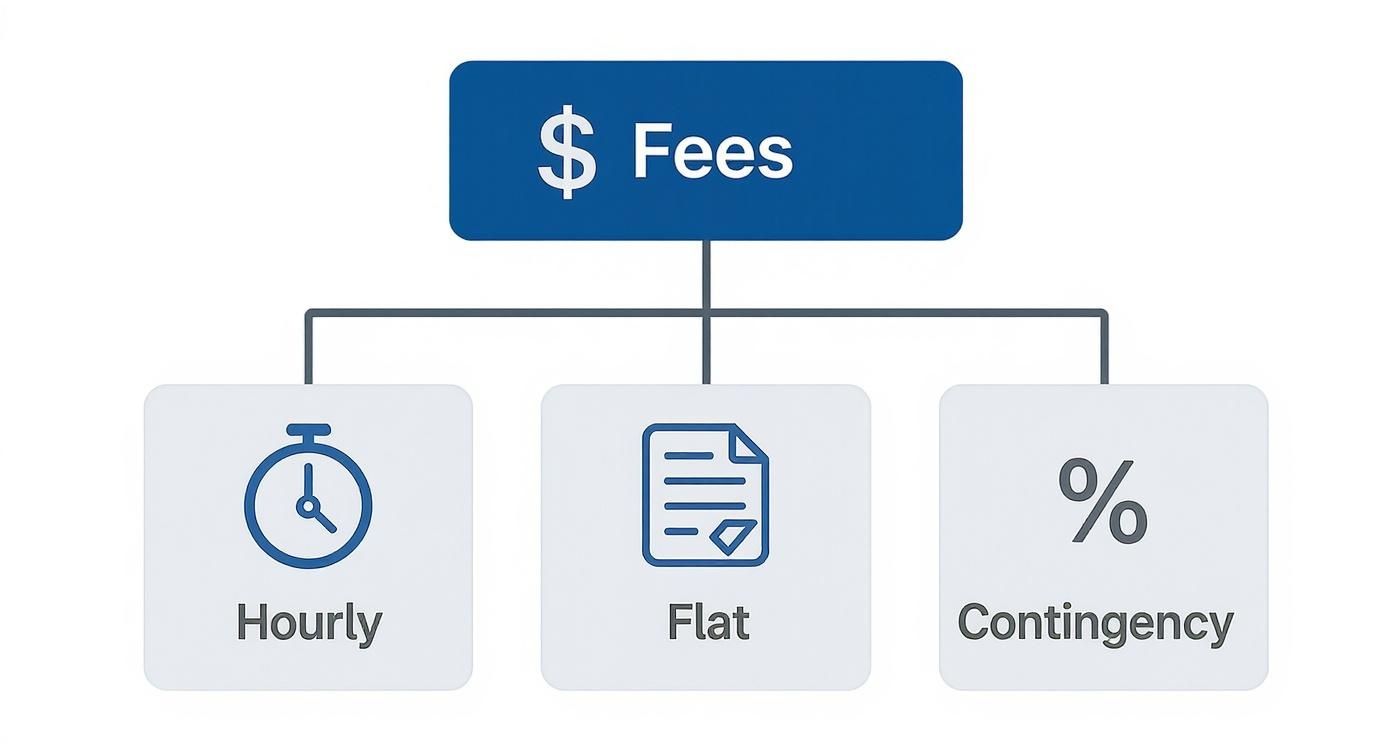
As you can see, the main options are designed to fit different types of legal needs, making sure the payment setup matches the work being done.
A Quick Look at Common Lawyer Fee Structures
This table compares the four main ways lawyers charge for their services, helping you see which model might apply to your situation.
| Fee Type | How It Works | Best For |
|---|---|---|
| Hourly | You pay a set rate for each hour the attorney works. | Ongoing litigation, business law, family law cases where the total time is unknown. |
| Flat Fee | A single, upfront price for a well-defined legal service. | Routine legal tasks like will drafting, uncontested divorces, or traffic tickets. |
| Retainer | An upfront payment that the lawyer draws from as they bill hourly. | Cases requiring a significant amount of work over time, acting as a down payment. |
| Contingency | The lawyer receives a percentage of the settlement or award; you pay nothing if they don't win. | Personal injury, workers' compensation, and other cases where you are seeking monetary damages. |
Understanding these models is your first step. It helps you have a clear, informed conversation about costs with any attorney you consider hiring.
The process of hiring a lawyer always starts with some initial paperwork, and this helpful guide to legal client intake documents is a great resource for understanding that first step. You'll also come across a lot of specific terminology, which is why we created a legal dictionary to help you understand the language. Knowing these fee models will prepare you for a productive conversation about how much a lawyer costs for your specific situation.
What to Expect from Lawyer Hourly Rates
When people start looking into legal help, one of the first questions is, "how much does a lawyer cost" when billed by the hour? Unlike a flat-fee setup, hourly billing means you are paying for the attorney's time—and that rate can vary a lot from one lawyer to another.
Think of it like hiring a specialized professional. A master carpenter with decades of experience will charge a higher hourly rate than a new apprentice. The same idea applies in the legal field. An attorney's hourly rate is a direct reflection of their years in practice, specialized knowledge in an area like personal injury, and the professional reputation they have built.
An attorney with 20 years of trial experience has handled countless legal situations and can often resolve issues more efficiently than a newer lawyer. You are paying for that seasoned judgment, which can be invaluable to the outcome of your case.
Key Factors That Influence Hourly Costs
Several things directly impact what an attorney charges per hour. Understanding these helps make sense of the numbers you might see.
- Years of Experience: A seasoned partner at a law firm will have a higher hourly rate than a junior associate. Their extensive background and a proven track record command a higher fee.
- Geographic Location: This is a major factor. An attorney practicing in a large metro area like Atlanta will have higher overhead—office rent, staff salaries—than a lawyer in a small town. These business costs are naturally part of their hourly rates.
- Firm Reputation and Size: A large, well-known law firm with a national presence often charges more than a smaller local practice. Their extensive resources and brand recognition are part of their pricing.
It's important to remember that a higher hourly rate doesn't automatically mean a larger final bill. A highly experienced attorney might solve a problem in five hours that a less experienced one could take ten hours to complete.
Across the United States, the average hourly rate for a lawyer can range from $100 to over $460, with big differences between states. For example, legal fees in the District of Columbia average $462 per hour, while a state like Mississippi is closer to $242 per hour. Most major states, like Texas ($345/hr) or New Jersey ($348/hr), fall somewhere in between. You can discover more insights about these legal fee averages to see how different states compare.
This data highlights just how much location matters when you're trying to estimate how much does a lawyer cost.
How Location and Firm Size Impact Your Legal Bill

When you begin searching for an attorney, you’ll find that pricing varies a lot, even among lawyers with similar experience. A primary reason for this difference is simple: location, location, location. An attorney practicing in a major business district like downtown Atlanta has much higher overhead than a lawyer in a quieter suburban office.
Think of it like any other business. A firm in a high-rise building pays more for rent, parking, and higher staff salaries. These operating costs are part of their billing rates.
On the other hand, a smaller firm or a solo attorney in a more accessible location can keep overhead low. This structure allows them to offer more competitive rates without sacrificing the quality of legal representation, which can mean substantial value for the client.
The Big Firm vs. Small Firm Dynamic
A law firm's size is another major factor in its fee structure. Large, nationally recognized firms often charge higher rates. They have vast resources, multiple departments with specialized attorneys, and a brand built over decades of high-stakes cases.
These firms are typically set up to serve large corporations in commercial disputes, where legal fees are just a small part of the overall financial picture. For an individual seeking help after a personal injury, however, the scale and cost of a giant firm may not be the right fit.
A smaller, dedicated personal injury practice often provides a more focused and personal experience. Because our main mission is to help individuals and families, we understand the financial pressure you’re under after an accident. This focus is built directly into our firm’s approach. We prioritize efficiency and direct attorney-client communication, which contains our costs and allows us to dedicate our resources to what really matters—winning your case.
A key takeaway is that the "best" lawyer isn't always the most expensive one in the tallest building. The right lawyer is the one whose experience, focus, and fee structure align with your specific needs.
Big Cities Mean Higher Attorney Rates
It's no surprise that major legal markets have higher prices. Recent industry analysis confirms this, showing that partner-level billing rates at top U.S. law firms can reach between $2,400 and $2,950 per hour. The research shows that geography is a primary cost driver, with markets like New York City, Chicago, and Los Angeles leading the way. You can read the full analysis on attorney fee rate increases to see just how significant these regional differences are.
For those of us here in Georgia, it’s helpful to understand the different communities we serve in the Atlanta area and how our firm works to provide accessible, expert legal representation. Knowing how location and firm size affect legal fees empowers you to make an informed decision. You can find dedicated, top-tier advocacy without paying extra for a downtown address.
The Role of Contingency Fees in Personal Injury Claims
After an accident, the last thing you should be worried about is how to afford a lawyer, especially when medical bills are starting to pile up. This is where a contingency fee agreement becomes so important for injury victims. It’s a model designed specifically to give everyone a fair chance at justice, no matter their financial situation.
Simply put, a contingency fee means you pay no attorney fees upfront. Zero. Our payment is entirely contingent on winning your case. If we secure a financial settlement or a court award for you, our fee is just a pre-agreed percentage of that total recovery.
This arrangement aligns our goals directly with yours: we only get paid if you do. It allows you to focus 100% on your recovery without the constant stress of hourly legal bills.
How a Contingency Fee Works
The standard contingency fee percentage in most personal injury cases is between 33% and 40%. The exact number can depend on a few things, mainly how far the case has to go. For example:
- A lower percentage might apply if your case settles quickly, before we have to file a formal lawsuit.
- A higher percentage may be necessary if the case requires a lawsuit, depositions, and a full trial.
Everything is laid out in a clear, written agreement before we ever start, so you'll never face any surprises. This approach ensures you have a dedicated legal advocate fighting for you from day one.
The American Bar Association has some great resources for consumers on this topic, like this explanation of contingency fees.
The core concept is "no win, no fee," which is the foundation of most personal injury claims.
It's also important to know that the attorney’s fee is separate from case expenses. These are the direct costs of building your case—things like court filing fees or charges for getting copies of your medical records. We will discuss exactly how those costs are handled during your initial consultation.
Ultimately, this system ensures that when you're trying to figure out how much a lawyer costs, the answer for your injury claim is simple: nothing out-of-pocket, unless we win for you.
Understanding Additional Costs in a Legal Case

Knowing how your attorney is paid is a great first step, but it doesn't give you the full financial picture. Every personal injury case involves operational expenses known as "case costs," which are separate from your lawyer's fee.
Think of these as the direct, out-of-pocket expenses required to build and pursue your claim effectively. They are the essential materials for a successful case, different from the legal strategy and expertise your attorney provides. It's important to have a clear, upfront discussion about these costs from day one.
Common Examples of Case Costs
To give you a realistic idea, here are some of the most frequent expenses that come up in personal injury cases. These costs are essential for gathering proof and meeting legal requirements.
- Court Filing Fees: Every lawsuit officially begins when documents are filed with the court, and the court system charges a fee for this service. These fees can vary from county to county. For example, you can see a schedule of fees on the Fulton County Superior Court website.
- Costs for Obtaining Medical Records: To prove the extent of your injuries, your attorney must collect all related medical records and bills from every hospital, clinic, and doctor you visited. These facilities charge administrative fees for this work.
- Expert Witness Fees: Some cases need an expert's opinion. This might be an accident reconstructionist who can show how a crash happened or a medical expert who explains the long-term impact of your injuries. These professionals charge for their time, analysis, and testimony.
- Deposition Costs: Depositions are sworn testimonies taken outside of court. The costs typically include hiring a court reporter to create a transcript and, in some cases, a videographer to record the session.
It's essential to ask any attorney you consider hiring how these costs are handled. Are you billed for them as they occur, or does the law firm advance these expenses and deduct them from the final settlement?
This simple question can prevent big surprises down the road. At Jamie Ballard Law, we believe in complete transparency, which is why we cover these details during our initial free consultation. Understanding the true financial scope of your case is a key part of making an informed decision.
Practical Ways to Manage Your Legal Expenses

While hiring a lawyer is a necessary step, you can still take an active role in managing the costs—especially if your case involves hourly billing. The truth is, being an organized and effective client doesn't just help your attorney build a stronger case; it can directly save you money.
The key is preparation. Before you even walk into that first meeting, take some time to gather all your relevant documents. This simple act of organization can cut down on the time your lawyer has to spend on administrative tasks, which means fewer billable hours for you.
Prepare for Your Meetings
To make every minute of your meetings count, it's smart to come prepared. Have a short summary of events ready to go and a list of your questions written down. This helps keep the conversation focused and productive.
Here are a few practical tips to get you started:
- Organize Your Documents: Gather all related paperwork, such as police reports, medical bills, and photos. Put them in chronological order.
- Write a Timeline: Create a brief, written summary of what happened. Be sure to include key dates and important events.
- List Your Questions: Prepare your questions beforehand so you don’t forget anything important during your conversation.
A clear, written fee agreement is your best tool for financial clarity. Always ensure you have one that outlines all potential charges before any work on your case begins.
To help manage your legal budget, it can be useful to look into various options, including how other professional fields utilize payment plan services.
For personal injury victims, however, the most direct way to control costs is to take advantage of a free consultation. This initial meeting lets you get a professional opinion on your case without any upfront financial commitment. Our guide on the costs and benefits of a free consultation explains this process in more detail.
By using these strategies, you can build a strong partnership with your attorney and get a much clearer answer to the question, "how much does a lawyer cost?" for your specific situation.
Frequently Asked Questions About Legal Fees
When you're trying to figure out how much a lawyer costs, it's natural to have questions. You're not just looking for a number—you're looking for clarity and peace of mind. Below are straightforward answers to some of the most common things people ask when they're exploring their legal options after an accident.
Can I Get a Free Consultation with a Lawyer?
Yes, absolutely. Any reputable personal injury lawyer, including our firm here in Atlanta, will offer a free initial consultation. This isn't a sales pitch; it's your opportunity to tell your story and get a professional opinion without any financial pressure.
Think of it as a strategy session. You can lay out the details of your accident, learn about your legal options, and get a feel for how the attorney would handle your claim. It’s also the perfect time to ask direct questions about their fee structure.
What Is a Standard Contingency Fee Percentage?
The industry standard for a personal injury contingency fee typically falls between 33.3% and 40% of the total settlement or jury award. The specific percentage often hinges on how far your case needs to go before it resolves.
- Pre-litigation Settlement: Many attorneys charge a lower percentage if they can settle the case with the insurance company before a formal lawsuit is even filed.
- Litigation and Trial: If your case requires filing a lawsuit, taking depositions, hiring expert witnesses, and potentially going to trial, the percentage may be higher to reflect the significant increase in work and resources.
Every detail will be clearly outlined in a written fee agreement that you'll review and sign before the lawyer begins any work on your behalf. There should be no surprises.
Do I Still Pay Case Expenses If I Lose a Contingency Case?
This is an important question, and the answer comes down to the specific agreement you have with your law firm. Some firms might require you to reimburse them for out-of-pocket costs like filing fees or expert witness payments, even if you lose.
However, many client-focused personal injury firms will not ask you to pay for those case expenses if there is no financial recovery. This is a vital point to confirm. According to ethics guidelines from organizations like the State Bar of Georgia, this arrangement must be made perfectly clear in your contract before you sign.
At Jamie Ballard Law, we believe in providing clear answers and dedicated support to accident victims in Atlanta. If you have more questions about your case or want to better understand the potential legal expenses, we invite you to contact us for a free, no-obligation case evaluation at https://jamieballardlaw.com.