Being hit by a car while walking is a terrifying experience. In those first moments, your mind is reeling, and it's hard to know what to do. What you do next, however, can make a significant difference for your physical and financial recovery. This guide is here to provide clear, helpful information for anyone who finds themselves in this stressful situation. When you're hit by a car as a pedestrian, knowing the right steps to take is an important part of protecting yourself.
Your First Moves After a Pedestrian Accident
The minutes right after being struck are confusing. You may not even realize how badly you're hurt. Protecting yourself—both physically and legally—starts right there on the pavement.
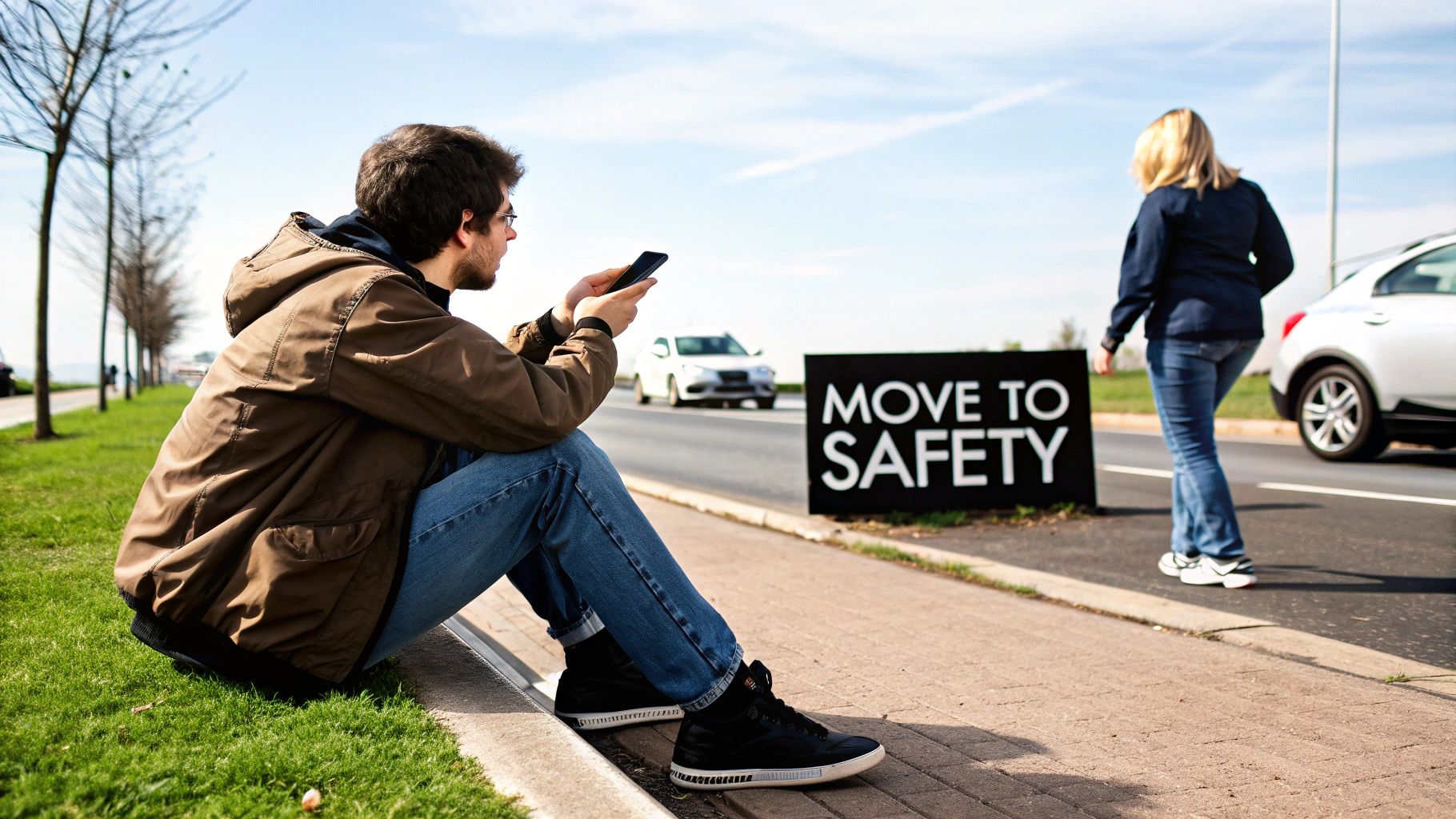
Your absolute first priority, if you can move, is to get to a safe place. That could be a sidewalk, a nearby lawn, or inside a storefront—anywhere out of the path of traffic to prevent a second injury. If you are seriously hurt, do not try to move. Stay put and wait for help to arrive.
Call 911 Immediately
No matter how minor you think your injuries are, call 911. This is the single most important step you can take.
This one call accomplishes two essential tasks: it summons emergency medical personnel to evaluate you and dispatches police to the scene. An official police report provides an unbiased, third-party record of the incident, capturing key details about the driver, the conditions, and initial statements. That document becomes invaluable down the road.
What to Say—and What Not to Say
It's natural to want to be polite or downplay the situation, but you have to be extremely careful with your words. Do not apologize or say things like, "I'm okay" or "It was my fault."
Even if you’re just trying to be courteous, insurance companies will seize on these statements as an admission of fault, which can seriously damage your claim. Stick to the facts. Your only goal when speaking to the driver is to exchange essential information, nothing more.
Pedestrian safety is a huge issue on our roads. The National Highway Traffic Safety Administration reports that around 70,000 pedestrians are injured by vehicles in the U.S. each year. Even a collision at 30 mph causes severe injury for 37% of pedestrians. The risks are incredibly high.
Information to Collect from the Driver
Before leaving the scene, your next job is to gather the driver's information. The easiest way to do this is to pull out your phone and snap pictures of their documents.
- Driver's full name and contact information (phone number and address)
- Driver's license number
- Insurance company and policy number
- The vehicle's license plate number, make, and model
For quick reference, here’s a checklist to help you remember these necessary steps in a high-stress moment.
Immediate Checklist at the Accident Scene
| Action Item | Why It's Important |
|---|---|
| Move to Safety | Prevents further injury from traffic. If seriously hurt, do not move. |
| Call 911 | Summons medical help and creates an official police report. |
| Limit Conversation | Avoid admitting fault. Only exchange necessary information. |
| Gather Driver Details | Collect name, license, insurance, and vehicle plate number. |
| Take Photos | Document the scene, your injuries, and the vehicle damage. |
| Identify Witnesses | Get contact information from anyone who saw the accident happen. |
Having this information makes the entire follow-up process much smoother. If you’re too hurt or shaken to do this yourself, ask a bystander for help or wait for the police officer to document everything in their report. Handling this is overwhelming, and it’s okay to need help. If you have questions about what to do next, you can always reach out for personalized guidance.
Documenting Everything at the Scene
If you are physically able to do anything after being hit by a car while walking, the next few minutes can be absolutely foundational. While you wait for police and paramedics, your smartphone is your best tool for gathering evidence. The photos and videos you take create a powerful, undeniable record of what the scene looked like right after the incident.
This kind of visual evidence is almost always more compelling than relying on memory alone. Start with wide shots of the entire area from a few different angles. You want to capture the final positions of the vehicles, the layout of the intersection, nearby traffic lights, and the general road conditions.
What to Capture with Your Camera
Put yourself in the mindset of a detective. Every small detail helps paint a complete picture for insurance adjusters and legal professionals who weren't there. Your goal is to build a visual narrative of what happened.
Be sure to focus on these key elements:
- The Vehicle That Hit You: Get photos of the car from every side. It's vital to get a clear, close-up shot of the license plate. Also, photograph any damage on the car itself, like a cracked windshield, dented bumper, or broken headlight.
- Your Injuries: This can be difficult, but it's important. Document any visible injuries you have, such as cuts, scrapes, or bruises. These photos establish a baseline of your physical condition immediately following the impact.
- Surrounding Conditions: Look for things that tell the story. Capture photos of skid marks, the weather conditions (wet pavement, sun glare), any traffic signs in the area like speed limits or crosswalk warnings, and even what the traffic lights were showing.
- Personal Property: Did the collision damage any of your belongings? A cracked phone screen, torn clothes, or a broken laptop in your backpack are all part of your damages. Take pictures of them right there at the scene.
Remember, the details you can capture in these moments are fleeting. Once the scene is cleared and traffic starts moving again, that evidence is gone forever. A thorough visual record preserves the truth.
The Power of Eyewitnesses
While you’re documenting the scene with your phone, look around for anyone who might have seen what happened. An independent eyewitness provides an objective, third-party perspective that can be incredibly valuable to your case. Their account can confirm important details and push back against any inaccurate statements the driver might make.
When you approach a potential witness, stay calm and be polite. Simply ask if they saw the collision and if they'd be willing to give you their name and phone number. Most people are glad to help. A quick note in your phone with their contact information is all you need for now. You aren't taking a full statement on the sidewalk; you're just making sure your attorney can contact them later. This simple action can significantly strengthen the foundation of your claim, especially in a case where someone was hit by a car while walking.
Why You Must See a Doctor Immediately
After being hit by a car while walking, your body floods with adrenaline. It’s a powerful, natural response designed for survival, but it can also dangerously mask the true extent of your injuries. You might feel shaken but believe you're "okay"—a common and risky assumption.
Seeking immediate medical attention isn't just a suggestion; it's a foundational step you cannot afford to skip.
Many serious injuries don’t show symptoms for hours, or even days. The sheer force of a vehicle's impact can cause significant internal damage that simply isn't visible from the outside. A seemingly minor headache, for instance, could be the first sign of a concussion or, in a worst-case scenario, internal bleeding in the brain.
Unseen Injuries and Their Delayed Symptoms
It's a scenario we see all the time: an accident victim goes home thinking they dodged a bullet, only to wake up the next morning in excruciating pain. When this happens, it gives the insurance company an opening to argue that your injuries aren't directly related to the accident.
Some of the most common delayed-symptom injuries include:
- Soft Tissue Damage: This includes things like whiplash, muscle sprains, and deep bruising. The pain and stiffness often take a full 24-48 hours to set in.
- Internal Bleeding: A life-threatening condition that can present with subtle signs like dizziness or abdominal pain long after the initial impact.
- Traumatic Brain Injuries (TBIs): Concussions and other TBIs frequently have delayed symptoms, such as confusion, memory problems, or sensitivity to light. Even a "mild" TBI can have a lasting impact on your life.
A medical evaluation creates an official, time-stamped record of your physical condition right after the accident. This documentation is your strongest proof that the injuries were a direct result of being struck by the vehicle.
Your Medical Record Is Your Proof
When you see a doctor, be meticulously detailed. It's important to tell them you were hit by a car while walking. From there, describe every single ache, pain, or strange sensation you're feeling, no matter how insignificant it seems at the moment. What you might dismiss as a small bruise could be an important clue to a more significant underlying injury.
Following your doctor’s treatment plan is just as important. Attending every follow-up appointment and physical therapy session demonstrates that you're taking your recovery seriously.
Beyond the initial diagnosis, a complete medical assessment might also involve understanding the role of a functional capacity evaluation. This helps fully document how your injuries impact your ability to perform daily tasks and work. This comprehensive medical history is the foundation for recovering damages when someone is hit by a car while walking.
Understanding Pedestrian Accident Patterns in Atlanta
If you've been hit by a car while walking, the experience feels shocking and deeply personal. But it’s important to understand that these incidents are rarely random. They often fit into predictable patterns, especially here in Atlanta, and knowing this context can be a helpful first step in your case.
Several factors contribute to the rising danger on our streets.
One of the biggest culprits is the explosion in distracted driving. We see it every day—drivers texting, fiddling with a GPS, or otherwise not paying attention. This behavior turns intersections and crosswalks into potential disaster zones.
On top of that, Atlanta's infrastructure can sometimes fail pedestrians. Poorly lit streets or crosswalks that lack clear signals create dangerous conditions, particularly after dark, putting people on foot at a significant disadvantage.
Even the vehicles on the road play a role. The shift toward larger SUVs and trucks means collisions now happen with a higher point of impact on a pedestrian's body. This often results in more severe trauma to the head and torso.
The National Trend of Rising Pedestrian Dangers
What’s happening in Atlanta is, unfortunately, part of a disturbing national trend. The data is stark: after years of decline, pedestrian fatalities in the United States have skyrocketed.
Between 2009 and 2023, pedestrian deaths jumped by an alarming 78%. In 2023 alone, more than 7,300 people lost their lives. This surge has occurred almost entirely in urban areas just like ours.
These numbers tell a clear story. Many of these incidents aren't just "accidents" but the preventable result of systemic issues. Knowing the common causes can provide valuable context for your situation. Our guide to Atlanta pedestrian accident law offers more detailed information on these legal factors.
The infographic below highlights some of the common injuries we see, particularly those with delayed symptoms.

This is precisely why getting immediate medical care is so important. Serious injuries like concussions or internal bleeding may not show symptoms right away. These trends underscore the seriousness of what happens when you’re hit by a car while walking and reinforce the need to take decisive action.
How to Talk to Insurance Adjusters
It won't be long after you've been hit by a car while walking that you get a call from the at-fault driver's insurance company. The person on the line is an insurance adjuster, and they will probably sound incredibly friendly and concerned.
Always remember their job is not to help you. Their role is to protect their company’s bottom line, which means paying out as little as possible on your claim.
When that call comes, the most important rule is to keep the conversation short and stick only to the bare-bones facts. The adjuster is trained to ask questions, and it’s very easy to get pulled into saying more than you should.
Politely provide your name, confirm the date and location of the incident, and state that you were the pedestrian involved. That's all.
What to Say and What to Avoid
In these conversations, it's often what you don't say that protects you the most. Insurance adjusters use open-ended questions designed to get you talking, speculating, or offering opinions that can be twisted and used to weaken your claim down the road.
Here are a few quick rules for that first call:
- Don't Guess About Anything. If you don't know an answer, saying "I'm not sure right now" or "I don't recall" is a perfectly strong response. Never guess about how fast the car was going, distances, or the exact sequence of events.
- Don't Discuss Your Injuries in Detail. Adrenaline is a powerful pain-masker. You might not realize the full extent of your injuries for days or even weeks. Simply tell them you are receiving medical care. Saying "I think I'm okay" or "It's just some bruises" can seriously damage your case if a more severe injury, like a concussion or internal damage, shows up later.
- Don't Admit Any Fault. Never, ever apologize or say anything that could be interpreted as you taking even partial responsibility. A simple "I should have been paying more attention" can be used to argue you were partially at fault.
The adjuster will almost certainly ask you to provide a recorded statement. You have no legal obligation to do this, and it is nearly always against your best interests. Politely decline until you have legal advice. A simple, "I am not providing a recorded statement at this time," is all you need to say.
Protecting Your Right to Fair Compensation
The insurance adjuster's primary objective is to get you to agree to a quick, low-dollar settlement. They might offer you a few thousand dollars right away, hoping you'll take it and sign away your rights before you even know the full cost of your medical treatment.
This is a very common tactic.
Never feel pressured to accept an offer or make a decision on the spot. Once you sign a settlement agreement, you can't go back and ask for more money, even if your medical bills are ten times what you expected. Your only job is to focus on your recovery.
Keeping your conversations with the insurance company brief and strictly factual is the best way to protect your ability to get the compensation you actually deserve after being hit by a car while walking.
How Vehicle Size Affects Your Injuries
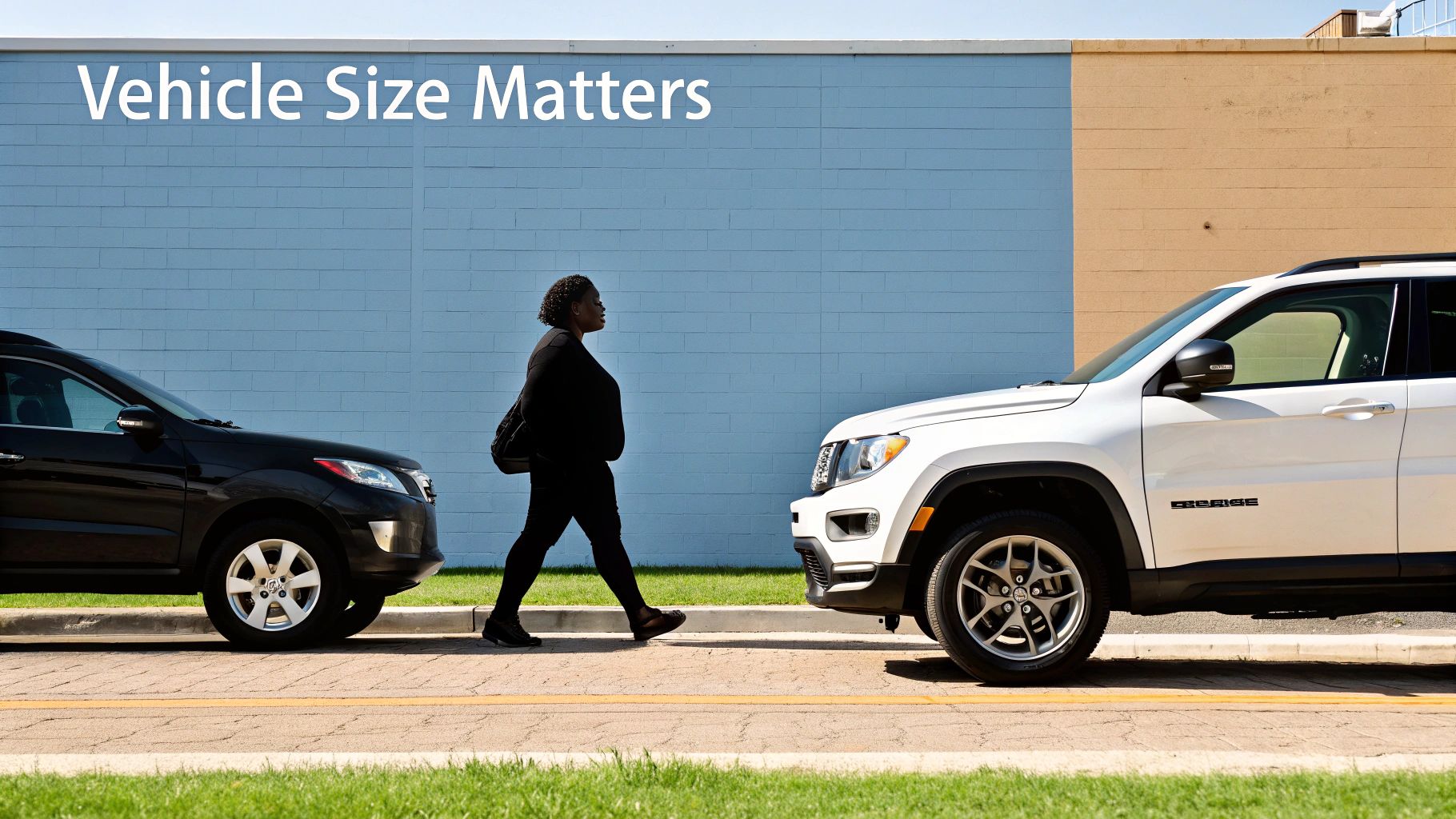
When you're hit by a car while walking, the type of vehicle involved plays a massive role in the severity of your injuries. It’s a matter of basic physics: a heavier, larger vehicle transfers far more destructive force in a collision. The increasing number of SUVs and light trucks on Atlanta's roads has made these pedestrian accidents much more dangerous.
A standard sedan typically strikes a pedestrian's lower body, often causing severe leg and pelvic injuries. The high, flat front-end of an SUV or truck, however, is a different story. It's more likely to hit a person's torso or head directly.
This design difference is a key reason why accidents with larger vehicles so often have catastrophic results. The point of impact shifts from your limbs to your vital organs and brain, dramatically increasing the odds of life-altering injuries.
The Sobering Statistics Behind Vehicle Size
The data doesn't lie—it paints a grim picture of the danger posed by larger vehicles. Research shows that a pedestrian or cyclist is 44% more likely to suffer a fatal injury when hit by an SUV or light truck compared to a regular car. For children, that risk jumps by an astonishing 82%.
This isn't just a number; it provides important context for what you're going through. It helps explain why your recovery path might be so much longer and more involved than someone hit by a smaller vehicle. If your accident involved a large commercial truck, our guide on Atlanta truck accidents offers more specific information you'll need.
Long-Term Recovery and Medical Needs
The devastating injuries caused by bigger vehicles frequently lead to extensive and costly long-term medical care. We're not just talking about the initial ER visit. This can mean years of physical therapy, multiple surgeries, and the need for expensive assistive devices.
When you speak with an insurance adjuster, don't assume they understand the full scope of your future medical needs. It is important that you have a clear picture of potential costs for everything from ongoing treatments to adaptive equipment.
A severe spinal cord injury, for example, could require major modifications to your home and specialized mobility equipment. Victims often have to figure out things like whether insurance will cover the cost of an electric wheelchair. Thinking ahead about these future needs is absolutely essential when you've been hit by a car while walking.
Common Questions After a Pedestrian Accident
When you’ve been hit by a car while walking, your mind is likely racing with questions. It’s a confusing and frankly terrifying time, and getting clear answers can help you feel more in control.
Here are some of the most common concerns we hear from pedestrians who find themselves in your shoes.
Who Pays for My Medical Bills?
This is often the first and most pressing question. Initially, the fastest way to get your treatment covered is through your own health insurance or a MedPay policy if you have one on your own auto insurance.
The ultimate goal, of course, is to have the at-fault driver’s liability insurance reimburse these costs and cover any future care you need. But that process takes time, and your health can't wait.
What if the Driver Was Uninsured?
It’s a nightmare scenario, but you still have options. If you carry uninsured/underinsured motorist (UM/UIM) coverage on your own auto insurance policy, it’s designed for this exact situation. This coverage can step in to pay for your damages when the at-fault driver can’t.
In fact, Georgia law requires insurance companies to offer this coverage. You can find more details about these requirements on the official website for the Georgia Office of Commissioner of Insurance and Safety Fire. It’s a vital protection.
Do I Still Have a Case if I Was Partially at Fault?
Yes, you very well might. Georgia follows what’s known as a “modified comparative fault” rule.
This means you can still recover damages as long as a judge or jury finds you to be less than 50% at fault for the accident. Your final compensation award would then be reduced by your percentage of fault. For example, if you were found 10% at fault, your total recovery would be reduced by 10%. More information on fault rules can be found on legal information sites like Wikipedia.
Your immediate priority is always your health. Don’t delay medical care out of fear of the cost. Getting treatment and documenting your injuries is the most important step for both your well-being and any future claim you might have.
While this information gives you a general roadmap, remember that every single case is unique. Understanding your specific rights and options after being hit by a car while walking is the best way to protect yourself.
At Jamie Ballard Law, we understand the road ahead can feel overwhelming. We're here to provide the clear, experienced guidance you need to focus on your recovery. For a free, no-obligation conversation about your case, contact us today. https://jamieballardlaw.com