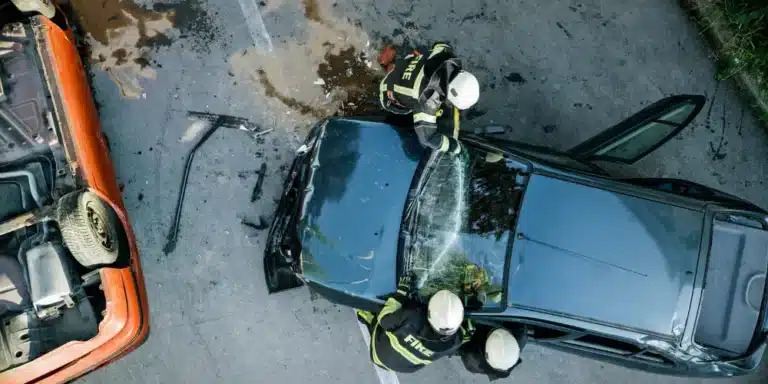
Let’s get right to it: what is spoliation of evidence? As an Atlanta personal injury attorney, I can tell you that in legal terms, it’s a way of saying someone destroyed, changed, hid, or simply failed to save evidence that is important to a potential lawsuit. This is a very real problem that can impact the outcome of your personal injury claim.
Think of a store manager who deletes the security footage showing you slipping on a freshly mopped, unmarked floor. That’s a textbook case of evidence destruction.
Understanding Spoliation Of Evidence In Simple Terms
Imagine your personal injury case is a puzzle. Each piece of evidence—a photograph, a maintenance log, a witness statement, a damaged car part—is a vital piece. When someone intentionally or carelessly gets rid of one of those pieces, it becomes nearly impossible to see the full picture of what truly happened. That act of removing a puzzle piece is exactly what we call spoliation.
This isn’t some new legal idea. The concept goes all the way back to English common law, where courts recognized how fundamentally unfair it was to destroy evidence as early as 1722. Today, spoliation covers everything from physical objects to electronic files, whether they’re lost on purpose or just through pure negligence.
The duty to preserve this evidence applies to everyone involved in a potential case—including you, the injured party. That responsibility kicks in the moment a person or company reasonably anticipates that a lawsuit could be on the horizon.
To make it even clearer, let's break down the key ideas.
Spoliation of Evidence at a Glance
| Concept | Simple Explanation |
|---|---|
| What is spoliation? | Intentionally or negligently destroying, altering, or concealing evidence relevant to a case. |
| Who does it apply to? | Anyone who knows or should know about a potential lawsuit, including plaintiffs and defendants. |
| What kind of evidence? | Anything—physical objects, documents, photos, videos, emails, text messages, and other data. |
| When does the duty start? | As soon as litigation is reasonably anticipated, not just after a lawsuit is officially filed. |
In short, once an incident occurs that could lead to a claim, all parties have a legal obligation to hit "pause" and save anything that might be relevant.
What Does Spoliation Actually Look Like?
Spoliation isn’t always as dramatic as a villain shredding documents in a smoky back room. It often happens in subtle, everyday ways.
Here are a few common forms it can take:
- Outright Destruction: This is the most obvious example. Think of a trucking company wiping the data from a truck’s “black box” recorder right after a serious crash.
- Altering Evidence: This could be a doctor editing notes in a medical chart after a surgical error or a property manager Photoshopping a hazard out of a picture.
- Hiding or Concealing: This happens when someone knowingly holds back important documents or objects during the discovery phase of a lawsuit.
- Failure to Preserve: This is often a case of negligence. For instance, a retail store has a policy to automatically overwrite security camera footage every 48 hours. If they don’t take steps to save the video after a customer falls, it’s gone for good—and that’s spoliation.
In our digital world, this often involves data sanitization, the permanent destruction of data, where electronic files are deliberately and irreversibly wiped from a device.
Who Is Responsible For Preserving Evidence?
The duty to hang onto evidence falls on any person or company that has control over it and knows (or reasonably should know) that a claim is likely. This includes business owners, drivers, property managers, and even you as the injured person.
Ultimately, knowing what is spoliation of evidence is the first step toward protecting your rights and holding the at-fault party accountable.
The Serious Consequences of Destroying Evidence in Georgia
When a person or company destroys evidence in Georgia, they haven’t just made a simple mistake—they’ve actively undermined the fairness of the entire legal process. The courts here do not take that lightly.
So, what is spoliation of evidence really going to cost the party who did it? Judges have a range of powerful tools, known as sanctions, to penalize the wrongdoer and level the playing field.
These penalties aren't just a slap on the wrist. They are designed to directly fix the harm caused by the missing evidence and to send a clear message that this behavior won't be tolerated. For an injured person, these sanctions can be the very thing that saves a claim that might have otherwise been impossible to prove.
Understanding Court Sanctions for Spoliation
The most common—and often most powerful—sanction a judge can use is something called an adverse inference instruction. It sounds technical, but the idea is simple and incredibly effective in practice.
The judge essentially tells the jury, "You are allowed to assume that the evidence the other side destroyed would have been harmful to their case and helpful to the injured person's case."
This is a huge deal. Let’s say a trucking company "loses" the driver's logbooks after a serious crash. With this instruction, the jury can now operate under the assumption that those logbooks would have shown the driver was breaking safety rules. An instruction like this can completely change the outcome of a trial.
Of course, that's not the only tool a judge has. Depending on how egregious the behavior was, Georgia courts can impose other serious consequences.
Here is a look at the official source for Georgia's court rules, which provide the foundation for how judges handle these situations.
This page from the Supreme Court of Georgia is the hub for all the procedural rules that govern how cases, including the handling of evidence, are managed.
Other Penalties for Destroying Evidence
Beyond telling the jury to assume the worst, a judge might take several other actions to level the playing field. These sanctions can make it much more difficult for the at-fault party to defend themselves.
- Monetary Fines: The court can order the party who destroyed evidence to pay significant fines. This often includes forcing them to pay the attorney's fees you incurred proving that the spoliation happened in the first place.
- Exclusion of Evidence: A judge can prohibit the at-fault party from using other evidence to support their side of the story. For instance, if they destroyed a maintenance record for a faulty machine, the judge might not allow them to bring in their own expert to testify about the machine's condition.
- Striking Pleadings or Defenses: In more serious cases, the court might completely bar the defendant from making certain arguments. If a business owner destroys video footage of a slip and fall, the judge could prevent them from even arguing that the hazard didn't exist.
- Dismissal of the Case: This is the ultimate penalty, reserved for the worst offenders. If the destruction of evidence was so intentional and severe that a fair trial becomes impossible, a judge has the power to dismiss the defendant’s case entirely. This results in a default judgment for the injured person.
For these penalties to apply in Georgia, the court must find that the destroyed evidence was important to the case and that the party knew—or should have known—a lawsuit was likely.
Understanding how Georgia courts handle spoliation is a key part of the overall personal injury lawsuit process. These rules exist to ensure that the answer to what is spoliation of evidence is met with real and meaningful consequences, protecting your right to a fair outcome.
Real-World Examples of Spoliation in Injury Claims
Legal definitions can feel abstract. To really understand what spoliation of evidence means, you have to see how it plays out in real life. These aren't just theories—they are real situations we see in Atlanta where the loss of a single piece of proof can change everything for an injured person.
Let's walk through a few scenarios that happen far too often. These examples show just how easily important evidence can disappear and the devastating impact it has on someone's fight for justice.
The flow above shows how quickly key evidence can vanish in trucking, retail, and medical malpractice cases. This is why acting fast to preserve it is so important.
The Trucking Company and the Missing "Black Box"
Picture a catastrophic wreck on I-285 involving a commercial truck. The trucker swears our client cut him off. But our client knows the truth: the trucker was speeding and weaving through traffic. The key to proving it is the truck's Electronic Logging Device (ELD), or "black box."
This device records the hard data:
- The truck’s speed right before the crash.
- Brake application data.
- How long the driver had been behind the wheel without a mandatory break.
We immediately send a formal preservation letter, demanding the trucking company secure the truck and all its data. But when we ask for the ELD records, we get a familiar excuse: the data was "corrupted" during the tow and is now lost.
This is a classic spoliation scenario. Whether it was intentional or just negligent, the company had a duty to save that data. Without it, the objective, digital proof of the trucker's recklessness is gone, making our client's case much harder to win.
The Grocery Store and the Overwritten Surveillance Video
A woman is shopping in an Atlanta grocery store and slips on a clear puddle of liquid from a leaky freezer. She fractures her hip and needs surgery. The store manager filed an incident report, so the store is officially on notice of a potential claim.
A security camera is pointed right at the aisle where she fell. That footage is everything—it would show exactly how long the puddle was there and if any employees ignored it.
But there's a problem. The store's security system automatically overwrites footage every 72 hours. Despite knowing a serious injury occurred, nobody saves the video file. Three days later, the evidence of their negligence is erased forever. This failure to act is spoliation, and it can cripple a victim’s case.
The Medical Facility and the Altered Patient Chart
Now, consider a patient who suffers a severe complication during a routine procedure. The family suspects a medical error. The patient’s chart is the central piece of evidence—it’s supposed to be a precise record of every action the medical team took.
When the family’s attorney gets the records, an expert notices something isn't right. Entries appear to have been added or changed after the incident. Timestamps are off, the handwriting is different, or digital logs show someone accessed and modified the file days after the patient went home.
This is an especially blatant form of spoliation: the intentional alteration of evidence. The hospital isn't just letting evidence disappear; they are actively creating a false narrative to cover their tracks. This kind of deception strikes at the very heart of the justice system.
Each of these stories shows why the concept of spoliation is so vital. It’s the legal shield that protects your right to a fair fight by holding accountable those who would conveniently "lose" or destroy the truth.
How to Protect Evidence After Your Accident
After you’ve been hurt in an accident, your first priority is always your health. But in the hours and days that follow, it's just as important to think like a detective and protect the evidence that tells your story.
Evidence is fragile. It can disappear, get repaired, or be overwritten with alarming speed. Taking proactive steps to preserve this information is one of the most powerful things you can do to safeguard your claim. It prevents the other side from controlling the narrative and stops potential spoliation of evidence before it can happen.
Documenting the Scene and Your Injuries
Your phone is your best tool in the moments after an accident. Think of the scene as a temporary snapshot; your goal is to capture as much of that snapshot as possible before it's gone for good.
When you’re taking photos and videos, go beyond just the obvious damage. For instance, if you were in a car wreck, don't just photograph the dents. Capture skid marks on the road, the final resting position of the vehicles, any nearby traffic signs, and the weather conditions.
If you slipped and fell, get shots of the area from multiple angles to show a lack of warning signs or poor lighting. These details provide important context that helps piece together the full story of the other party's negligence.
Pro Tip: When recording a video, narrate what you are seeing. Walk through the scene and describe the conditions, the time of day, and what happened, all in your own words. This can capture details you might later forget.
Your Post-Accident Evidence Checklist
Taking immediate action can make a massive difference in your ability to prove your case down the road. Use this checklist to make sure you've covered the most important steps.
| Action Item | Why It's Important |
|---|---|
| Take Photos and Videos | Documents the scene, property damage, hazards, and your injuries before they change or are cleaned up. |
| Identify Witnesses | Witness testimony can be incredibly powerful, but people move and memories fade. Securing their contact info is key. |
| Preserve Physical Items | Torn clothing, damaged footwear, or a broken piece of equipment are tangible proof. Do not wash, repair, or discard them. |
| Keep All Documents | Start a folder for medical bills, repair estimates, and insurance correspondence. This paper trail is vital. |
These steps lay the groundwork for a strong claim. For more specific advice related to auto collisions, see our guide on how to file a car accident claim in Atlanta.
Organizing Your Evidence for Your Attorney
Once you've gathered this initial evidence, keeping it organized is the next important step. Create both a physical and a digital file to store everything. You can use a simple folder for paper documents and a cloud storage drive for your photos, videos, and digital communications.
A well-organized file allows your legal team to quickly understand the facts of your case and identify what might be missing. You can also use AI-powered legal assistant tools to help streamline the process of identifying and preserving key documents. This organization is a foundational step in building a strong claim and countering any attempts at spoliation of evidence.
Using a Spoliation Letter to Formally Preserve Evidence
After an accident, you can and should document everything you can. But a huge chunk of the most important evidence is often in the hands of the very person or company that caused your injury.
This is where an experienced attorney steps in with an important legal tool: a spoliation letter. Understanding what is spoliation of evidence means knowing exactly how to stop it in its tracks.
A spoliation letter—also called a preservation demand or preservation letter—is a formal notice sent from your lawyer to the other side. Its purpose is blunt and direct: it legally instructs them not to destroy, alter, hide, or get rid of any evidence related to your accident.
Think of it as drawing a legal line in the sand. It officially puts the other party "on notice," stripping them of any excuse to later claim they "didn't know" they were supposed to save something.
The Power of Putting Them on Notice
Sending this letter is a game-changing move that strengthens your entire case. Once a person or company receives this formal demand, their legal duty to preserve evidence is no longer a gray area—it's black and white.
If they destroy evidence after getting the letter, it’s incredibly hard for them to argue it was just an accident or part of routine business. A judge is far more likely to see it as a willful act to hide the truth, which can lead to severe penalties. This is one of the most important first moves to make in any personal injury claim.
This letter is your best shield against the security camera footage that "accidentally" gets overwritten or the maintenance logs that are "routinely" shredded. It tells the other side that you're serious and you know exactly what evidence is needed to prove your claim.
What Goes into a Strong Preservation Letter
A generic, one-size-fits-all letter just doesn’t work. A powerful spoliation letter is intensely specific, leaving zero room for interpretation. It doesn’t just say "save everything"; it provides a detailed, itemized list of exactly what must be protected.
An effective letter drafted by an attorney will demand the preservation of things like:
- Electronic Data: This includes all emails, text messages, GPS data from company vehicles, and information from "black box" recorders (ELDs) in commercial trucks.
- Video and Audio: Any and all surveillance footage from security cameras, dashcams, or body cameras that captured the incident or the surrounding area.
- Physical Evidence: The actual vehicle from the crash (without any repairs), the broken piece of equipment, or any other tangible item connected to how you were injured.
- Paper Documents: Personnel files, driver logs, maintenance records, inspection reports, employee handbooks, and official incident reports.
- Digital Communications: Internal Slack messages, memos, or even social media posts that relate to what happened.
By listing these items with such clarity, the letter makes it impossible for the other party to claim they misunderstood what to save. It creates an undeniable record of your request, which is vital if a dispute over missing evidence comes up later.
The letter will also set a clear deadline and specify how the evidence must be preserved to prevent tampering. For instance, it might demand that a wrecked truck be moved to a secure, neutral facility or that a "litigation hold" be placed on all electronic data to stop automatic deletion protocols.
Ultimately, this letter is a shield. It’s a proactive, strategic step designed to protect the truth and ensure the facts of your case are decided on a complete record—not just on what the other side chose to keep.
Frequently Asked Questions About Evidence Spoliation
Even when you grasp the basics, real-world situations always throw curveballs. As Atlanta personal injury attorneys, we've heard just about every question you can imagine from clients worried about missing evidence. Here are some of the most common ones we tackle, answered directly and without the legal jargon.
Our goal is to get straight to the "what if" scenarios that keep people up at night. By running through these common concerns, you'll get a much clearer picture of what is spoliation of evidence and how it might play out in your own case.
What If the Evidence Was Destroyed Accidentally?
This is probably the number one question we hear. What happens when the other side claims losing the evidence was just an honest mistake?
In Georgia, their intent definitely matters, but it’s not the only thing a judge looks at. Even if the destruction was accidental, the court can still bring down sanctions. The real key is whether that person or company had a duty to preserve the evidence when it was lost. If they knew—or even should have known—that a lawsuit was coming, their obligation to save that evidence was already in place.
Think of it like this: a grocery store's policy of taping over its security footage every 24 hours is just a routine business practice. But the moment a customer slips and is seriously injured in their aisle, that "routine" becomes negligent if they don't step in and save the video. The punishment might not be as harsh as it would be for intentional shredding, but a judge can still instruct the jury to assume the missing video would have helped your case.
How Do You Prove That Evidence Was Destroyed on Purpose?
Proving someone deliberately got rid of evidence sounds tough, but it's far from impossible. It’s rare for a defendant to admit they destroyed something to hide the truth. Instead, we build a powerful case from the surrounding facts and a thorough investigation.
A good lawyer has a whole toolkit for this:
- Depositions: We put employees, managers, and executives under oath and question them about their evidence policies and what happened in this specific case. Conflicting stories or shaky answers tell us a lot.
- Suspicious Timing: If a truck's "black box" data gets wiped clean a few hours after a catastrophic wreck, that’s a huge red flag. Same goes for a important document getting shredded the day after they receive our preservation letter. The timing itself becomes the evidence.
- Policy Violations: Most companies have their own internal rules for saving records. When they break their own rules to get rid of evidence in your case, it paints a pretty clear picture. It suggests they knew they had something to hide.
- Forensic Experts: When electronic data is involved, we can bring in forensic specialists. These experts can often tell if files were intentionally deleted, pinpoint when it happened, and sometimes even recover the "lost" data.
Can I Get in Trouble for Spoliation as the Injured Person?
Yes, and this is an important point. The duty to preserve evidence is a two-way street. It applies to everyone involved in a potential claim—that includes the injured person.
You are legally required to save everything that could be relevant to what happened, even if you think it might reflect badly on you. This includes:
- Your physical property: Don't get your car repaired. Don't throw away the torn shoes from your fall. Don't get rid of the defective product that hurt you.
- Your digital life: Do not delete text messages, photos, emails, or videos related to the incident.
- Your social media: Resist the urge to delete your accounts or posts about the incident or your recovery. The American Bar Association has great resources explaining why this is so important for modern cases.
Be completely honest with your lawyer about all potential evidence. Trying to hide something you think looks bad can do far more damage to your credibility than whatever that piece of evidence showed.
How Soon Should a Spoliation Letter Be Sent?
A spoliation letter has to go out immediately. There is zero time to waste. The faster the at-fault party gets a formal, written demand to preserve evidence, the stronger your legal position.
So much of the most important evidence has an incredibly short shelf life.
- Security camera footage is often automatically overwritten in just 24 to 72 hours.
- A truck's electronic logging device (ELD) data can be erased by the very next trip.
- Physical evidence at a crash scene, like skid marks or debris, can vanish with the next rainstorm.
Sending that letter is one of the first and most powerful actions an attorney takes. It officially puts the other side on notice, locking in their duty to save everything you need. It's the first step in holding them accountable if they fail—a cornerstone of what what is spoliation of evidence means in the real world.
If you're worried about lost or destroyed evidence after an accident in Atlanta, you have to act fast to protect your rights. At Jamie Ballard Law, we know the games at-fault parties play and we know how to beat them. Contact us today for a free, no-obligation consultation to talk about your case and find out how we can help.