The moments after a car crash are often a blur of adrenaline and confusion. But what you do right then and there lays the groundwork for your entire insurance claim. Knowing how to report a car accident to insurance starts at the scene, and taking the right steps can make all the difference for you and your family.
What to Do Immediately After an Atlanta Car Accident
In the chaotic minutes after a collision, staying as calm and methodical as possible is your best defense. The actions you take—or don't take—can protect your rights and put your insurance claim on solid footing from the very beginning.
First, always prioritize safety. Check yourself and your passengers for injuries. If it's safe, move your vehicle out of the flow of traffic to a shoulder or nearby lot and turn on your hazard lights. Only then should you check on the occupants of the other vehicle.
Call 911 and Get an Official Report
Even for what seems like a minor fender-bender, please call 911. Paramedics can check for injuries that adrenaline might be masking, and more importantly, a police officer will create an official crash report. This report is a neutral, third-party record of the accident, which is very helpful when dealing with insurance companies.
Under Georgia law, you're required to report any crash involving injury, death, or apparent property damage of $500 or more. Nearly every modern car accident meets that threshold.
The police report provides a factual foundation for your claim. It helps prevent the other driver from changing their story later and turns a potential "he said, she said" dispute into a documented event.
The process is straightforward: keep everyone safe, get an official report, and then exchange key information.
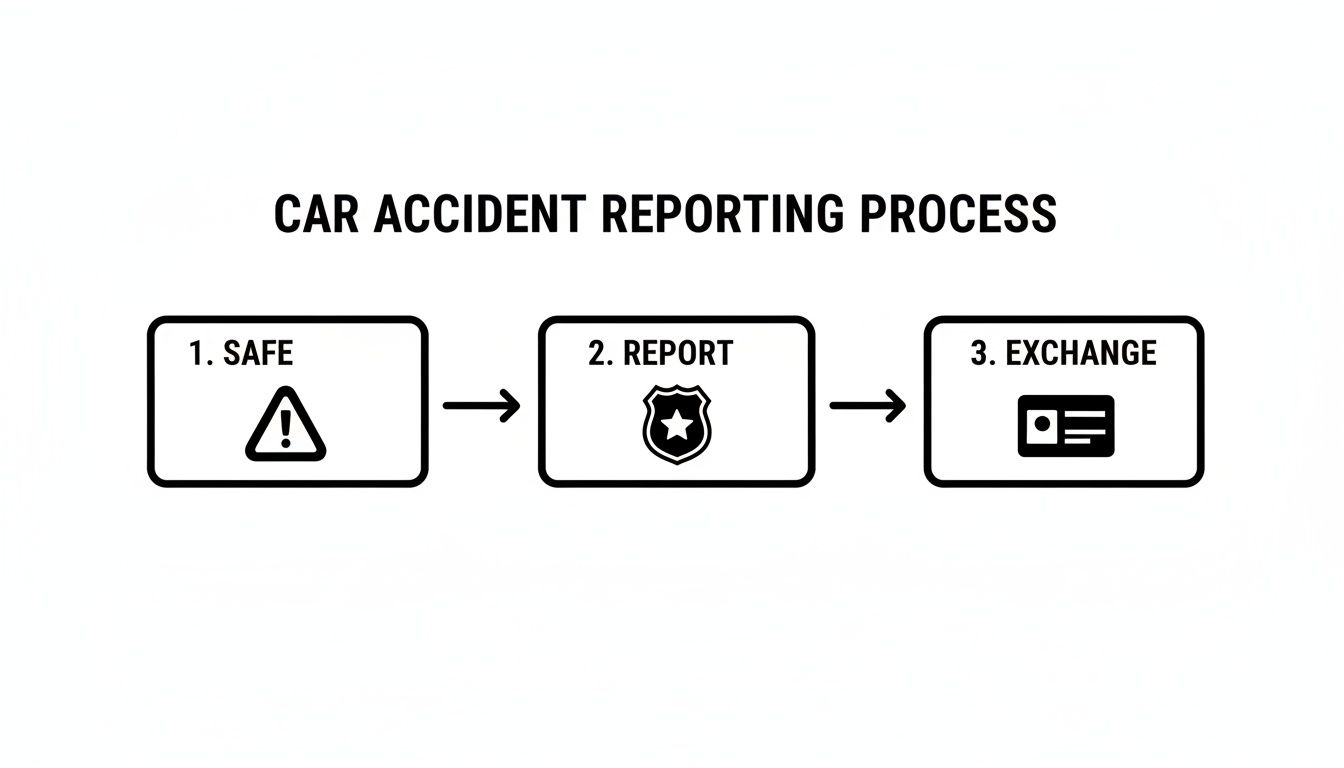
Following these steps in order ensures you handle the most urgent needs first while methodically gathering the evidence required for your claim.
Exchange Information—But Stick to the Facts
While waiting for the police to arrive, you'll need to exchange information with the other driver. It is absolutely important that you only state the facts. Do not apologize or say anything that could be twisted into an admission of fault, like "I'm so sorry" or "I didn't see you."
Use this quick checklist to make sure you get everything you need from the other driver and the scene.
At-Scene Information Checklist
| Information Category | Specific Details to Collect |
|---|---|
| Driver Information | Full name, address, and phone number. |
| Vehicle Details | Make, model, color, and license plate number. |
| Insurance Policy | Insurance company name and policy number. |
| Documentation | Take a clear photo of their driver's license and insurance card. |
| Scene Evidence | Officer's name and badge number; names/numbers of any witnesses. |
Having this information organized and ready will make the claims process much smoother.
It’s also wise to keep a folder for all accident-related expenses. This includes everything from the police report fee to any towing receipts you might have.
For a complete breakdown of the entire claims journey, from the initial report to the final settlement, you can read our detailed guide on how to file a car accident claim in Atlanta. This proactive approach is the key to successfully managing the insurance process.
Building Your Case with Strong Documentation
Once you've confirmed everyone is safe and the police are on their way, your smartphone is your best tool for building your case. The evidence you gather right here, right now, is what will give your story credibility when you figure out how to report a car accident to insurance. Think like an investigator—your job is to capture everything.
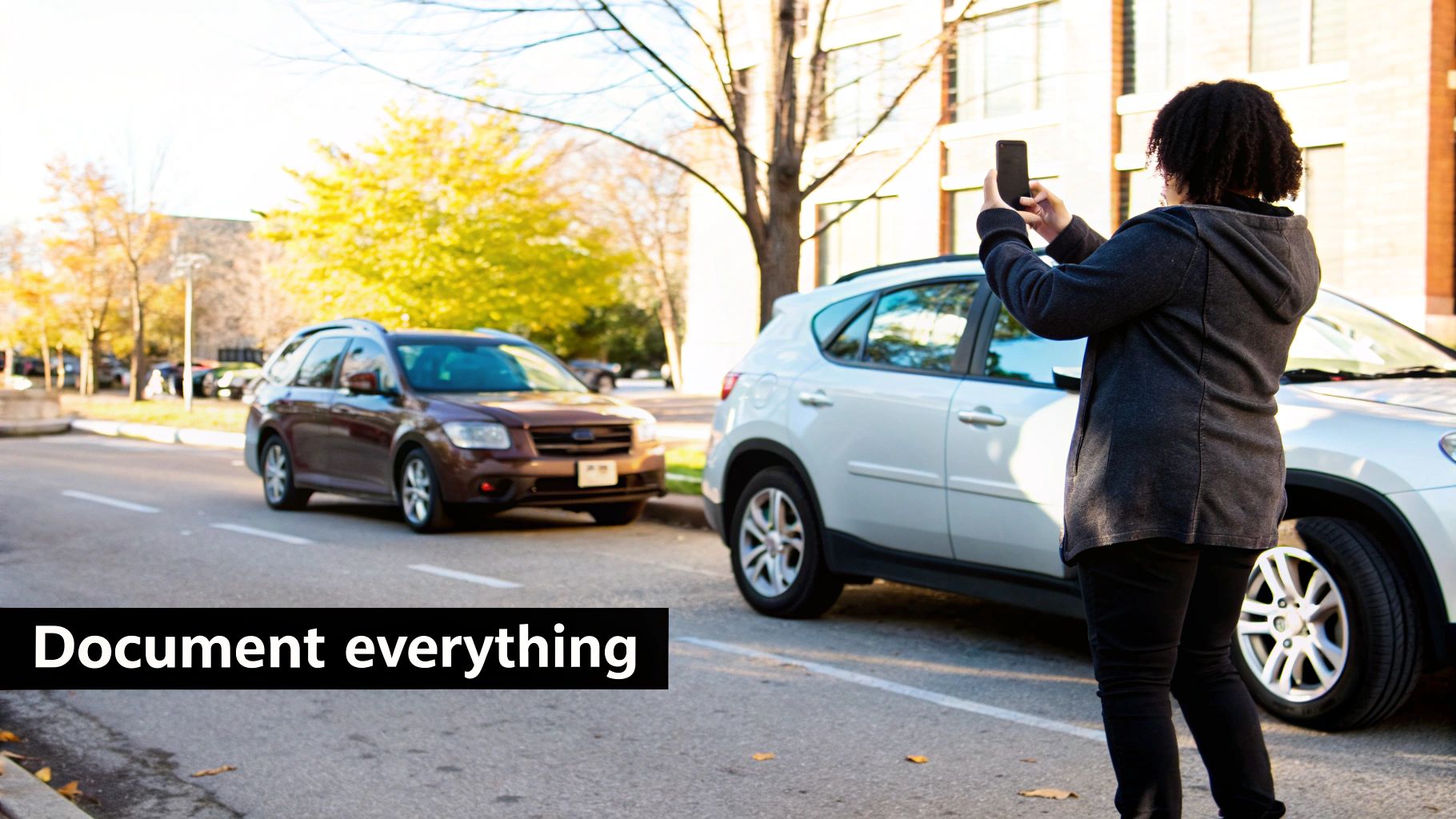
This isn't just about snapping a quick picture of the damage. You need to create a complete visual record that tells the story of what just happened.
Your Essential Photo Checklist
Don't just take pictures of your own vehicle. A thorough set of photos can often prove how the collision happened without you saying a single word.
- Wide Scene Shots: First, step back. Take photos of the entire accident scene from multiple different angles to show the final positions of the cars, traffic patterns, and the weather.
- All Vehicles Involved: Walk around every car—not just yours—and photograph all four sides. This documents the full extent of the impact and helps identify any pre-existing damage.
- Specific Damage Close-Ups: Now, get close. Take detailed shots of crumpled bumpers, broken headlights, deployed airbags, and shattered windows.
- Environmental Clues: Look around for other evidence. Photograph any skid marks on the road, debris from the crash, and important traffic signs like stop signs or speed limit postings the other driver might have ignored.
Finding and Speaking with Witnesses
An independent witness is a powerful asset. If anyone stopped to help or saw the crash, politely ask if they'd be willing to share what they observed. Most people are willing to help when they know it can make a real difference.
All you need is their name and phone number. Don't worry about getting a detailed statement at the scene—just secure their contact info so your insurance company, or your lawyer, can follow up. Their objective account can be the deciding factor if the at-fault driver changes their story later.
A good witness corroborates your version of events, offering an unbiased perspective that insurance adjusters find persuasive. It's often the key to proving fault.
Start Your Personal Injury Log
Finally, open a new note on your phone or grab a dedicated notebook and start logging everything, right away. Write down how you are feeling, both physically and emotionally, each day. Keep track of all doctor's visits, days you miss from work, and every single related expense, from prescriptions to parking fees at a physical therapy appointment.
This detailed log, combined with your photos and witness information, creates an undeniable record of events and their aftermath. Insurance companies use these details to open a file and set aside funds for your claim. Missing or inconsistent information can stall an investigation for weeks. This preparation is what strengthens all your personal injury claims by providing clear, organized proof right from the beginning.
Making the First Call to Your Insurance Company
Calling your own insurance company after a wreck is a required step, but how you handle this conversation matters—a lot. This is your first chance to get the facts on record. Knowing how to report a car accident to insurance means being clear, sticking to the facts, and choosing your words carefully.
Your insurance policy almost certainly requires you to provide "prompt notice." That isn’t a suggestion. Most major carriers consider "prompt" to mean within 24 to 72 hours of the crash. Reporting quickly lets the insurer start its investigation and directly impacts how your claim proceeds. It's an important first move, and you can read more about current U.S. auto insurance trends to get a sense of how seriously carriers take this.
What to Say and What to Avoid
When you pick up the phone, your only goal is to report the essential, objective facts. You’re simply notifying them that an accident happened. Think of it as a simple script: who, what, when, and where. Nothing more.
Here's the information you need to provide:
- Your Name and Policy Number: They'll ask for this first. Have it ready.
- The Date and Time of the Accident: Be as exact as you can.
- The Location of the Accident: Give the street names or the closest intersection.
- The Other Driver's Information: Share the name and insurance details you gathered from them.
- The Police Report Number: If the police gave you one, provide it.
Do not guess about who was at fault. Do not go into detail about your injuries, other than to say you are seeking or planning to seek medical attention. You want to avoid phrases like "I'm fine" or "I think I'm okay," because many serious injuries don't show up for days.
Your job during this call is to report the basics, not to tell a story, assign blame, or provide a medical update. Keep it short and factual.
Sticking to this script prevents you from accidentally saying something the insurer could twist to devalue your claim down the road.
Politely Declining a Recorded Statement
It's almost a guarantee that the adjuster will ask you for a recorded statement during this initial call. It is almost always in your best interest to politely decline this request until you've had a chance to speak with a lawyer.
An adjuster is trained to ask questions designed to limit the insurance company’s financial exposure. They are experts at framing questions that can confuse you or bait you into saying something that hurts your case. Even a friendly "How are you feeling today?" is a potential trap. If you reply "I'm fine," they will document it, even if you're in significant pain later.
You can simply and firmly state: "I'm not comfortable giving a recorded statement right now. I'm still processing everything and can provide a written statement later if it's needed."
This is a perfectly reasonable response. It protects your rights and buys you the time you need to get organized and seek legal advice. Remember, knowing how to report car accident to insurance is just as much about what you don't say.
Speaking with the Other Driver's Insurance Adjuster
You can bet on one thing after a crash: the at-fault driver's insurance adjuster will call you, and it will happen fast. When that phone rings, you need to remember who you're talking to. They are not your friend. Their one and only job is to protect their company's bottom line, which means paying you as little as possible.
This initial conversation is a very important moment. What you say here can be just as damaging to your claim as anything you tell your own insurer.
The adjuster on the other end of the line will probably sound incredibly friendly, maybe even sympathetic. This isn't a coincidence; it's a tactic. They are trained to build a quick rapport to make you feel comfortable. The goal is simple: get you to lower your guard and share details that they can use to weaken your claim later.
Sticking to the Basics
When the adjuster calls, be polite but firm. You are under no legal obligation to give them a detailed story of the wreck or a full rundown of your injuries. The best approach is to keep it short and stick to the absolute, undisputed facts.
You should only confirm this information:
- Your full name and contact information.
- The make and model of your vehicle.
- The date and location of the accident.
That's it. You don't need to get into who was at fault, how the crash happened, or how you're feeling physically. If they push you for more, you can simply state that you aren't prepared to discuss the details at this time.
The Recorded Statement and Quick Settlements
Just like your own insurance company, the other adjuster will almost certainly ask you for a recorded statement. You should always politely refuse this request. You have no legal duty to provide one. Giving a recorded statement only opens the door for them to ask confusing or leading questions designed to trip you up, minimize your injuries, or get you to admit partial fault.
The other driver's insurance adjuster is a trained negotiator looking for any statement they can use against you. Providing a recorded statement gives them ammunition they don't need to have.
Another common tactic is the quick settlement offer. Don't be surprised if the adjuster offers you a check for a few hundred or maybe a thousand dollars just days after the accident. It might seem tempting, especially with bills piling up, but these offers are almost always far too low. They’re a gamble on their part, hoping you'll take the money and close the case before you understand the full scope of your injuries and medical expenses.
Never accept a settlement or sign any documents from an insurance company without having an attorney review them first.
It's a good idea to keep a log of every conversation you have with adjusters. You can even use tools like free transcription software to help you maintain an accurate record of what was discussed. This creates a clear timeline and prevents them from twisting your words later. Protecting your rights during this phase is a non-negotiable part of handling your claim properly.
Deadlines and Uninsured Drivers in Georgia
The insurance process isn't just about making phone calls; it's a game with a strict clock, and in Georgia, that clock ticks fast. If you miss a deadline, the insurance company can, and will, shut the door on your claim for good.
Here in Georgia, you have two years from the date of the accident to file a personal injury lawsuit. This is called the statute of limitations. It sounds like a lot of time, but it evaporates when you're juggling doctor's appointments, physical therapy, and watching bills pile up.
This two-year deadline is the single most important piece of leverage you have. Once it passes, you lose the right to sue. The insurance adjuster knows this, and without the threat of a lawsuit, they have zero reason to offer you a fair settlement. Keeping that date circled on your calendar is very important. You can learn more about the specifics in our guide to the statute of limitations for personal injury in Georgia.
What if the Other Driver Has No Insurance?
It’s an unfortunate reality on Atlanta’s roads: you get hit by someone with little or no insurance. How are you supposed to pay for your medical care and car repairs? This is exactly why Uninsured/Underinsured Motorist (UM/UIM) coverage is so important.
UM/UIM is an optional part of your own auto policy that I strongly recommend to every driver. It’s designed to protect you when the at-fault driver’s insurance is either nonexistent or simply not enough to cover your losses.
When you use your UM/UIM coverage, you're essentially making a claim against your own insurance company, which steps into the shoes of the at-fault driver's carrier. The first step is always a prompt, detailed report to your insurer. This preserves your right to make this kind of claim later. With so many uninsured drivers on the road—sometimes over 10% in certain areas, according to the Insurance Information Institute—this coverage is your financial backstop.
Think of Uninsured Motorist coverage as a safety net. It guarantees you have a source of recovery even when the person who hit you can't pay.
Without it, you could be stuck with tens of thousands in medical debt through no fault of your own. The initial steps you take to report the car accident to your insurance are what unlock this vital protection.
When It’s Time to Call an Attorney
Knowing how to report a car accident to insurance is a very important first step, but what happens when the road gets bumpy? While you can probably handle a minor fender-bender on your own, many situations call for a professional legal advocate. This isn't about looking for a fight; it's about leveling the playing field.

Remember, insurance companies are businesses. They have entire teams of adjusters and lawyers whose job is to protect their bottom line. An attorney’s job is to protect yours. We handle the communication, build the evidence, and fight to make sure you get fair compensation.
Red Flags That Signal You Need Legal Help
You should seriously consider speaking with an attorney if you run into any of these common scenarios. These are clear signs that the insurance company may not be treating you fairly, and you could be leaving a lot of money on the table.
- Someone Was Hurt: If you or a passenger suffered any injury—from nagging whiplash to a broken bone—it’s time to call an attorney. Insurance companies are notorious for downplaying injuries to minimize payouts.
- They're Disputing Fault: The other driver is blaming you, or their insurer is denying their client was at fault. An attorney can dig in and gather the proof needed to show what really happened.
- The Offer is a Joke: You get a settlement offer that doesn't even come close to covering your medical bills, lost paychecks, and vehicle repairs. This is a classic tactic to get you to close the case fast and cheap.
- You're Being Pressured: The adjuster is rushing you, trying to confuse you, or pushing you to give a recorded statement or sign documents you don't understand. Get an advocate on your side, fast.
An attorney acts as your shield. We manage the entire claims process so you can focus on the most important thing: recovering from your injuries. We make sure deadlines are met and that your rights are protected every step of the way.
We believe everyone deserves to know their legal options without financial pressure. That’s why we always offer a free consultation to discuss your case with no strings attached. Understanding how to report a car accident to insurance is just the beginning. Knowing when to ask for help is how you secure your future.
Common Questions After an Atlanta Car Wreck
After a collision, it's natural to have questions. Here are a couple of the most common ones we hear from clients.
Do I Have to Report a Minor Accident in Georgia?
Yes, absolutely. Georgia law is clear: you are required to report any accident involving an injury, a death, or property damage that exceeds $500.
Think about it—a minor bumper repair or a new headlight can easily cost more than that. Always file a police report and let your insurance company know what happened. This creates a paper trail that protects you if the other driver changes their story, or if you discover later that your injuries or the vehicle damage are more serious than they first appeared.
Will My Insurance Rates Go Up if I Wasn't at Fault?
They shouldn't. If the other driver was clearly at fault for the collision, your insurance rates are not supposed to increase.
In fact, reporting the accident is the only way to get the at-fault driver's insurance to pay for your medical bills and vehicle repairs. Understanding how to report a car accident to insurance properly is the first step toward getting the compensation you deserve.