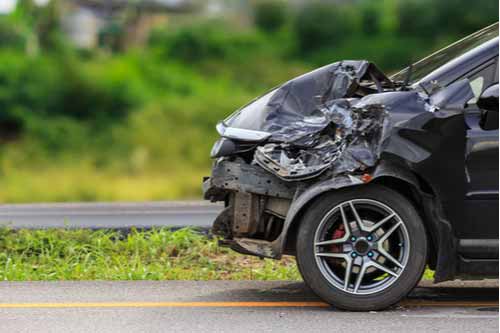
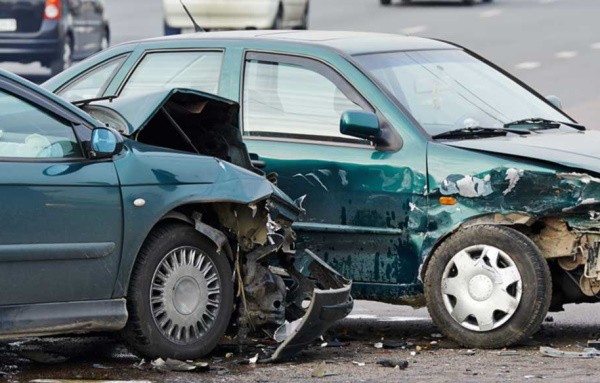
If you’ve been in a bicycle crash in Atlanta, you know the shock and confusion that follows. What you do in those first few moments can make a big difference for your health and for your legal rights. The actions you take at the scene are the foundation for any potential bicycle accident lawsuit, creating a clear and immediate record of what happened. Taking calm, deliberate action right away protects your ability to seek fair compensation down the road.
Your First Steps After a Georgia Bicycle Accident
The minutes following a bike accident are often chaotic. Your first priority is always your well-being, but the steps you take to document the incident are just as important. Think of it like a detective arriving at a scene; the initial evidence collected is almost always the most powerful.
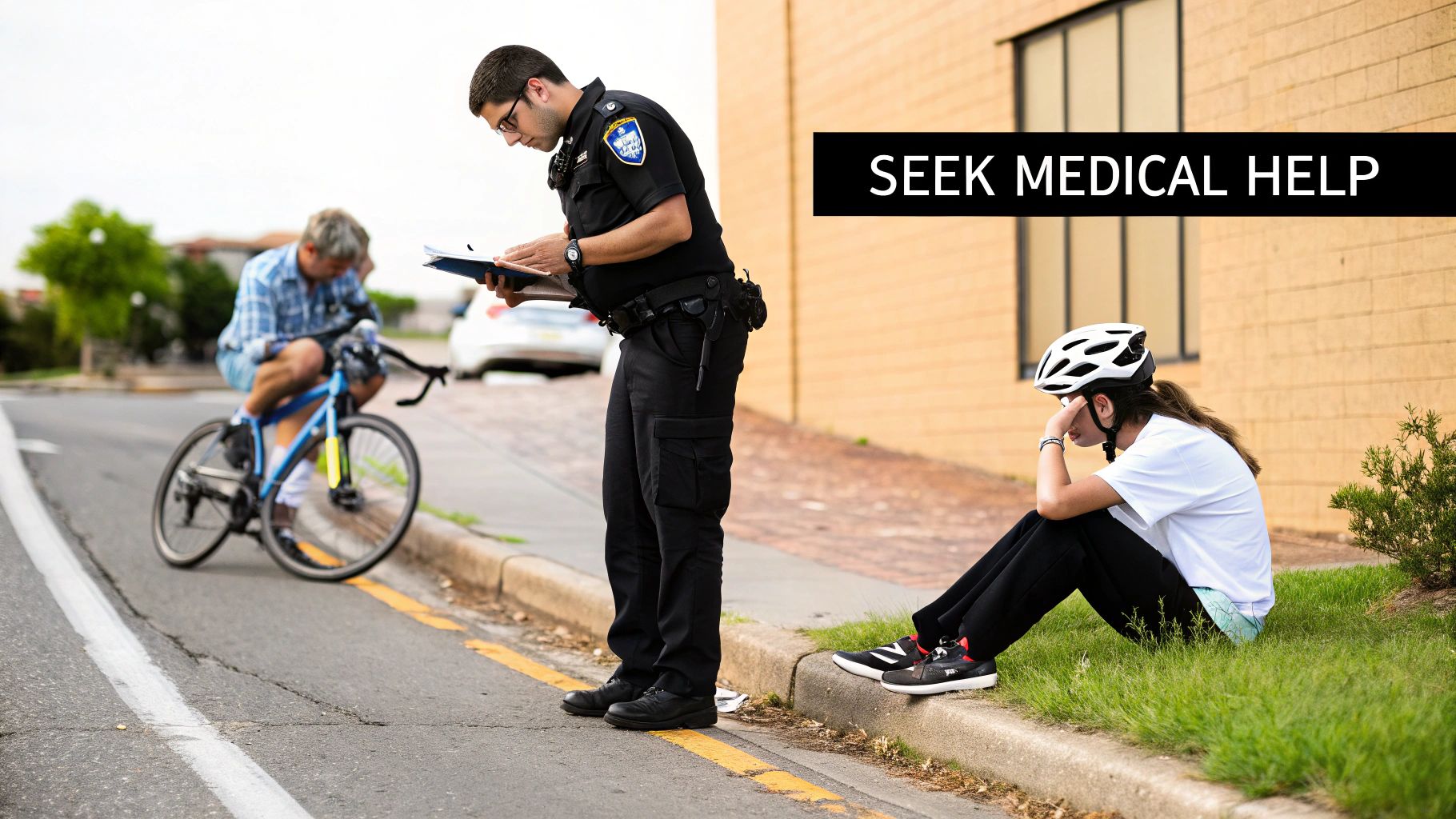
Here are the essential actions to take immediately after being hit:
- Seek Immediate Medical Attention: Your health comes first. Adrenaline is a powerful pain-masker and can hide serious injuries like internal bleeding or concussions. A medical evaluation creates an official record that directly links your injuries to the accident.
- Report the Accident to the Police: Always call 911. A police report provides an official, third-party account of the collision. It will contain the driver’s information, witness statements, and the officer’s initial observations—all vital pieces of evidence.
- Gather Information: If you are physically able, get the driver's name, phone number, driver's license number, and their insurance details. Don't forget to collect contact information from any witnesses who saw what happened.
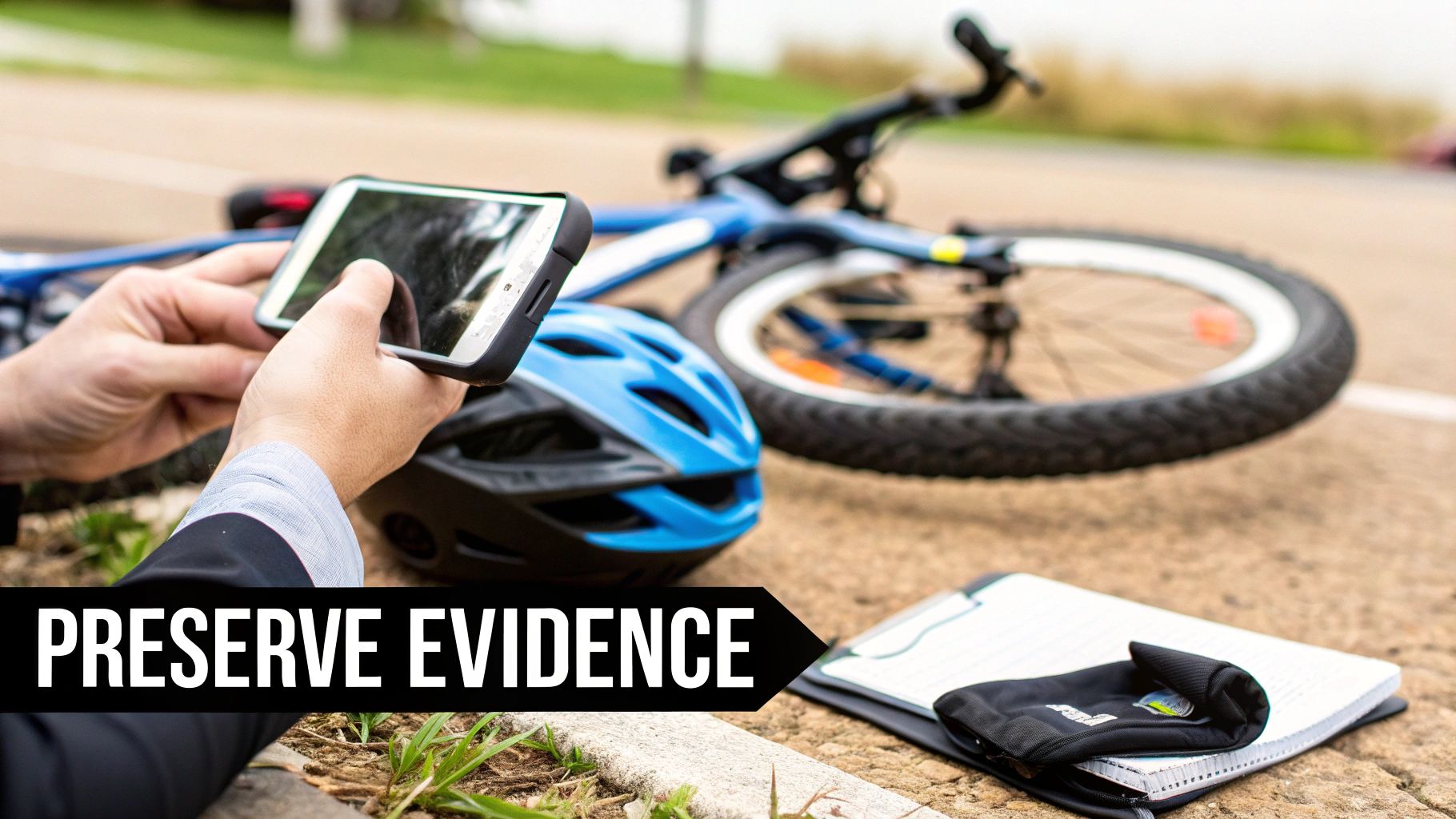
- Document Everything with Photos: Use your phone to take pictures of absolutely everything. This means your injuries, the damage to your bike, the position of the car, any skid marks on the road, traffic signals, and the general area.
Post-Accident Action Checklist
To make it simple, here’s a quick-reference checklist of what to do. Following these steps helps build a solid foundation for your case from the very beginning.
| Action Step | Why It Matters for Your Case |
|---|---|
| Get Medical Help | Creates an official record of your injuries and their cause. |
| Call the Police | An official police report provides objective evidence and details. |
| Gather Contact Info | Ensures you have the driver's and witnesses' details for follow-up. |
| Take Photos & Videos | Visual proof captures the scene, damages, and injuries before they change. |
| Preserve Evidence | Your damaged bike, helmet, and clothes are tangible proof of the crash. |
Completing these actions methodically will give your attorney the raw materials needed to build a compelling claim on your behalf.
Preserve Key Evidence
It’s just as important to protect the physical evidence after you leave the scene. Do not repair your bicycle or wash your clothes. The scuffs, tears, and dents on your bike, helmet, and clothing provide useful information about the force and angle of the impact. Store these items somewhere safe; they are tangible proof of the collision.
The documentation process is similar to what's required in other vehicle collisions. You can learn more about the general steps by reading up on how to file a car accident claim in Atlanta, as many of the same principles apply.
Why Official Documentation Matters
Official police reports and medical records form the backbone of your claim. They transform your case from a "he said, she said" dispute into one supported by documented, undeniable facts.
Without a police report or prompt medical records, an insurance company will almost certainly argue that the accident wasn't serious or that your injuries happened at a different time. Securing this documentation shuts down those arguments before they can even start.
By taking these initial steps, you create a powerful record that sets a strong foundation for your bicycle accident lawsuit and protects your right to fair compensation.
Determining Fault in a Georgia Bike Crash
Figuring out who is legally at fault is the foundation of every successful bike crash claim. When a car hits a cyclist, it’s not enough to simply say the driver caused it. Under Georgia law, we have to prove the driver was negligent.
Think of negligence as breaking a fundamental safety rule. Every driver on the road has a duty to operate their vehicle safely. When they fail to do that and someone gets hurt, that’s negligence in a nutshell.
To prove it legally, we have to establish four specific elements. Imagine building a stool with four legs—if even one is missing, the entire claim collapses.
The Four Elements of Negligence
- Duty: This is the easiest leg to establish. Every driver has a legal duty to operate their vehicle with reasonable care to avoid harming others, including cyclists. This is a given in Georgia.
- Breach: This is where the driver breaks a safety rule. A breach of duty occurs when a driver acts carelessly or fails to do something a reasonably prudent person would have done in the same situation.
- Causation: The third leg connects the driver’s mistake directly to your injuries. We must show their breach was the direct and primary cause of the crash and the harm you suffered.
- Damages: Finally, we have to prove you suffered actual harm. This includes concrete financial losses like medical bills and a destroyed bike, but also non-economic harm like pain and suffering.
Only by proving all four of these elements can we hold the at-fault driver legally and financially accountable.
The Georgia Governor's Office of Highway Safety offers resources for both cyclists and drivers, underscoring that safety is a shared responsibility.
While the responsibility is shared, we all know the potential for catastrophic harm is far greater from a two-ton vehicle than from a 20-pound bicycle.
Common Driver Actions That Cause Bike Crashes
A driver’s breach of duty can happen in countless ways. In our experience, some of the most common negligent acts leading to bike accidents include:
- Failure to Yield: This is a classic. A driver making a left turn directly into the path of an oncoming cyclist is a textbook—and often devastating—failure to yield the right-of-way.
- Distracted Driving: Texting, scrolling, or even just adjusting the GPS takes a driver’s focus off the road. For a cyclist, that split second of inattention can be life-altering.
- "Dooring" Accidents: A driver or passenger throws their door open into a bike lane without looking, creating an instant, unavoidable wall.
- Ignoring Bike Lanes: We see it all the time—drivers drifting into, blocking, or turning across a designated bike lane without checking for cyclists.
- Speeding or Aggressive Driving: Following a cyclist too closely or driving too fast for conditions drastically cuts down a driver's reaction time and multiplies the force of impact.
The numbers paint a grim picture. In 2023, passenger cars killed at least 323 cyclists, and SUVs killed another 288. The most common type of crash? Front-end impacts, which account for more than 80% of fatal incidents. You can dig deeper into these bicycle accident statistics to see the real-world risks cyclists face every day.
Looking Beyond the Driver
The driver is usually the obvious at-fault party, but a proper investigation often uncovers others who share the blame. It’s important to identify every person or entity whose negligence contributed to the crash.
A thorough investigation might reveal that a city government is also liable for failing to repair a massive pothole that forced you to swerve into the path of a car.
Other potentially liable parties can include:
- A Bicycle Manufacturer: If a defective component like faulty brakes or a cracked frame caused a loss of control, the manufacturer could be held liable under product liability laws.
- A Commercial Company: If the at-fault driver was on the clock for a delivery service or another company, their employer can often be held responsible.
- A Property Owner: If overgrown hedges on a corner lot blocked a driver’s view of an intersection, the owner of that property may share some of the fault.
Identifying every responsible party is a valuable step toward recovering the full compensation you deserve. This is why a comprehensive, professional investigation is the bedrock of a strong bicycle accident lawsuit.
Gathering Evidence to Build a Strong Case
A strong bike crash claim is built piece by piece with solid proof. Think of it like building a house in Atlanta: the police report is the foundation, but you need the walls, roof, and wiring—photos, witness statements, and medical records—to make it complete. Each piece of evidence makes your claim stronger and more resilient against insurance company tactics.
To successfully prove your case, we need to gather a wide range of evidence that tells a clear story of what happened and how it has impacted your life. This goes far beyond just the initial details collected at the scene.
The Essential Pieces of Your Evidence Puzzle
While every crash is different, some types of evidence are almost always fundamental to building a powerful case. It’s a good idea to start collecting and preserving these items from the very beginning.
- Official Police Report: This is your starting point. It provides a third-party narrative of the accident, often including the officer’s initial assessment of fault, a diagram of the scene, and contact information for everyone involved.
- Photographs and Videos: Visual evidence is incredibly persuasive. This includes pictures of your injuries right after the crash and during recovery, damage to your bike and the driver’s car, the accident scene, and any relevant road signs or traffic signals.
- Medical Records: This is one of the most vital elements. Comprehensive medical records—from the ER visit to physical therapy sessions and prescriptions—document the extent of your injuries and the cost of your treatment.
The Atlanta Police Department provides resources for obtaining official records. For instance, the screenshot below shows the online portal where individuals can start the process of filing or requesting a report.
Having an official report filed through the correct channels is a non-negotiable step in securing the documentation needed for your claim.
Uncovering Deeper Layers of Proof
A thorough investigation often reveals evidence that isn't immediately obvious. This is where a focused legal effort can make a significant difference in strengthening your claim.
We often dig deeper for:
- Witness Statements: Independent witnesses can provide unbiased accounts that confirm your version of events. When getting statements, it helps to efficiently transcribe interviews to ensure every detail is captured accurately.
- Video Surveillance: Many businesses, traffic cameras, and even doorbell cameras capture footage that can show exactly how the accident unfolded.
- Expert Testimony: In some cases, we bring in an accident reconstruction specialist to analyze the evidence and provide a scientific explanation of the crash dynamics, proving the other driver’s fault.
A personal injury journal is one of the most compelling pieces of evidence you can create yourself. Document your daily pain levels, physical limitations, emotional struggles, and how the injuries impact your ability to work, sleep, and enjoy life. This personal account brings the human cost of the accident to life.
Preserving Physical Evidence Is Key
Finally, it is absolutely essential to preserve the physical evidence from the crash. Do not throw away your damaged bicycle, helmet, or torn clothing. These items are tangible proof of the forces involved in the collision.
They can be examined by experts to demonstrate the severity of the impact and shut down any claims from the other side that the accident was minor.
By diligently gathering all these different forms of evidence, we can construct a comprehensive and convincing narrative. This detailed preparation is what positions your bicycle accident lawsuit for a successful outcome, giving you the proof needed to secure the compensation you deserve.
Calculating the True Value of Your Bike Accident Claim
When you're hit by a car while on your bike, your first thoughts are usually about the immediate, obvious costs. The ER bill. The mangled bike frame. But a proper settlement for a bicycle injury claim goes far beyond that. It has to cover every single loss you’ve suffered—not just the ones with neat price tags. To get the true value, we have to look at the complete picture of how this crash has impacted your finances, your body, and your life.
Think of it this way: we need to fill two different buckets to make you whole again. The first bucket holds all the tangible, out-of-pocket costs. The second, which is just as important, holds the very real but less tangible human cost of the accident. Legally, these are called damages.
Economic Damages: The Financial Ledger
Economic damages are the straightforward, calculable expenses that piled up because of the accident. These are the black-and-white numbers we can add up from bills, receipts, and pay stubs to show your direct financial hit.
The most common economic damages we pursue include:
- Medical Expenses (Past and Future): This covers everything from the ambulance ride and hospital stay to future needs like physical therapy, prescriptions, and even surgeries that might be years down the road.
- Lost Income and Earning Capacity: If you were out of work while recovering, we calculate those lost wages. If your injuries mean you can't go back to your old job or earn what you used to, we fight for compensation for that diminished future earning capacity.
- Property Damage: This is the cost to repair or replace your bicycle, helmet, Garmin, ripped clothing, and any other personal gear that was destroyed in the crash.
Non-Economic Damages: The Human Cost
This second bucket is deeply personal. Non-economic damages are meant to compensate you for the ways the accident has wrecked your quality of life. You can’t get a receipt for pain, but its impact is undeniable and deserves to be recognized.
Key non-economic damages include:
- Pain and Suffering: This is for the physical pain, chronic discomfort, and general suffering you’ve had to endure because of your injuries.
- Emotional Distress: A serious crash can leave deep mental scars. This covers things like anxiety, depression, a new fear of riding your bike, or even PTSD.
- Loss of Enjoyment of Life: Maybe you can no longer join your weekend group rides, play with your kids the way you used to, or engage in hobbies that once brought you joy. This damage addresses that specific loss.
The hard truth is that bike accidents are getting more common and more severe. In 2023, federal data showed 1,166 pedalcyclist deaths and an estimated 49,989 cyclists injured across the country. Over the last decade, cyclist fatalities have jumped by roughly 60%, with about 80% of these tragedies happening in urban areas like Atlanta. You can dig into these national statistics in the NHTSA's detailed report.
It is an insurance adjuster's job to downplay or even dismiss these non-economic damages. They'll gladly offer to cover your medical bills while ignoring the profound toll the crash has taken on your daily life. A proper valuation ensures your human suffering is never pushed aside.
Calculating a claim’s total value requires a meticulous analysis of both your economic and non-economic losses. By understanding every type of damage you can recover, you’re in a much stronger position to demand the full and fair compensation you need. Our firm is skilled at documenting all these damages to build powerful personal injury claims that reflect the true cost of an accident. It's this detailed, comprehensive approach that secures a settlement that truly addresses every part of your loss in a bicycle accident lawsuit.
Understanding the Georgia Legal Process for Your Claim
Filing a bike crash claim can feel like stepping into a whole new world with its own set of rules. The good news is that the process isn't as mysterious as it seems. It has a clear path, usually starting with an insurance claim and often ending with a fair settlement—many times without ever seeing the inside of a courtroom.
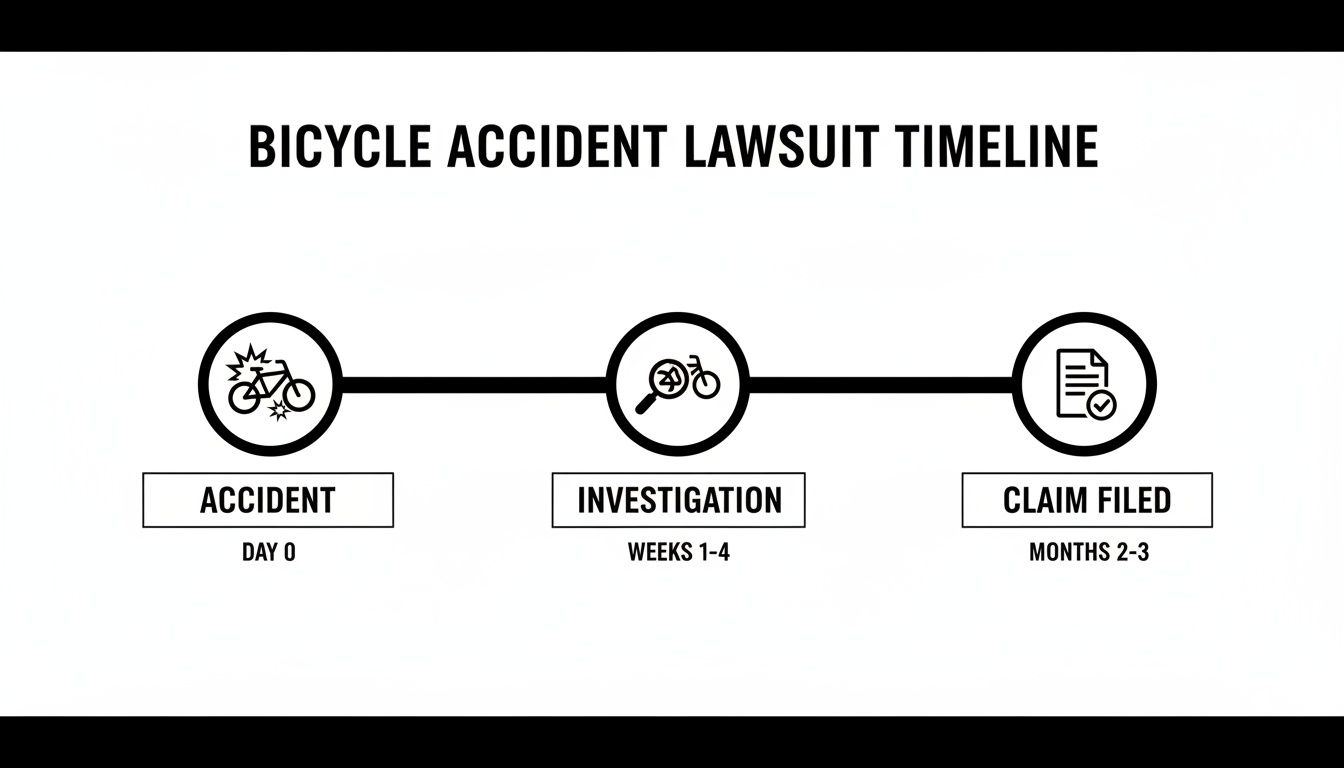
Knowing what's ahead can make a huge difference. Let's walk through the roadmap for a typical bicycle accident claim in Georgia.
The Georgia Statute of Limitations
One of the most important rules you need to know is the statute of limitations. Think of it as a non-negotiable deadline. In Georgia, you generally have just two years from the date of the crash to file a lawsuit for personal injuries.
If you miss that two-year window, the courthouse doors will be closed to you forever. You lose your right to seek compensation, period. This is why it's so important to connect with an attorney long before the clock runs out. You can read more about Georgia's statute of limitations for personal injury to understand the few exceptions that might apply.
Georgia’s Modified Comparative Fault Rule
Another major piece of the puzzle in Georgia is the concept of modified comparative fault. This rule comes into play when the other side tries to argue that you, the cyclist, were also partly to blame for the accident. It's a common tactic.
Here’s a breakdown of how it works:
- If you are found to be 49% or less at fault, you can still recover money for your damages. Your final compensation will simply be reduced by your percentage of fault. For example, a $100,000 award becomes $90,000 if you were 10% at fault.
- But if you are found to be 50% or more at fault, you get nothing. Zero. Georgia law completely bars you from recovering any compensation if you were equally or more responsible than the other party.
This 50% cutoff is a huge deal. Insurance adjusters are experts at using this rule to their advantage. Their goal is to shift as much blame as possible onto you to push your fault percentage over that line and wipe out their responsibility to pay.
The Stages of a Bicycle Accident Claim
To give you a clearer picture of what to expect, we can look at the typical lifecycle of a bicycle injury claim.
Here’s a simplified overview of how these cases usually move forward.
Georgia Bicycle Lawsuit Timeline Overview
| Stage | What Happens During This Stage | Typical Duration |
|---|---|---|
| Investigation & Claim Filing | We gather all evidence: police reports, medical bills, photos, and witness statements. A formal claim is filed with the at-fault driver's insurance company. | 1-4 Weeks |
| Treatment & Damages Assessment | You focus on your medical treatment and recovery. We wait until you reach Maximum Medical Improvement (MMI) to fully calculate your damages. | Months to a Year+ |
| Demand & Negotiation | We send a comprehensive demand package to the insurer. This kicks off a back-and-forth negotiation process to reach a fair settlement. | 1-3 Months |
| Filing a Lawsuit (If Needed) | If the insurer refuses to be reasonable, we file a formal lawsuit. This move often gets them to make a serious offer. | 2-4 Weeks to File |
| Discovery & Litigation | Both sides exchange information through legal processes like depositions. Settlement talks often continue during this phase. | 6 Months to a Year+ |
| Settlement or Trial | The vast majority of cases settle before trial. If not, we present your case to a judge and jury. | Days to Weeks |
Each stage has its purpose, and understanding the flow helps manage expectations for how long the process can take. Now, let's look at the first few steps in more detail.
- Initial Investigation and Filing the Insurance Claim: Right after the crash, our job is to lock down the evidence—the official police report, your medical records, witness accounts, and any photos from the scene. We then put the at-fault driver's insurance company on formal notice that you're making a claim for your injuries.
- Negotiation with the Insurance Company: Once we have a full picture of your damages, we send a detailed demand package to the insurer. This is the official start of negotiations. They’ll make a lowball offer, we’ll counter, and the back-and-forth continues until we either agree on a fair number or they prove they aren't going to be reasonable.
- Filing a Lawsuit: If the insurance company won't make a fair settlement offer, we take the next step: filing a lawsuit. This doesn't guarantee a trial. In fact, just filing the suit is often the push the insurer needs to come back to the table with a much better offer.
How a Bicycle Accident Attorney Strengthens Your Case
Trying to recover from your injuries while simultaneously managing the legal fallout of a bike crash is a heavy burden. This is where partnering with a skilled attorney for your bicycle accident lawsuit becomes a game-changer. Instead of you battling insurance adjusters, we take on the heavy lifting so you can focus entirely on your health.

Think of your lawyer as your dedicated advocate and lead investigator. We immediately launch a deep-dive investigation into the crash, gathering evidence you might not have access to, like nearby surveillance footage or a commercial driver's internal records.
This investigation often requires bringing in specialists. We might hire accident reconstructionists to create a scientific model of how the crash occurred or consult medical experts to fully document the long-term consequences of your injuries.
Fighting the Insurance Companies
Insurance companies are not on your side. Their primary goal is to protect their bottom line, which means paying out as little as possible. They employ teams of adjusters and lawyers trained to find reasons to minimize or outright deny valid claims. An experienced attorney levels that playing field.
An insurer's first settlement offer is almost never their best. It's a tactic to test your resolve, hoping you'll accept a lowball amount out of frustration or financial strain. Having a lawyer sends a clear message: you won't be bullied.
We handle all communications and negotiations, shielding you from the insurance company's pressure tactics. Our job is to build a case so robust that insurers are compelled to negotiate in good faith. If they refuse to offer a fair settlement, we are always prepared to take your case to trial.
A major advantage for our clients is that we work on a contingency fee basis. This means you pay absolutely nothing upfront. Our fee is simply a percentage of the compensation we successfully recover for you. This structure makes professional legal help accessible when you need it most. An experienced Atlanta bicycle accident lawyer can manage every detail of your case, from the initial filing to the final resolution.
Hiring an attorney ensures every legal strategy is deployed to build the strongest possible claim, maximizing your chances of securing the compensation you deserve in your bicycle accident lawsuit.
Common Questions About Bicycle Accident Lawsuits
When you're recovering from a bicycle crash, legal questions are bound to surface. For most people, pursuing a bicycle accident lawsuit is uncharted territory. Here are clear, direct answers to the questions we frequently hear from injured cyclists in Atlanta.
What if the Driver Who Hit Me Has No Insurance?
This is a valid and serious concern, but it does not mean you are without options. If the at-fault driver is uninsured or underinsured, our first step is often to review your own auto insurance policy for Uninsured/Underinsured Motorist (UM/UIM) coverage.
This is an essential protection that can provide compensation when the liable party cannot. We are skilled at navigating UM/UIM claims to ensure you receive the benefits you are entitled to. Our investigation will also identify any other parties who may share liability for the collision.
Can I Still File a Lawsuit if I Was Not Wearing a Helmet?
Yes. In Georgia, state law does not require adult cyclists to wear a helmet. The Georgia Department of Driver Services provides further details on state cycling regulations.
The at-fault driver's insurance company will almost certainly argue that your lack of a helmet contributed to the severity of your injuries. This is a standard defense tactic designed to reduce their liability. It does not, however, prevent you from pursuing a case. We have extensive experience countering these arguments and keeping the focus on the driver’s negligence as the root cause of the accident itself.
How Long Does a Bicycle Accident Lawsuit Take to Settle?
The timeline for resolving a bike crash claim is highly variable and depends on several key factors:
- Severity of Injuries: Catastrophic injuries require extensive medical treatment. We must have a clear understanding of your long-term prognosis before we can accurately calculate the full value of your claim.
- Clarity of Fault: When evidence of the driver's liability is indisputable, the process may move more quickly. Contested liability will extend the timeline.
- Insurer's Conduct: Some insurance carriers negotiate in good faith, while others employ delay tactics that necessitate more aggressive legal action.
A straightforward case might settle in a few months, while a more involved claim could take a year or longer to resolve. Our objective is to secure your compensation efficiently, but our primary duty is to ensure the final amount is full and fair.
If you've been injured in a bicycle accident, you are not alone in this process. The team at Jamie Ballard Law is prepared to provide the legal guidance and support you require. For a free, no-obligation case evaluation to discuss your rights and legal options, please visit us at https://jamieballardlaw.com.