When you're recovering from an injury, figuring out your next move can feel overwhelming. After an accident, the first steps you take are essential for a successful personal injury claim. Knowing how to choose a personal injury lawyer is one of the most important decisions you'll make. Getting this right starts with two key actions: prioritizing your health and documenting everything. Taking care of these protects both your well-being and your future case.
Your First Moves After an Accident
The moments after an accident are chaotic. It's completely normal to feel disoriented, but a few clear actions can make all the difference.
Your first priority is always your health and safety. Always.
Even if you think your injuries are minor, get a medical evaluation right away. Serious conditions like internal bleeding or concussions often don't have immediate symptoms. A doctor’s visit creates an official medical record that directly links your injuries to the incident—an invaluable piece of evidence. The U.S. Department of Health & Human Services has resources on your patient rights that are worth reviewing.
Document Everything at the Scene
If you are physically able, your next most important task is gathering information. This isn't just busy work; it's the raw material your attorney will use to build a powerful case. Think of yourself as an investigator creating a perfect snapshot of what happened.
Here's a quick checklist of what to grab if you can:
- Photos and Videos: Use your phone. Get pictures of everything—damage to all vehicles, your injuries, skid marks, traffic signals, and the entire scene from different angles. You can't have too many.
- Contact Information: Get names, phone numbers, and insurance details from every driver involved. It's also very important to ask any witnesses for their names and numbers. They might not wait for the police, so getting their info fast is key.
- Official Report: Always call the police. An official accident report is a neutral, third-party account of the incident that carries a lot of weight.
The evidence you collect in the first hour after an accident is often more powerful than anything found weeks later. Memories fade, cars get towed, and evidence disappears. Capture it immediately.
Once you’ve received medical care and documented the scene, secure your evidence. And whatever you do, avoid the common mistake of speaking with the other party’s insurance adjuster before you've consulted an attorney. Their job is to minimize their company's payout, not to help you.
The information you've gathered is the launchpad for a strong claim. It sets you up for success when you finally start the process of finding the right personal injury lawyer.
Finding a Lawyer with the Right Experience
Knowing how to choose a personal injury lawyer comes down to one key factor: have they handled cases just like yours, over and over again?
Not all legal experience is the same. An attorney who spends most of their time on real estate closings isn't the right fit for a truck accident claim. A general practice lawyer simply won't have the focused insight needed for your specific injury.
You're looking for a specialist—someone whose daily work involves fighting the same insurance companies and handling the same legal issues you're facing right now.
Questions That Reveal True Experience
When you sit down with a potential lawyer, your job is to figure out the depth and relevance of their background. Don't hesitate to ask direct questions. This is your future on the line.
- What percentage of your practice is dedicated to personal injury cases? You want an attorney who lives and breathes this area of law, not someone who just takes a case here and there.
- Can you share outcomes from cases similar to mine? While every case has its own facts, a seasoned lawyer can discuss their approach to similar situations, like a rear-end collision on I-285 or a slip and fall at a local business.
- Who will be my main point of contact? It is important to know if you'll be working with the senior attorney you're meeting or if your case will be passed off to a junior associate or paralegal.
This isn't about being difficult. It's about making a smart, informed decision.
Why Trial-Readiness Matters
The reality is that most personal injury cases settle before they ever see a courtroom. So why does trial experience matter so much? Because an attorney's reputation for being ready and willing to go to trial is a massive negotiating tool.
Insurance companies keep score. They know which lawyers will take a low offer to avoid the courtroom and which ones aren't afraid to fight it out in front of a jury.
A lawyer who prepares every case as if it’s going to trial sends a clear message to the insurance company: we are serious, and we will not accept a lowball offer. This readiness often leads to better settlement offers without ever needing to step inside a courthouse.
When cases do go to trial, plaintiffs have about a 50% success rate, which highlights just how important it is to have a trial-tested advocate on your side. Today's legal world also requires firms to be responsive and transparent. You can learn more about these industry trends from the experts at Clio's legal blog.
Ultimately, a specialist brings a clear advantage. An attorney with deep experience in truck accidents knows the specific federal regulations for commercial vehicles—a key detail a generalist might overlook. This specialized knowledge is a core part of learning how to choose a personal injury lawyer who can deliver the best possible outcome for you.
Making Sense of Legal Fees and Firm Resources
Concerns about cost should never be a barrier to seeking justice. One of the first questions people ask when figuring out how to choose a personal injury lawyer is, "How can I possibly afford this?"
The good news is that most personal injury firms, including ours in Atlanta, operate on a contingency fee agreement.
This structure is designed to help you. In simple terms, it means you pay no attorney's fees unless and until we win or settle your case. The fee is a pre-agreed percentage of the financial recovery. This system gives everyone access to quality legal representation, regardless of their financial situation.
Understanding the Contingency Fee Breakdown
The percentage can vary, but it's typically between 33% and 40% of the settlement. It's also important to discuss case expenses. These are the upfront costs required to build a strong case, such as:
- Expert Witness Fees: Hiring medical experts or accident reconstruction specialists.
- Court Filing Fees: The administrative costs of filing a lawsuit.
- Investigator Costs: Fees for professionals who gather evidence and interview witnesses.
Always ask for a clear, written explanation of how these expenses are handled. A transparent fee agreement ensures there are no surprises down the road. You should feel completely comfortable with the financial arrangement before signing anything.
The percentage a firm charges often depends on how far your case has to go before it's resolved. A case that settles before a lawsuit is filed requires less work than one that goes all the way to a jury trial.
Typical Contingency Fee Percentages
| Case Resolution Stage | Common Fee Range | What This Generally Means |
|---|---|---|
| Pre-Litigation (Settled before lawsuit) | 33.3% | The case is resolved through negotiations with the insurance company without filing a formal lawsuit. |
| Litigation (Settled after lawsuit is filed) | 40% | A lawsuit has been filed, and the case settles before going to trial. This involves more work like discovery and depositions. |
| Trial (Resolved by jury verdict) | 40% – 45% | The case proceeds all the way through a trial, which is the most resource-intensive phase. |
The key takeaway is to have this conversation upfront. A good lawyer will walk you through their fee agreement line by line so you understand exactly what to expect.
Does the Firm Have the Resources to Win?
Just as important as the fee structure is the firm's financial stability and resources. Building a strong personal injury claim often requires a significant upfront investment from the law firm. Insurance companies have deep pockets and often try to win by outspending and outlasting an injured person.
A well-resourced law firm can level the playing field. They can afford to hire the best experts and see a case through to trial without feeling pressured to accept an early, lowball settlement offer just to cover their costs.
This chart illustrates how firm resources and experience can influence key case metrics.
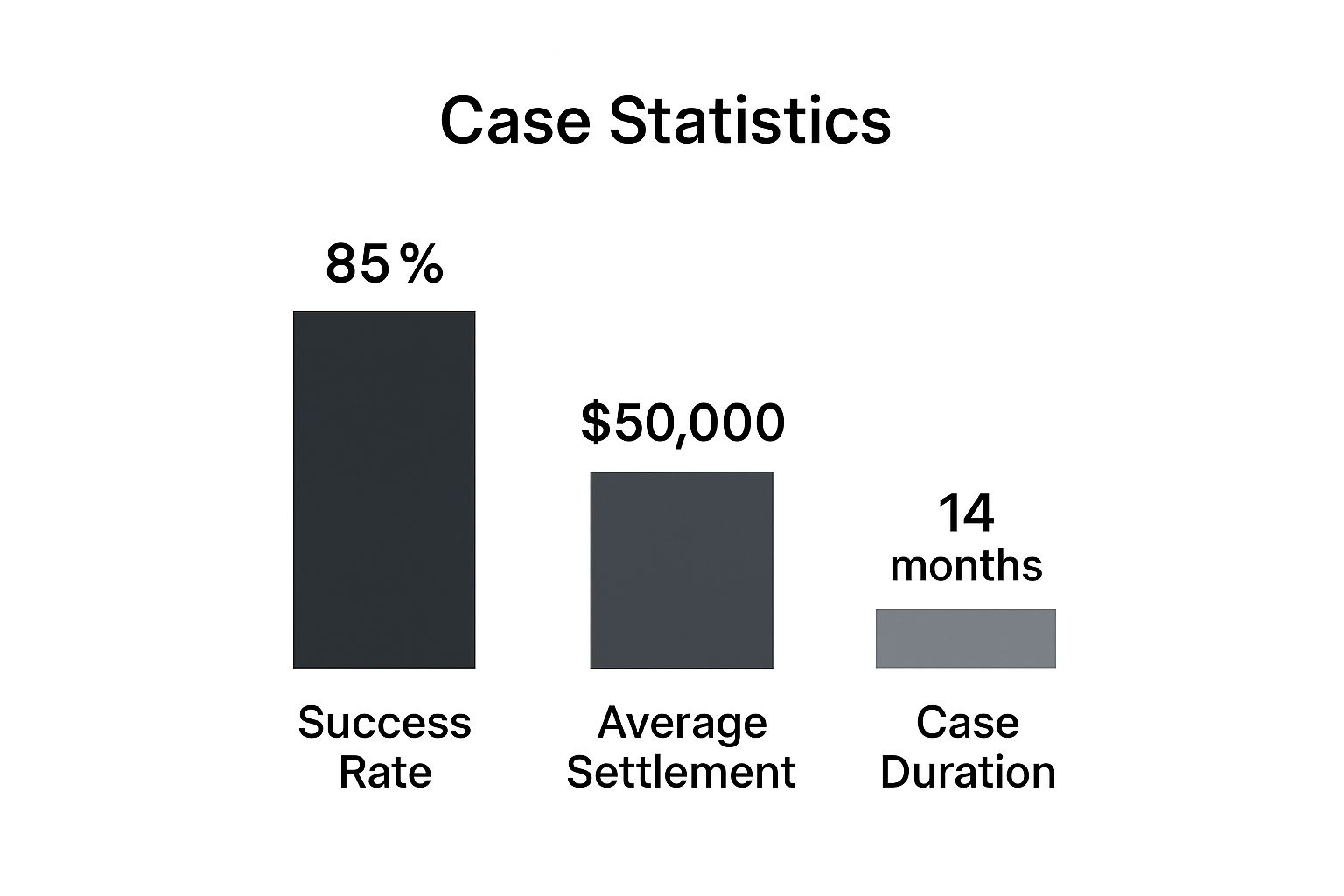
The data suggests that a well-supported case often yields a higher success rate and a more substantial settlement, even if it takes a bit longer to resolve. Don't be shy about asking a potential firm if they have the financial footing to take your case the distance if needed.
You can learn more about the different types of personal injury claims and what they entail on our website. This knowledge is a key part of learning how to choose a personal injury lawyer who can truly support you.
Checking an Attorney's Reputation and Reviews

Once you've vetted a lawyer's experience and fee structure, it's time to dig into their reputation. What past clients and peers say about an attorney offers a candid look into what you can expect when working with them.
An attorney’s professional standing is a good starting point. You can check with the State Bar of Georgia to confirm they are in good standing and have no public disciplinary actions. This is a baseline check that should be done.
Looking Beyond Star Ratings
Client reviews on platforms like Google or Avvo are a great resource, but you have to read between the lines. A simple five-star rating doesn't paint the full picture.
Look for consistent themes in the comments. Are clients repeatedly highlighting the same positive traits?
- Communication: Do reviews mention the lawyer was responsive and provided clear, regular updates?
- Respect and Empathy: Did clients feel heard, understood, and treated with compassion during a difficult time?
- Satisfaction with the Outcome: Even without specifics, do clients express satisfaction with the final result of their case?
A couple of negative reviews aren’t necessarily a dealbreaker, but a clear pattern of poor communication or unmet expectations should be a major red flag. It’s also wise to consider their broader understanding of legal matters by reviewing insights into the roles of attorneys in settlements and high-level legal actions.
A powerful testimonial often focuses less on the settlement amount and more on how the client felt throughout the process—supported, informed, and respected. That's the gold standard you should be looking for.
The Rise of Legal Representation
The role of lawyers in personal injury claims has grown significantly, making your choice more important than ever. Data from 2013 showed that roughly 20% of road traffic accident claims involved an attorney, nearly double the proportion from 2000.
This trend highlights a growing public awareness of legal rights and the claims process, reinforcing the value of professional guidance. It means you need an advocate with not just sharp legal skills, but a proven reputation for outstanding client care.
You can see how we apply these principles for our clients by visiting our Atlanta personal injury lawyer page. Ultimately, this research is a vital part of finding the right lawyer because it helps you build a complete, trustworthy picture of the firm that will be fighting for you.
Getting the Most from Your Initial Consultation

Think of your first meeting with a potential lawyer as a two-way interview. Yes, they're evaluating your claim. But more importantly, you are interviewing them for one of the most important roles in your life right now. This is your chance to see if the research you've done online translates to a good fit in the real world.
To make this meeting count, you need to come prepared. Your goal is to paint a clear picture of what happened so they can give you a meaningful, honest assessment of your case.
What to Bring to Your First Meeting
Walking in organized sends a powerful message: you're serious. It also helps the attorney get straight to the heart of your case. Gather as many of these documents as you can find:
- The Official Report: Bring the police report or any other incident report that was filed.
- Medical Records: This includes everything from ER discharge papers and doctor's notes to the medical bills that have started rolling in.
- Photos and Videos: Any pictures you snapped of the accident scene, vehicle damage, or your injuries are valuable.
- Insurance Information: Have your own policy information handy, along with any letters or emails you've received from the other party's insurance company.
Don't panic if you can't find everything. Just bring what you have. This initial collection of evidence gives a good lawyer a solid foundation to start building your case.
Key Questions to Ask the Attorney
Now, it's your turn to take control. The answers you get to these questions will tell you everything you need to know about how the firm operates and how they value their clients.
- Who will be my day-to-day contact? Are you going to be speaking with the senior partner you're meeting now, or will your case be handed off to a junior associate or paralegal? Knowing who will actually answer your calls is essential.
- How will you keep me updated on my case? Ask about their preferred method and frequency of communication. Do they send emails, make phone calls, or use a client portal? This sets expectations from day one.
- Based on what you've seen, what are your initial thoughts? An experienced lawyer will never make guarantees, but they should be able to offer a frank, preliminary assessment of your case's strengths and potential roadblocks.
Pay close attention to the vibe in the room. Do you feel heard, or are you being rushed out the door? Do they explain legal concepts in plain English? Trust your gut—it's often the best indicator.
With an estimated 164,559 personal injury lawyers practicing in the U.S. in 2023, you have options. This meeting is how you separate the contenders from the pretenders. As industry resources like CasePeer's blog often point out, a firm's process and client communication are just as important as their track record.
After the consultation, take a moment to reflect. If you walked away feeling confident, understood, and ready to take the next step, you may have found your advocate. If you're ready, you can reach out to schedule the next steps. This meeting is the final piece of the puzzle in figuring out how to choose a personal injury lawyer who is right for you.
Common Questions About Hiring an Injury Lawyer
After an accident, it's natural to have a lot of questions. When you're trying to figure out how to choose a personal injury lawyer, you need clear, direct answers. Here are some of the most common questions we hear from clients.
How Soon Should I Contact a Lawyer After an Injury?
The short answer: right away, as soon as you've addressed your immediate medical needs.
Every state puts a strict time limit on your right to file a personal injury lawsuit. This is called the statute of limitations. Here in Georgia, for example, you generally only have two years from the date of the injury to file a claim, as outlined in the Official Code of Georgia Annotated (O.C.G.A.) § 9-3-33.
Getting an attorney involved early is about more than just meeting a deadline. It allows them to start preserving evidence before it disappears. Witnesses' memories fade, and physical evidence can be lost. An early start gives your legal team the best shot at building the strongest possible case from the ground up.
What Should I Bring to My First Meeting?
The more information you can provide during your initial consultation, the more productive that meeting will be. Your goal is to give the attorney a clear, complete picture of what happened.
Try to gather as many of these documents as you can:
- The official police or incident report.
- Photos or videos of the accident scene, vehicle damage, and your injuries.
- All medical-related paperwork, including discharge summaries and medical bills.
- Contact information for anyone who saw the accident (witnesses).
- Any letters or emails you've already received from insurance companies.
Don't stress if your file is incomplete. Just bring whatever you have on hand. The most important step is simply getting the conversation started.
Can I Change Lawyers if I'm Not Satisfied?
Yes, you absolutely have the right to change legal counsel at any stage of your case. Your relationship with your attorney is based on trust, and you must feel confident that they are the right advocate for you.
One thing to be aware of is that your previous lawyer will likely place a "lien" on your case. This is a standard procedure that simply entitles them to be paid for the work they've already performed, which would come out of the final settlement.
Before making a move, it's often a good idea to voice your concerns to your current attorney. If that doesn't resolve the issue, your new lawyer will handle all the logistics of the transition for you. You can find more guides and information in our online legal resources.
Ultimately, a good attorney ensures you feel informed and supported. Asking these key questions is a very important part of learning how to choose a personal injury lawyer who is the right fit for you.
At Jamie Ballard Law, we believe in providing clear answers and compassionate guidance from day one. If you have more questions or need to discuss your case, we are here to help. For a free, no-obligation consultation, visit us at https://jamieballardlaw.com.