If you're asking, "how long does a civil lawsuit take?", you're not the first. As Atlanta personal injury attorneys, it's one of the most common questions we hear from folks right out of the gate.
While every case has its own unique path, the short answer is that most civil lawsuits wrap up in one to two years. Some can conclude in just a few months, while others stretch on much longer. Understanding this timeline is a big part of feeling prepared for the journey ahead, so let's walk through what you can expect and why the duration of a civil lawsuit can vary so much.
Understanding the Civil Lawsuit Timeline
The journey from filing a claim to getting a resolution isn't a straight line. It unfolds in several distinct phases. Think of it as a roadmap that helps set realistic expectations for the legal process ahead. For a much deeper dive, you can explore a detailed look at the lawsuit process to get a better handle on each step.
This visual timeline gives you a great overview of how different forks in the road—like settling early versus going all the way to trial—can dramatically change the overall duration.
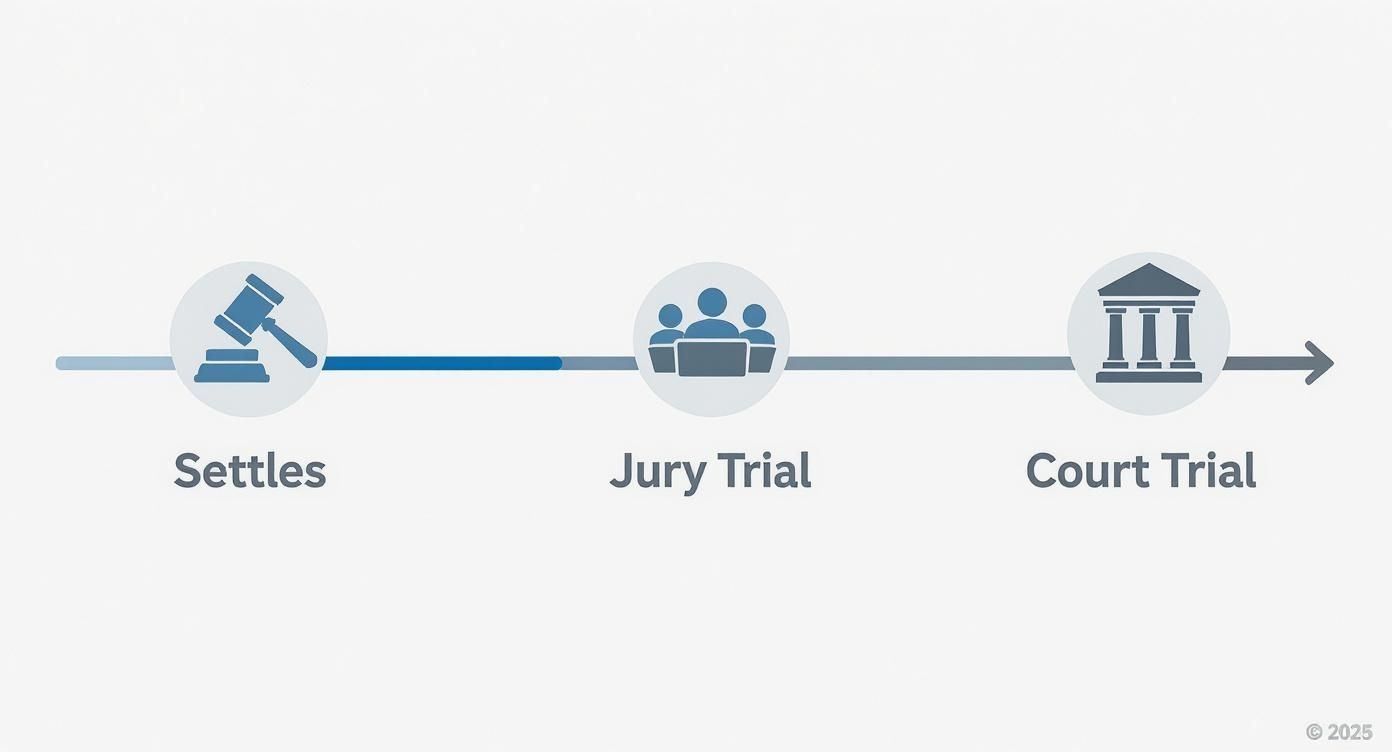
Average Civil Lawsuit Timelines by Resolution Type
Federal court data paints a clear picture of how the final outcome impacts the timeline. As you can see below, cases that avoid a full trial are resolved much more quickly. This is precisely why the vast majority of personal injury claims settle before ever seeing the inside of a courtroom.
| Resolution Type | Average Duration (Days) | Approximate Timeline |
|---|---|---|
| Settled Before Trial | 365 – 545 | 12 – 18 Months |
| Resolved by Jury Verdict | 771 | ~25 Months |
| Resolved by Court Trial (Judge Only) | 831 | ~27 Months |
These numbers underscore a key strategic point in litigation. A case that goes all the way to a jury verdict can average 771 days from start to finish. If it's a bench trial decided by a judge, that average climbs even higher to 831 days—well over two years. This reality is a major factor in deciding whether to accept a settlement offer or push forward to trial.
The First Steps: Filing the Complaint and Serving the Defendant
Every single lawsuit gets its official start when a legal document, known as a complaint, is filed with the proper court. For cases here in Atlanta, that often means heading to a place like the Fulton County Superior Court. Think of the complaint as the opening chapter of your legal story—it clearly outlines your version of events and what you're asking the court to do about it.
Once the complaint is filed and stamped by the clerk, the next step is "serving" the person or company you're suing. This isn't just a friendly heads-up. It's the formal, legally required process of delivering the lawsuit documents to them so they can't later claim they were never notified.
In Georgia, the defendant then has a specific deadline, typically 30 days, to file their "answer." This is their official response to the allegations laid out in your complaint.
All told, this initial phase of filing, serving, and waiting for an answer usually takes about one to three months. However, this timeline isn't set in stone. Delays can pop up, especially if the defendant is difficult to locate for service or if their attorney requests and is granted an extension from the court to file their answer. These early hurdles can directly impact how long a civil lawsuit takes from start to finish.
The Discovery Phase: Gathering the Evidence
After the initial complaint and answer are filed, the lawsuit enters what is almost always the longest and most labor-intensive stage: discovery. This is the formal, court-supervised process where both sides investigate the facts of the case by demanding evidence from one another.
Think of it as a mandatory show-and-tell. The goal is to eliminate any "gotcha" moments at trial by ensuring everyone sees the same hand of cards. This phase reveals the strengths and weaknesses of each party's arguments and can take anywhere from six months to over a year, making it a huge factor in answering "how long does a civil lawsuit take."
This evidence exchange happens through a few powerful legal tools:
- Interrogatories: These are written questions one side sends to the other. The recipient must provide written answers under oath. It’s a foundational step to lock in the other party's version of events.
- Requests for Production: This is a formal demand for documents, records, and other physical evidence. It can include anything from emails and text messages to medical records, contracts, or photographs relevant to the case.
- Depositions: This is out-of-court testimony where lawyers question witnesses, including the opposing party, under oath. Everything said is recorded by a court reporter. The specific regulations for depositions are outlined in the Federal Rules of Civil Procedure.
Motions And Negotiations Seeking Resolution Before Trial
Once the discovery phase closes, the focus of the case completely changes. We're no longer just gathering evidence; we're actively trying to end the lawsuit before it ever gets in front of a jury. This is where lawyers start filing motions—formal legal requests asking the judge to make a specific ruling.
One of the most common and powerful tools here is a 'Motion for Summary Judgment.' This is where one side tells the judge, "The facts we've uncovered are so clear and undisputed that there's nothing for a jury to even decide. The law is on our side, so please rule in our favor now."
Finding A Resolution Without A Courtroom
This is also the point where settlement talks get really serious. In Atlanta, many cases are steered toward mediation. This is a confidential meeting where a neutral third-party mediator helps both sides find a middle ground and hopefully, a resolution.
Often, the first step in these talks is sending a formal demand, which might be drafted using a personal injury demand letter template.
A huge percentage of lawsuits are resolved during this phase. It offers a path to finality without the significant expense and unpredictability of a trial, which is why it's a key part of most successful personal injury claims. This period can add a few months to the timeline.
Trial and Appeals: The Final Stages of a Lawsuit
If settlement talks break down, your case is officially headed to trial. But don't expect to be in court next week. Simply getting a trial date on a packed court calendar can take several months right off the bat, adding a significant waiting period.
The trial itself is the part everyone pictures from movies—witnesses, evidence, and arguments in front of a judge or jury. The length varies wildly depending on how involved the case is. It could be over in a single day or stretch on for several weeks if there's a mountain of evidence and a long list of witnesses to get through.
But even a verdict doesn't always mean it's over. The losing party almost always has the right to appeal the decision to a higher court, like the Court of Appeals of Georgia.
The appeals process alone can easily tack on another one to two years to your case's total timeline. This is a huge reason why so many cases settle—the prospect of a long, drawn-out fight through the courts is a major factor in determining how long does a civil lawsuit take.
Key Factors That Influence Your Lawsuit's Timeline
If you're asking how long your civil lawsuit will take, the honest answer is: it depends. Several variables, many of which are completely out of your control, can stretch or shrink the timeline. Knowing what they are from the outset helps set realistic expectations.
- The Court's Schedule: Think of the court system like a backed-up highway. A busy courthouse means you're going to be waiting in line longer for everything from initial hearings to a final trial date. There’s simply no way to speed up a congested court docket.
- The Opposing Side: The other driver in this scenario is the opposing party. A reasonable defendant who wants to resolve the matter can keep things moving smoothly. But if you’re up against a difficult opponent who uses delay tactics at every turn, the process can drag on. Strong case organization through effective legal project management strategies is one way your legal team can combat these slowdowns.
- Case Details: The specifics of the case itself are another major factor. A straightforward dispute with only a few witnesses and documents will naturally move faster than a case involving dozens of depositions and expert testimonies. For example, a car accident case with clear fault may resolve quicker than a medical malpractice case requiring multiple expert opinions.
- Deadlines: Finally, and perhaps most importantly, are the hard deadlines. Missing a deadline like the Georgia statute of limitations for personal injury can end your case before it even gets started, no matter how strong your claim is.
All these elements work together to create a timeline unique to your specific case.
Common Questions About Civil Lawsuit Timelines
We know the legal process can feel like a black box. Let's tackle some of the most common questions our clients ask about how long a civil lawsuit takes.
Can I Do Anything to Speed Up My Lawsuit?
While you can’t control the court’s calendar, your cooperation is the single biggest factor you can control.
Being organized and highly responsive to your attorney makes a massive difference. When you provide documents quickly and make yourself available for key meetings, you empower your legal team to keep the case moving forward without delay.
Ultimately, a willingness to honestly consider a fair settlement offer is the most direct path to a faster resolution.
Does Settling a Case Always Mean It Ends Faster?
Yes, almost without exception. The overwhelming majority of civil cases in Georgia are resolved through a settlement, not a trial verdict.
Going to trial adds significant time for scheduling, the proceedings themselves, and the ever-present risk of appeals. Settling the case is the quickest way to get a final, predictable outcome.
If you want to get more familiar with the terms used during this process, you can review key definitions in our legal dictionary.
What is the discovery process in a civil lawsuit?
The discovery process is the formal phase where both sides exchange information and evidence. Governed by rules like those found on the U.S. Courts website, this stage includes written questions (interrogatories), requests for documents, and in-person testimony (depositions). It's designed to make sure both sides have access to the same facts before trial.