When you're hurt in an accident, one of the first things we need to figure out is the difference between recklessness vs negligence. It's a key distinction that really comes down to the at-fault party's state of mind. Negligence is essentially a mistake—a failure to act with reasonable care, like a driver who glances away from the road for a second to change the radio station. Recklessness, on the other hand, is a conscious choice to ignore a major, obvious risk, such as someone deciding to drive 90 mph in a school zone.
Defining Recklessness and Negligence in Georgia
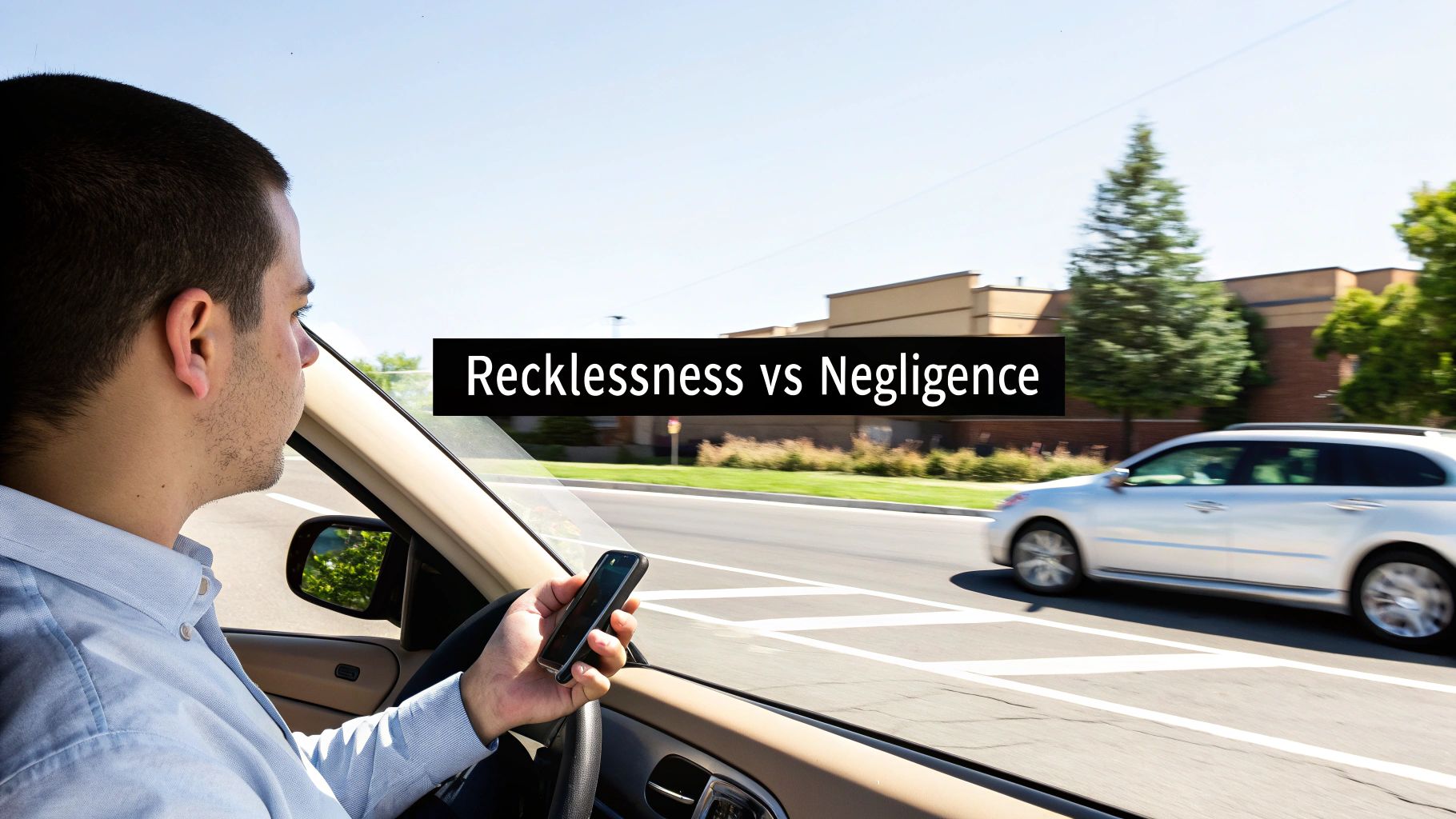
Under Georgia law, there's a sharp line between an unintentional error and a willful decision that puts others in danger. Both can cause devastating injuries, but how we classify the defendant's actions will have a major impact on your personal injury claim.
What is Negligence?
Negligence is the foundation of most personal injury cases. It’s all built around what a "reasonable person" would do. The core question is simple: Did the person who caused your injuries act as a reasonably careful individual would have under the same circumstances? If the answer is no, they were likely negligent.
You can find straightforward definitions of this and other common legal terms in our firm's legal dictionary.
What is Recklessness?
Recklessness, which is sometimes called "gross negligence," is a much higher standard to meet. Proving it means we have to show the at-fault party was fully aware of a clear and substantial danger but chose to ignore it anyway. Their behavior showed a plain indifference to the safety of everyone around them.
This isn't just about making a mistake; it's about making a conscious choice to act dangerously, knowing full well what could happen. That mental state is the entire difference between these two legal standards.
To make this distinction very clear, here’s a high-level comparison of the key elements.
Key Differences Between Negligence and Recklessness
| Element | Negligence | Recklessness |
|---|---|---|
| State of Mind | Inattention or carelessness; an unintentional mistake. | Conscious and willful disregard of a known risk. |
| Level of Fault | Failure to meet the standard of ordinary care. | Extreme departure from the standard of care. |
| Example | A driver failing to see a stop sign while distracted. | A driver knowingly racing on a busy city street. |
This isn't just legal talk. It directly shapes how a case is built, what evidence is needed, and the type of compensation you might be able to recover. Grasping the fundamentals of recklessness vs negligence is the first step toward building a strong claim.
How Each Legal Standard Is Proven
Understanding the difference between recklessness vs negligence is one thing, but proving it in court is where the real work begins. The evidence we gather and the legal strategy we build are entirely different for each standard.
For a negligence claim, the path is more structured. We focus on establishing four specific elements to show that the at-fault party’s actions fell below a reasonable standard of care, which led directly to your injuries.
Proving a Negligence Claim
To win a negligence case, we must demonstrate that it is more likely than not that these four points are true:
- Duty of Care: The defendant had a legal obligation to act with a certain level of caution to avoid harming others. All drivers, for instance, have a duty to follow traffic laws and pay attention.
- Breach of Duty: The defendant failed to meet that obligation. This could be anything from running a red light to a store owner failing to clean up a dangerous spill.
- Causation: This specific failure to act responsibly was the direct cause of your injuries. We have to draw a clear line connecting their mistake to the harm you suffered.
- Damages: You sustained actual, provable losses, such as medical bills, lost income, and pain and suffering.
Establishing Recklessness
Proving recklessness is a much heavier lift. It’s not enough to show someone was careless; we have to go a step further and get inside their head to establish their state of mind. We must present compelling evidence that the defendant knew about a substantial, unjustifiable risk but consciously chose to ignore it anyway.
This involves demonstrating a willful disregard for the safety of others. The focus shifts from the action itself to the defendant's awareness and indifference to the potential for severe harm.
Evidence might include eyewitness testimony about the defendant's erratic behavior, proof they ignored prior warnings, or a documented history of similar dangerous conduct. Think of a commercial truck driver who knowingly falsifies their logbooks to drive past legal limits—that’s a conscious decision to ignore safety rules. To effectively prove either standard, a thorough grasp of case precedents is very helpful, which can be aided by an AI-powered legal case researcher.
This distinction is also reflected in court awards. Punitive damages are awarded in about 28% of recklessness cases but in only 7% of negligence cases. These statistics show how the legal system views reckless behavior as a far greater threat to public safety. As an American Bar Association study on the topic shows, the difference between recklessness vs negligence directly impacts both how we build your case and the potential outcome.
Real-World Scenarios in Car and Truck Accidents
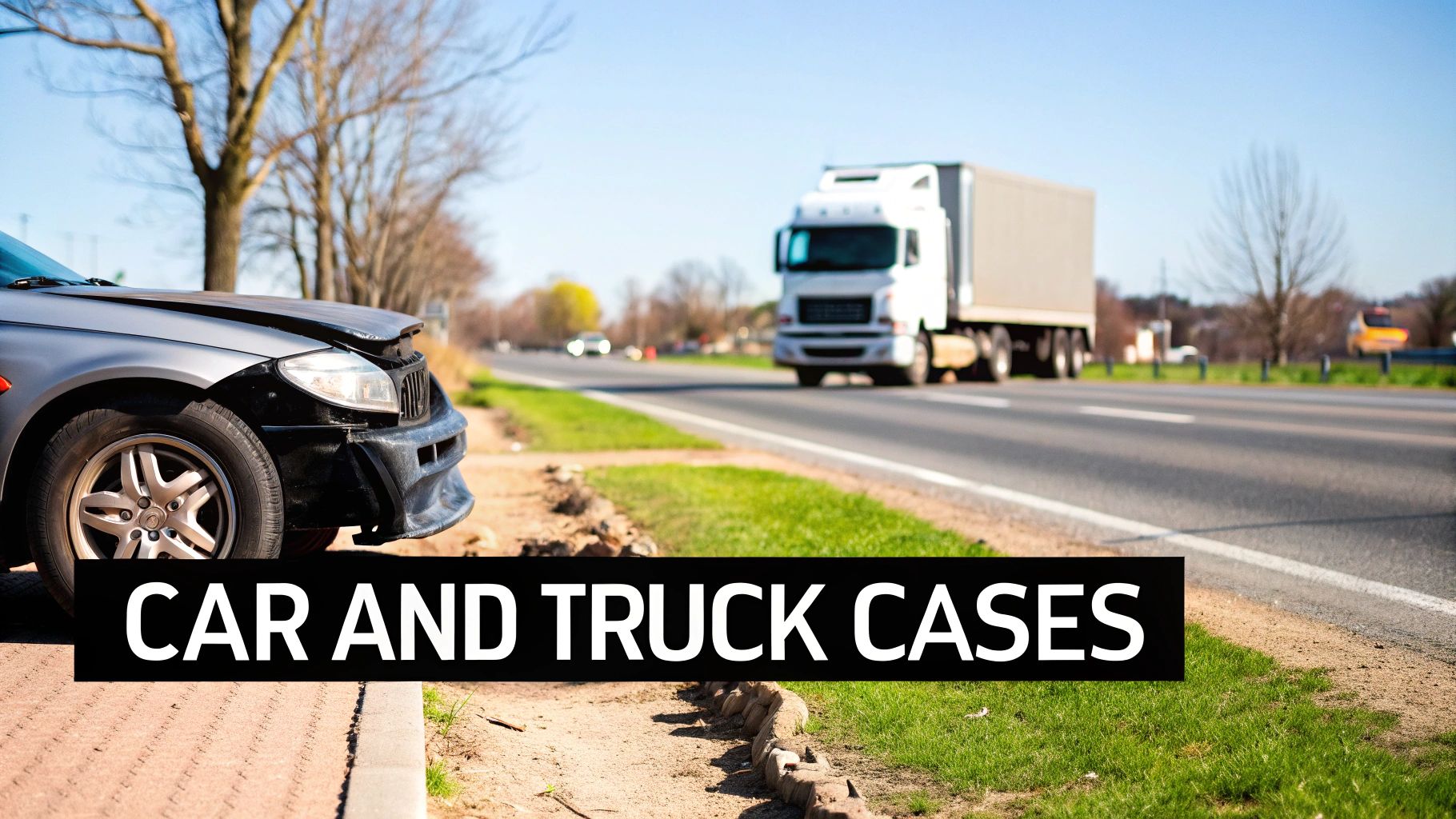
To really get the difference between recklessness vs negligence, let's move beyond legal theory and apply these concepts to the crashes we see on Atlanta’s roads every day. The driver’s actions just before impact are what draw the line between a simple mistake and a conscious disregard for everyone else's safety.
Think about a driver on GA-400. They look down for a second to read a text, and in that moment, they cause a rear-end collision. That’s a textbook case of negligence. They didn't intend to hurt anyone, but their failure to keep their eyes on the road was a clear breach of their duty to drive safely.
Now, picture a completely different scene. It’s rush hour on I-285, and a driver is weaving between lanes at 95 mph. They know their actions could trigger a catastrophic multi-car pileup, but they do it anyway. This isn't just carelessness anymore—it’s recklessness. The driver understood the extreme risk and chose to ignore it.
Differentiating Driver Actions
The key differentiator is the driver's mindset and their awareness of the danger they created. Here’s how common behaviors usually break down on that spectrum.
-
Negligent Actions (Carelessness):
- Failing to check a blind spot before switching lanes.
- Following another car too closely, or tailgating.
- Getting momentarily distracted by the radio or a passenger.
- Misjudging the speed of oncoming cars while making a left turn.
-
Reckless Actions (Willful Disregard):
- Treating a public road like a drag strip by street racing.
- Blasting through a school or construction zone at extreme speeds.
- Deliberately running multiple red lights to beat traffic.
- Getting behind the wheel of a car they know has failing brakes.
If you’re dealing with the fallout from this kind of behavior, it helps to understand the specific laws around reckless driving in Georgia to put your own case into context.
Truck Accident Scenarios
In commercial trucking cases, the line between negligence and recklessness often becomes even sharper. Federal and state regulations impose a very high standard of care on trucking companies and their drivers.
A trucking company that simply misses a routine maintenance check, leading to unexpected brake failure, has likely been negligent. They failed in their duty, but the oversight might not have been intentional.
But what if that same company was caught knowingly falsifying inspection logs? If they did it to keep an unsafe truck on the road to squeeze out more profit, their actions cross into recklessness. That’s a deliberate decision to ignore safety rules set by agencies like the Georgia Department of Transportation, endangering every single person on the highway.
This kind of deliberate falsification demonstrates a conscious disregard for the deadly risk an unmaintained commercial truck poses. In the end, it’s the evidence of a driver's or a company's choices that truly defines the line between recklessness vs negligence.
How These Concepts Apply in Premises Liability Cases

The important distinction between recklessness vs negligence isn't just for car wrecks; it's a central issue in premises liability cases—injuries that happen on someone else’s property. In Georgia, property owners have a legal duty to keep their property reasonably safe. When they fail, their level of awareness of a hazard—and how they responded to it—is what separates simple negligence from the much more serious charge of recklessness.
A classic example of negligence is a small spill in a grocery store aisle that goes unnoticed for ten minutes. If a shopper slips and falls, the store is likely negligent because a reasonable owner should have protocols for routine safety checks. It was a momentary lapse, not a deliberate choice to ignore a known danger.
But the entire dynamic shifts when an owner knows about a hazard and does little to nothing. This is where negligence escalates into recklessness.
From Carelessness to Conscious Disregard
Let’s go back to that same grocery store. Now, imagine the manager knows a freezer has been leaking for weeks, creating a slick, icy patch in a high-traffic aisle. Instead of getting the unit fixed or properly roping off the dangerous area, they just put up a small, easily overlooked "wet floor" sign. That decision transforms the situation from a mistake into a conscious disregard for the safety of every person who walks down that aisle.
The property owner is aware of a serious, persistent hazard but chooses an inadequate and ineffective solution. This demonstrates an indifference to the high probability that someone will suffer a serious fall and get hurt.
This distinction is important because it speaks directly to the owner's mindset. Proving that an owner knew about a dangerous condition and willfully ignored it can substantially strengthen an injury claim. Under Georgia law, specifically O.C.G.A. § 51-3-1, owners are legally obligated to exercise ordinary care to keep their property safe for invitees.
Common Premises Liability Scenarios
Here is how these standards might apply in different situations, which are often the grounds for a premises liability claim:
- Negligent Security: An apartment complex fails to repair a broken security gate for a few days, leading to a break-in. This is likely negligence. But if management had received dozens of complaints about assaults in the area and still refused to install working locks or adequate lighting for months, their inaction could be viewed as reckless.
- Retail Store Hazards: A retail employee briefly leaves a box in an aisle while grabbing something from the backroom. This is a negligent act. If the store’s corporate policy, however, encourages leaving large pallets of merchandise in walkways during business hours to save on overnight stocking costs, that policy shows a reckless disregard for customer safety.
Ultimately, the evidence we gather—what the property owner knew and when they knew it—is what separates a simple case of carelessness from a clear example of recklessness vs negligence.
The Impact on Your Personal Injury Compensation
So, why does the legal line between recklessness vs negligence really matter for your case? The answer comes down to money—specifically, the amount and type of financial recovery you can pursue. This isn't just about covering your medical bills. It’s about making sure the at-fault party is held fully accountable for their dangerous choices.
In a standard negligence claim, the primary goal is to seek compensatory damages. This type of compensation is meant to make you "whole" again by covering both your concrete and intangible losses.
Types of Damages in Injury Claims
In most personal injury claims, there are two main categories of damages you can seek.
- Compensatory Damages: These are available whether the at-fault party was negligent or reckless. They cover tangible economic costs like medical bills and lost income, along with non-economic losses like your pain and suffering.
- Punitive Damages: This is where the distinction becomes very important. Punitive damages are typically reserved for cases where the defendant’s actions were reckless or intentionally harmful. They aren't designed to compensate you—they are meant to punish the wrongdoer and deter others from similar conduct.
The shot at punitive damages is the single biggest financial difference when a case involves recklessness. The decision tree below clearly shows how a defendant's conduct creates different paths to compensation.
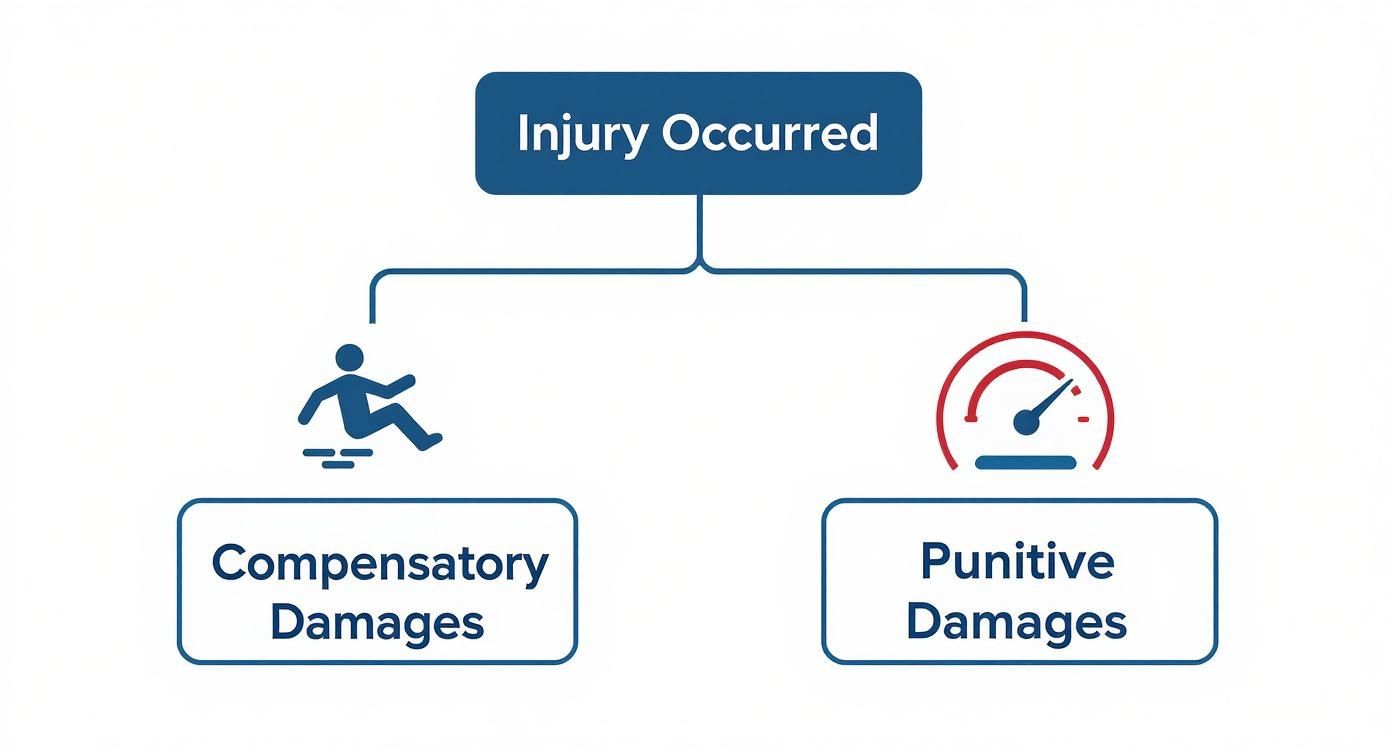
As you can see, proving recklessness opens up a powerful avenue for financial accountability that a simple negligence claim just doesn't have.
Potential Damages Based on Conduct
The table below breaks down how the defendant's conduct directly influences the potential financial recovery in a personal injury claim.
| Type of Damages | Available in Negligence Case? | Available in Recklessness Case? |
|---|---|---|
| Compensatory Damages | Yes | Yes |
| Punitive Damages | No | Yes |
Ultimately, proving recklessness introduces the possibility of a punitive award, which serves as both a punishment and a public deterrent.
Georgia's Stance on Punitive Damages
When you can prove recklessness, Georgia law allows a jury to award punitive damages. The goal is to send a clear message: the defendant's behavior was completely unacceptable and won't be tolerated.
Under Georgia Code § 51-12-5.1, our state lays out specific rules for these awards. While there's often a cap on punitive damages, that cap can be lifted entirely in certain cases, such as when the harm was caused by a driver under the influence of alcohol or drugs.
This statute highlights just how seriously Georgia law treats actions that show a conscious disregard for others' safety. Pursuing a claim based on recklessness isn't just about your own losses. It's about enforcing a community standard of care that helps protect everyone. The distinction between recklessness vs negligence isn't a minor legal detail—it's a very important tool for achieving true justice.
Building Your Injury Claim Around the Right Standard
Knowing the legal theory behind recklessness vs negligence is one thing; applying it strategically to your case is something else entirely. Deciding whether to frame a claim around simple negligence or push for the higher standard of recklessness requires careful thought and a clear-eyed assessment of the facts. When we allege recklessness, we raise the stakes for everyone involved.
Pursuing a recklessness claim demands stronger evidence—proof that goes directly to the defendant's state of mind. This makes the case far more contentious. You can be sure that insurance companies will fight tooth and nail against any claim that opens the door to punitive damages. At the same time, the potential for a much larger award gives us powerful leverage during settlement talks.
Weighing Risks and Rewards
The core of our strategy is weighing the strength of the evidence against the potential rewards and risks. We look for what are known as "aggravating factors"—things like a history of similar bad behavior, a conscious decision to violate safety rules, or attempts to cover up what happened. These are the details that can elevate a case from simple negligence into recklessness.
For instance, finding evidence that a trucking company pressured drivers to falsify logbooks moves a case beyond a single driver's mistake and into a corporate policy of recklessness. This kind of evidence is powerful.
Every decision we make has to be timed perfectly. It’s very helpful to understand the statute of limitations for personal injury claims in Georgia to ensure your rights are protected while we build the strongest possible case.
This evaluation isn't a simple checklist; it's a dynamic process of building a compelling narrative supported by hard facts. How we manage legal documentation, from contracts to evidence, can significantly impact the outcome. Many modern firms use tools like secure lawyer contract storage solutions to keep important case files organized and protected.
Ultimately, this strategic evaluation helps us determine the most effective path forward for your unique situation. Properly framing the defendant's actions—by drawing a clear line between recklessness vs negligence—is essential to seeking full and fair justice.
Frequently Asked Questions
Understanding the line between recklessness vs. negligence is very helpful, but it naturally brings up some common questions. Here are the straightforward answers we provide to our clients in Atlanta.
Can an Act Be Both Negligent and Reckless?
No, the same single act can't be both. Legally, an action is either a failure to use ordinary care (negligence) or a conscious decision to ignore a known risk (recklessness). The classification comes down to one thing: the defendant's state of mind and awareness when the incident happened.
Is It Harder to Win a Recklessness Case?
Yes, almost always. Proving what someone was thinking is far more difficult than just showing their actions were careless. A recklessness claim requires a much higher burden of proof because you have to convince a jury that the person knew about a serious danger and chose to ignore it anyway.
What Is Gross Negligence in Georgia?
Georgia law recognizes a middle ground called gross negligence. It’s more severe than a simple mistake but doesn’t quite rise to the level of intentional disregard that defines recklessness. The official definition is the "absence of even slight diligence or care."
Think of it as a step up from ordinary carelessness. While it’s a serious failure, it doesn't necessarily involve the conscious, willful choice to endanger others that is the hallmark of recklessness. You can find more on the legal definitions on sites like Wikipedia's page on gross negligence.
Getting these legal nuances right from the start is how we build the strongest possible foundation for an injury claim.