The moments after a crash are chaotic. Getting into an accident in a rental car adds another layer of stress, but knowing what to do can make all the difference. Your first priority is always safety. Check on everyone involved and, if possible, move the vehicles out of traffic's way. Then, call 911 immediately to get police and medical help to the scene. This initial step is fundamental when dealing with a collision involving a rented vehicle.
Your Immediate Actions at the Accident Scene
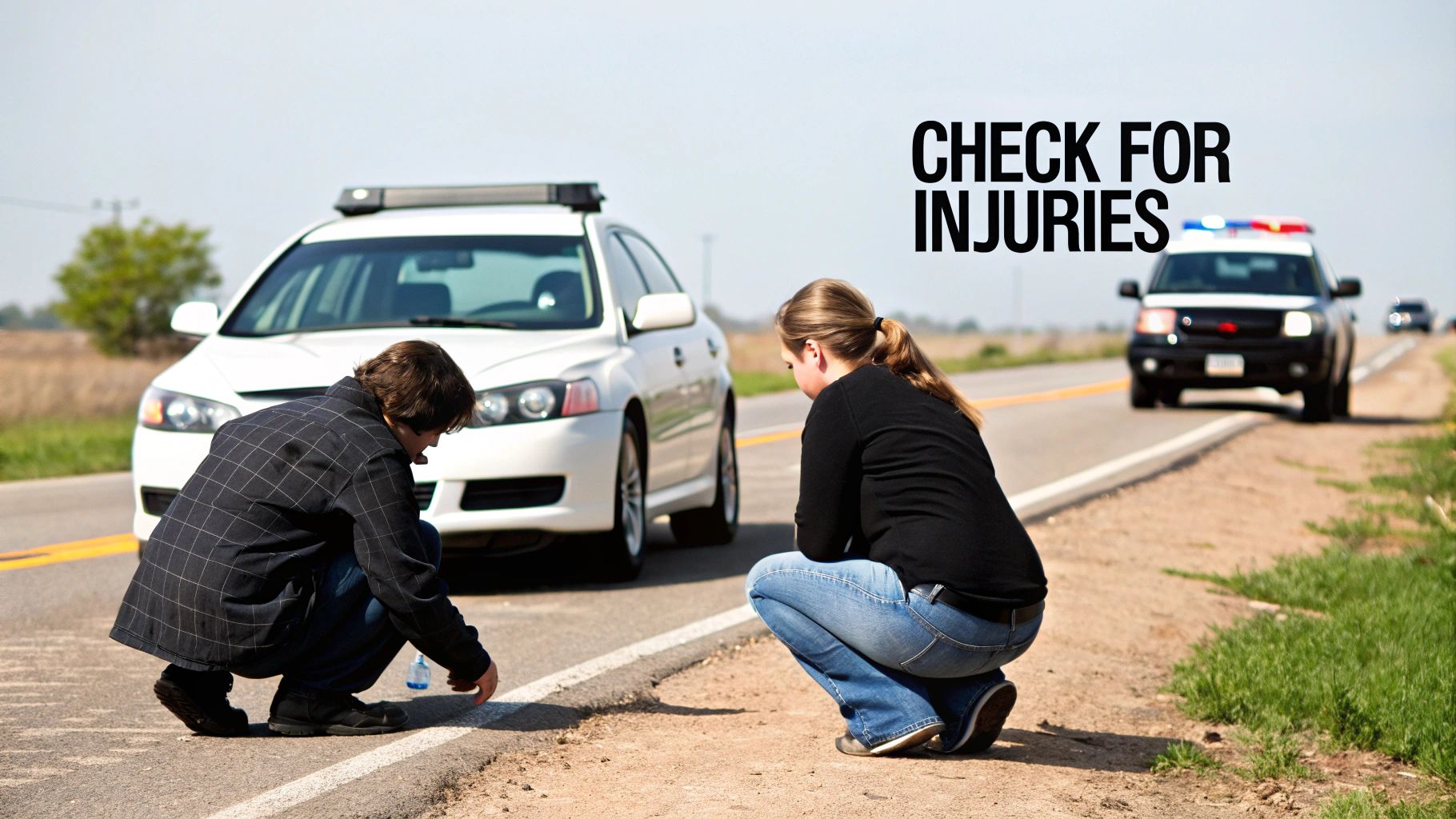
It’s easy to feel disoriented right after a collision, so it's important to focus on the essentials. Adrenaline can mask pain, meaning you might not realize you're hurt. Even if you feel okay, it’s always a good idea to get checked out by paramedics or visit a doctor soon after. For more on this, you can look up resources from the Centers for Disease Control and Prevention (CDC) on motor vehicle safety.
Once you’re in a safe spot and have called for help, you should insist on a police report. This isn't just a formality; it's an official, third-party record of what happened. You will absolutely need this document when you start dealing with the rental company and insurance carriers.
Exchanging Information the Right Way
When you talk to the other driver, stay calm and stick to the facts. Don't offer opinions, don't apologize, and don't assign blame. Just focus on gathering the key details you'll need later.
Here’s a quick rundown of what you must collect from the other driver:
- Name and Contact Info: Get their full name, phone number, and address.
- Insurance Details: Ask for their insurance company name and policy number. The easiest way to get this right is to take a clear photo of their insurance card.
- Driver's License & Plate: Snap a picture of their driver's license and their vehicle's license plate.
- Vehicle Information: Make a note of the car's make, model, and color.
One of the biggest mistakes you can make at the scene is admitting any kind of fault. Saying "I'm so sorry" can be misinterpreted as an admission of guilt, even if you’re just being polite. Let the police and insurance companies determine fault later on.
It's also helpful to understand why rental companies take these incidents so seriously. When a car is in the shop for repairs, it's not generating revenue. The average "length of rental" for accident-related repairs was 15.1 days in a recent quarter. That's more than two weeks of lost income for that one vehicle, which is why they have such a strict process for accident claims.
To give you a handy reference, I've put together a simple table outlining the must-do actions right after a crash.
Post-Accident Checklist
| Action Item | Why It Matters |
|---|---|
| Ensure Safety & Call 911 | Your health and the well-being of others is the top priority. A 911 call brings police and medical aid. |
| Get a Police Report | Creates an official, unbiased record of the accident, which is important for insurance claims. |
| Document Everything | Take photos of vehicle damage, the scene, and the other driver's documents. Details fade over time. |
| Exchange Information | Collect the other driver's name, contact info, insurance details, and license plate number. |
| Avoid Admitting Fault | Saying "I'm sorry" can be used against you. Stick to the facts only. |
| Seek Medical Attention | Some injuries, like whiplash, don't show up immediately. A medical record protects your health and your claim. |
| Notify the Rental Company | Your rental agreement requires you to report any accident immediately. |
Following these steps methodically will help you stay in control during a stressful situation and protect your interests down the line.
What to Prioritize for Your Well-Being
Your health comes first, period. Injuries from a car crash aren't always obvious right away. For a deeper dive into the medical side of things, check out this excellent step-by-step guide on what to do after a car accident injury.
Staying calm and organized at the scene is the best thing you can do for yourself. By focusing on safety, calling for help, and carefully gathering information, you’ll have a solid foundation for handling the rest of the process effectively.
How to Document the Rental Car Accident
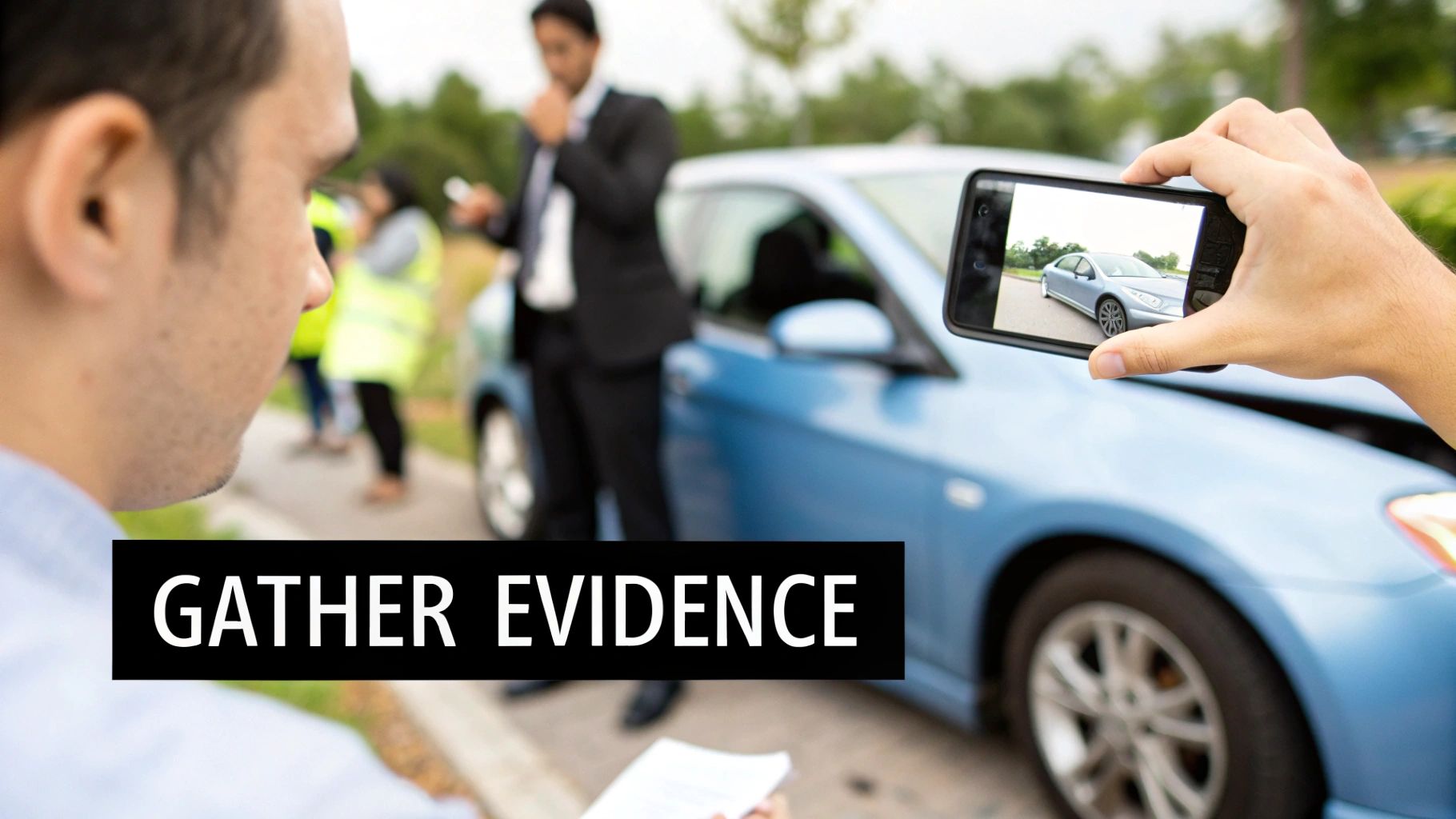
Once you've confirmed everyone is safe and the police are en route, your job shifts. You now need to become an investigator at the scene. The evidence you gather in the first few minutes after an accident in a rental car can significantly impact your claim down the road.
Your smartphone is the most useful tool you have right now. Start taking photos and videos immediately.
Don't settle for a few quick snaps of the damage. You need to document the entire scene. Get wide-angle shots showing the final positions of the vehicles in relation to the road, intersections, and any traffic signs. This helps establish context.
Then, zoom in. Get detailed, close-up shots of the damage on all vehicles involved, not just the rental. Document everything—skid marks on the road, shattered glass, and any other debris. Make sure to also capture photos of traffic signals, road conditions, and even the weather.
Gather More Than Just Photos
Visuals are important, but they only tell part of the story. You need to collect other information that provides context and supports the facts of what happened.
A strong documentation file should always include:
- Witness Information: If anyone saw what happened, get their name and phone number. An impartial account from a third party is incredibly powerful.
- Your Own Notes: Don't rely on memory alone. Open the voice memo app on your phone and record everything you can remember about the moments leading up to the crash.
- Road Conditions: Make a note of anything unusual. Was the road wet? Were there potholes or active construction? These details can sometimes shift liability.
Think of it this way: you are creating a perfect time capsule of the accident scene. Details that seem minor now can become very helpful when an insurance adjuster is piecing together the events.
For instance, a malfunctioning traffic light or a hazardous road condition could have contributed to the crash. Proving this requires documentation. Official channels, like the Georgia Department of Transportation's public request form, exist for reporting these issues.
Documenting every possible factor ensures all parties—from the rental agency to the insurance companies—have the information they need. This diligent record-keeping is often the foundation of successful personal injury claims and protects you from disputes over fault.
Notifying the Right People in the Right Order
Knowing who to call after an accident in a rental car can feel chaotic, but there’s a specific order that protects you best. Once the police have been called and everyone is safe, your very next call should be to the rental car company.
How you communicate in these first few moments can set the tone for the entire claims process.
Reporting to the Rental Company
Most rental agencies have a 24/7 accident hotline. You can usually find the number on a sticker inside the glove box or on your rental agreement paperwork. This needs to be your first call.
When you get them on the phone, stick to the objective facts you documented at the scene. Be ready to provide:
- Your Rental Agreement Number: This helps them pull up your information instantly.
- The Police Report Number: The officer at the scene will give you a case number. Provide that, even if the full report isn't available yet.
- A Factual Description of the Incident: Calmly explain what happened—the location, the time, and the visible damage. Don't speculate on fault.
It’s natural to want to apologize, but resist the urge. Simply state the facts. This is important because anything you say can be used later, and you want to avoid having your words misinterpreted.
Calling Your Own Insurance Company
Your next call should be to your personal auto insurance provider. Many people skip this step, especially if they bought the rental company's insurance, but that's a mistake.
Think of it as a safety net. Your own policy might offer secondary coverage that kicks in to help with deductibles or other fees the rental company’s plan doesn’t cover. Informing them puts all your potential resources on the table and prepares them in case the other driver’s insurer tries to file a claim against your policy.
Your personal auto policy often extends coverage to rental vehicles, but the fine print matters. Call your agent to confirm exactly how your policy applies and what your responsibilities are. Never assume—always verify the details directly.
Don't Forget Your Credit Card Provider
Did you pay for the rental with a credit card? If so, your third call should be to the card issuer's benefits administrator. Many premium credit cards offer rental car insurance as a perk, but there’s a catch: you often have to report the incident promptly to activate the coverage.
This coverage is usually secondary, meaning it pays out after your primary auto insurance. Still, it can be incredibly valuable for covering things like your deductible or the rental company's "loss of use" fees. Check your card's benefits guide to understand their specific reporting timeline and what documents you'll need.
Making sure you notify each party in the right order is a key part of handling the aftermath. Understanding the basics of how to file a car accident claim in Atlanta can also give you a helpful overview of the general process. Taking these steps methodically will help ensure a much smoother resolution.
Making Sense of Rental Car Insurance Coverage
Insurance is almost always the biggest headache after an accident in a rental car. Trying to figure out who pays for what can feel like untangling a knotted fishing line. But if you understand the basics, you’re in a much better position to take control of the process. There are several layers of coverage that might come into play, and knowing which one is primary is the key.
The financial stakes in the rental car world are higher than you might think. After the pandemic, daily rental rates in the U.S. jumped from an average of $76 to $90. A big reason for that spike? Accidents that took vehicles out of commission, tightening the available supply. The global rental car insurance market is now expected to grow from $9.88 billion to $10.59 billion, a 7.1% annual growth rate driven by the rising costs of repairs and replacements. You can find more details on these rental car industry trends over at ConsumerAffairs.com.
The Rental Company's Insurance Waiver
When you picked up the car, the agent at the counter almost certainly offered you a Collision Damage Waiver (CDW) or a Loss Damage Waiver (LDW). This isn't technically insurance. It’s an agreement where the rental company agrees not to hold you responsible if the car is damaged or stolen.
If you accepted it, you’re generally off the hook for the vehicle damage. But always read the fine print—there are usually exclusions for things like driving under the influence or taking the car off-roading.
The infographic below breaks down the very first moves you need to make, which will directly shape how your insurance situation plays out.
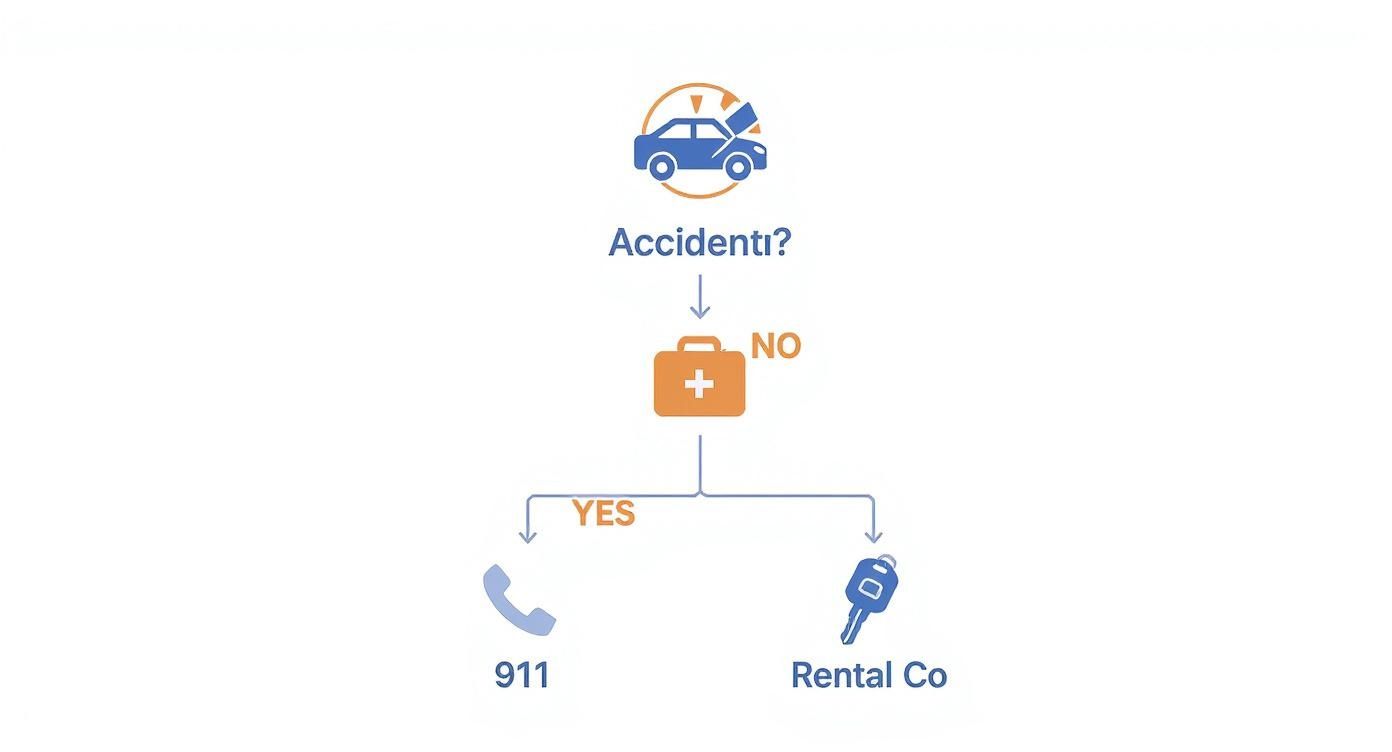
As you can see, your first actions—like calling 911 if anyone is hurt—set the foundation for everything else, including which insurance policies get triggered.
Your Personal Auto Insurance Policy
Declined the CDW/LDW? Your personal auto insurance policy is usually the next line of defense. Most standard policies extend both liability and collision coverage to cars you rent.
The downside is that you’ll have to pay your deductible, and the claim will go on your insurance record. That could mean higher rates down the road.
One key point many people miss: most personal policies do not cover the rental company's "loss of use" fees. These are the charges for the income the company loses while their car is in the shop, and they can add up fast.
The Role of Your Credit Card Benefits
Many premium credit cards offer rental car insurance as a perk, but this coverage is almost always secondary. That means it’s designed to pick up the costs your primary auto insurance won’t cover, like your deductible or those pesky loss of use fees.
To use this benefit, you absolutely must:
- Decline the rental company's CDW/LDW. If you accept their waiver, it usually voids the credit card coverage.
- Pay for the entire rental with that specific card. Even paying for part of it with another card can disqualify you.
- Report the accident right away to the credit card’s benefits administrator.
Understanding this hierarchy—which policy pays first—is everything. Typically, your personal auto policy is the primary insurer. Your credit card benefits then step in for the secondary costs. If you bought the rental company’s waiver, that becomes the primary source for damage to the car itself.
Some of these insurance terms can get dense. Referencing a good legal dictionary can help clear things up. Knowing how these pieces fit together will give you the confidence to manage the financial aftermath of an accident in a rental car.
Knowing When to Speak with an Attorney
Not every minor fender bender requires a lawyer. But when you’re dealing with a serious accident in a rental car, the situation gets involved—fast. Many people try to handle it themselves, only to hit a wall with an uncooperative rental company or insurance provider.
Knowing the signs that you need professional legal support is important for protecting your rights and your finances.
From our experience as Atlanta attorneys, certain situations are immediate red flags. If you or any of your passengers were injured, it’s time to talk to a lawyer. The same goes for any crash where the other driver was uninsured, underinsured, or fled the scene. These aren't issues you should handle alone.
Clear Signs You Need Legal Advice
Disputes over who was at fault are another major reason to seek legal counsel. If the police report is unclear, or you flat-out disagree with its findings, an attorney can help investigate and build a case to establish the true facts. Don't let an inaccurate fault determination leave you on the hook for thousands in damages.
You should also be wary if an insurance company—whether it’s yours, the other driver's, or the rental agency's—starts giving you the runaround. Keep an eye out for these classic tactics:
- Delay Tactics: The adjuster is impossible to reach or constantly puts off processing your claim.
- Lowball Offers: They push a quick settlement offer that doesn't even come close to covering your medical bills and other losses.
- Unreasonable Bills: The rental company hits you with a massive bill for vague "loss of use" fees or inflated repair costs.
- Pressure to Sign: An adjuster pressures you to sign a release form or provide a recorded statement before you've had a chance to think things through.
A common tactic we see is an insurance company trying to get you to accept a quick, small payment. They know that once you accept it, you can't come back for more money later, even if your injuries turn out to be far more serious than you first thought.
Travel has surged recently, putting more rental cars on the road than ever. The car rental market grew to 547 million users worldwide from 426.7 million the previous year, with projections showing that number will keep climbing. More cars on the road, unfortunately, means more accidents.
Protecting Your Right to Fair Compensation
When injuries are involved, the stakes get much higher. You're not just dealing with a damaged car; you're facing medical bills, lost wages from time off work, and the physical and emotional toll of recovery. A personal injury attorney's job is to make sure you are compensated fairly for all of it.
Another important factor is the timeline. In Georgia, there are strict deadlines for filing a personal injury lawsuit. Missing this window can mean losing your right to seek any compensation at all. You can learn more about the specific statute of limitations for personal injury in GA to understand these key deadlines.
Ultimately, if you feel overwhelmed, confused, or believe you're being treated unfairly after an accident in a rental car, that's your cue. Speaking with an attorney doesn't obligate you to anything. Most, including our firm, offer a free consultation to review your case. It’s an opportunity to get clarity on your options and figure out the best path forward.
Common Questions About Rental Car Accidents
A wreck in a rental car throws a wrench into everything, and it always leaves people with a pile of questions. As Atlanta personal injury attorneys, we've guided countless clients through this exact situation. Here are some of the most common things we're asked, with straightforward answers pulled from years of experience.
Getting these answers upfront can help you feel more in control. Just remember, a lot of this depends on the specific details, like who was at fault and what kind of insurance you're dealing with.
FAQ About Rental Car Collisions
-
What If the Other Driver Caused the Crash?
Even if the other driver is 100% at fault, your rental agreement is your first priority. You have a contractual obligation to report the accident to the rental company right away. Ideally, the at-fault driver's insurance pays for everything. However, the rental company might still try to bill you for the damage first, leaving you with the task of seeking reimbursement from the other insurer. This is exactly why a police report is non-negotiable. -
Can the Rental Company Bill Me for Loss of Use?
Yes, and this one catches people off guard all the time. "Loss of use" is a fee the rental company charges you for the income they lose while their car is stuck in the repair shop. Most personal auto policies do not cover these fees. The Loss Damage Waiver (LDW/CDW) you buy at the counter is designed to cover this. Some premium credit cards also offer this benefit, but you have to check the fine print. -
What Happens If the Accident Is Out of State?
If you crash a rental car across state lines, the laws of the state where the accident happened will apply to the case. The immediate steps are the same: call local police, document everything, and notify the rental company and your insurer. Your insurance should still cover you, but the specific rules for fault might be different. Make sure you get a copy of the police report from the local law enforcement agency.
The bottom line is this: your contract with the rental company follows you everywhere. It requires you to notify them immediately, no matter what state you're in when the accident occurs.
When an accident happens, a full investigation will look at every possible cause. Vehicle maintenance is always on that list. While rental cars are usually kept in good shape, any driver should know what mechanical failure looks like. For instance, knowing the signs you need brake repair for safe driving can help you spot a serious problem before it turns into a disaster. Being proactive about safety is a good habit, whether you're in a rental or your own car.
If you've been injured in an accident in a rental car and you're getting the runaround from the rental agency or an insurance company, you don't have to face it alone. The team at Jamie Ballard Law is here to help you understand your rights and fight for the support you deserve. For a free, no-obligation review of your case, contact us today at https://jamieballardlaw.com.