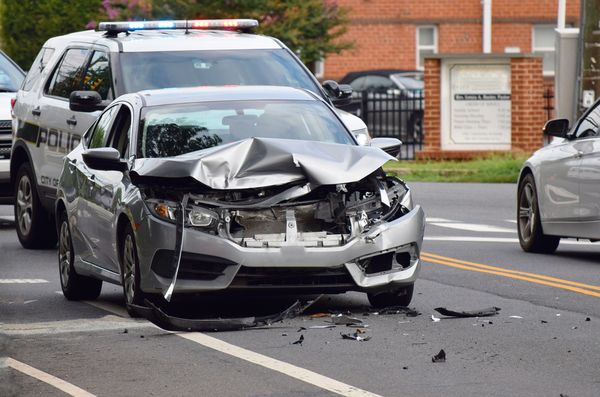
The first few moments after a car accident are a blur of adrenaline and confusion. It's a jarring experience, and your first instincts might not be the clearest. But what you do right there on the scene is so important—it lays the groundwork for your physical recovery and any legal claim that follows. Getting help from a local Atlanta personal injury attorney can make a big difference in the outcome of your case.
Your absolute first priority is safety. That means securing the scene for yourself, your passengers, and other drivers on the road.
Your Immediate Priorities At The Accident Scene
The screech of tires, the jolt of impact—it’s pure chaos. Adrenaline is a powerful thing; it can mask serious injuries and cloud your judgment. In my years helping Atlanta drivers, I've seen firsthand how a simple, clear plan for these initial minutes can make all the difference. Your actions here truly set the stage for everything else.
The goal is simple: prevent any more harm. That means making the area safe and then getting the right help on the way.
Securing The Scene And Preventing Further Harm
Before you jump out of your car, take a breath and assess. Are you in a dangerous spot, like a middle lane on I-75 during rush hour? If your car is creating an immediate hazard and you can move it, pull over to the shoulder. If not, it's often best to leave the vehicles exactly where they are to preserve the scene for the police investigation.
Once you’re safely out of the vehicle, make the area as visible as possible to oncoming traffic.
- Flip on your hazard lights immediately. It's the universal signal for trouble, warning other drivers to slow down and use caution.
- If you have them, set out emergency flares or reflective triangles. This is especially important at night or during bad weather like heavy rain or fog.
- Get away from moving traffic. Stand on the shoulder or a sidewalk—never between the wrecked cars or in the road.
This simple flowchart breaks down the essential first actions to take after any collision.
Following this sequence—secure the area, check on people, then call 911—ensures that safety is always the top priority.
For quick reference in a stressful moment, here's a checklist of what to do.
Quick On Scene Safety Checklist
| Action Item | Why It Matters |
|---|---|
| Assess your surroundings | Prevents you from stepping out into active traffic. |
| Turn on hazard lights | Makes your vehicle visible to other drivers, reducing the risk of another collision. |
| Move to a safe location | Standing on the shoulder or sidewalk keeps you out of harm's way. |
| Place flares/triangles (if available) | Provides an extra layer of warning, especially at night or in low visibility. |
These steps are about controlling the chaos and making sure no one else gets hurt while you wait for help.
Check For Injuries And Call 911
Once the scene is safe, check on yourself and your passengers first. Then, if you are able, check on the people in the other vehicle. Ask clearly, "Is everyone okay?" But remember, some serious injuries like concussions or internal bleeding don't always show immediate symptoms.
Even if the crash seems minor and everyone says they feel fine, you should always call 911. A police report creates an official, unbiased record of what happened. This document is absolutely vital for any insurance claim.
When you call 911, tell the dispatcher your location, what happened, and if there are any known injuries. In a city like Atlanta, EMS response times can be as fast as 7-10 minutes for serious calls, and those minutes can be lifesaving. For more national traffic safety data, you can visit the NHTSA website.
While waiting, it's natural to speak with the other driver. But be very careful what you say. Exchange essential information—names, contact details, and insurance—but nothing more. Do not apologize or say things like "I'm so sorry" or "I didn't see you." These statements can easily be interpreted as an admission of fault. Stick to the facts. The moments after a car accident are disorienting, and it's best to let the official investigation unfold without making comments that could damage your case down the road.
How To Gather Essential Information And Evidence
Once everyone is safe and you know help is on the way, the minutes that follow a crash are incredibly important. The evidence you gather right here, right now, is often the most powerful tool you'll have later. You need to shift into an evidence-gathering mindset. What you document can make or break an insurance claim or legal case down the road.
Your phone is your best friend in this situation. Use it to capture everything before the cars are moved or the scene is cleared.
Capturing The Scene With Photos And Videos
Don't just snap one or two pictures. You can't have too many. Start with wide shots showing the whole scene from multiple angles, then move in for the details.
Here's a quick checklist of must-have photos:
- Vehicle Damage: Get close-ups of the damage to every vehicle, but also take photos from further back to show the points of impact in context.
- License Plates: A clear, readable photo of every license plate is non-negotiable.
- The Scene Itself: Photograph any skid marks, broken glass, or debris on the road. These details help experts piece together what happened.
- Surroundings: Snap pictures of traffic lights, stop signs, road conditions (was it raining?), and anything else that tells the story of the environment.
- Your Injuries: If you have any visible cuts, bruises, or scrapes, document them immediately.
Better yet, take a video. Do a slow walk-around of the entire scene, narrating what you're seeing. This can capture context that a still photo might miss.
Exchanging Information And Talking To Witnesses
Next, you need to collect information from the people involved. Emotions will likely be running high, so it’s important to stay focused and calm.
What to get from the other driver:
- Full Name and Contact Information (phone, address)
- Insurance Company and Policy Number
- Driver's License Number
- Vehicle Make, Model, and Color
Important Tip: When you do this, stick to the facts. Don't argue about fault or apologize. Just state that you need their information for the report and your insurance.
Witnesses are gold. An independent person who saw the crash can provide an objective account that carries a lot of weight. If anyone stops, politely ask for their name and phone number. Most people are willing to help if they understand their account is important.
Get The Official Police Report Number
The responding officer will file an official report, which is a key piece of evidence. Before they leave, make sure you get the officer’s name, badge number, and the police report number.
You'll need that number to get a copy of the report later. In Georgia, you can typically find it through the state's crash reporting portal. This official document contains the officer's findings, diagrams, and other key details. Thoroughly documenting everything right after a car accident builds a solid foundation for everything that comes next.
Why You Must See A Doctor After A Crash
It’s completely normal to feel a bit shaken up but otherwise okay right after a car accident. Your body is flooded with adrenaline, a natural response that is incredibly effective at masking pain and hiding serious injuries. I can't tell you how many clients have walked away from a crash feeling fine, only to wake up a day or two later in debilitating pain.
This is exactly why getting a medical evaluation is one of the most important steps you can take, even if you don't think you're hurt. Your health is the absolute top priority, and some of the most severe injuries simply don't show immediate signs.
Uncovering Hidden Injuries
The violent jolt of a collision, even at low speeds, can cause significant trauma. While you might not have obvious cuts or broken bones, there could be serious underlying issues that demand immediate attention.
Some of the most common "hidden" injuries we see include:
- Whiplash: A soft tissue injury to the neck caused by the forceful back-and-forth snap of a crash. Key symptoms like neck pain, stiffness, and headaches often take 24-48 hours to fully emerge.
- Concussions: You don't have to hit your head to get a concussion. The impact alone can jolt your brain inside your skull, and symptoms like confusion, dizziness, or memory problems might be delayed.
- Internal Bleeding: Damage to organs or blood vessels is life-threatening and may only present with subtle signs at first, such as deep bruising or abdominal pain.
It’s also smart to educate yourself on recovery. For instance, knowing how long whiplash takes to heal can help you set realistic expectations, as it's a very common injury in rear-end collisions.
The Importance Of A Medical Record
From a legal and insurance standpoint, seeing a doctor creates an official, time-stamped record. This medical documentation becomes the foundation of any personal injury claim you might file later.
When an insurance adjuster reviews your case, one of the first things they look for is a direct, timely link between the accident and your injuries. A gap of several days—or weeks—between the crash and your first doctor's visit gives them an opening to argue your injuries were caused by something else entirely.
An immediate medical evaluation solidifies that important connection. It provides a baseline assessment of your condition right after the incident, making it much more difficult for the insurance company to dispute the cause of your injuries. You can get more specific details on the challenges of head injury cases by reviewing our guide on what to expect from an Atlanta concussion injury attorney.
Who To See And What To Do Next
After a collision, you have a few options for medical care. If you have any signs of a serious injury—like severe pain, losing consciousness, or difficulty breathing—go to the emergency room immediately. No question.
For less urgent situations, an urgent care clinic or your primary care doctor are both excellent choices for an initial evaluation. The most important thing is simply to be seen by a qualified medical professional who can properly assess your condition.
Once you've been evaluated, it is essential to follow all medical advice to the letter.
- Attend all follow-up appointments.
- Complete your prescribed physical therapy.
- Take all medications as directed.
Following through with your treatment plan is not only important for your physical recovery, but it also demonstrates that you are taking your injuries seriously. This consistent documentation of care is vital if you need to seek compensation for everything you've been through after a car accident.
Reporting The Accident To Your Insurance Company
Your insurance policy requires you to notify them pretty quickly after a crash. But how you handle this first call is absolutely key. Your goal is simple: report the bare-bones facts without guessing, offering opinions, or saying anything that can be twisted later.
Let’s be clear: even your own insurance company is a business. While they’re there to help, their main objective is to protect their bottom line by minimizing what they pay out. The insurance adjuster on the other end of the line is a highly trained professional whose goals may not align with yours.
What To Say And What To Avoid
When you call, have your policy number and the police report number ready. You only need to provide the basic, factual details of what happened.
Stick to a simple, clean script.
- Who: Your name and the other driver's name.
- When: The date and time of the collision.
- Where: The location of the crash.
- What: A brief, neutral description (e.g., "It was a rear-end collision.").
That's it. You have no obligation to volunteer extra information. If the adjuster asks how you're feeling, a safe and honest answer is, "I'm in the process of seeking medical attention." Never say "I'm fine" or "I'm not hurt," because many serious injuries take days or even weeks to fully surface.
The Recorded Statement Trap
The adjuster will almost certainly ask you for a recorded statement. Here's what you need to know: you are not obligated to give a recorded statement to the other driver's insurance company. Ever.
As for your own insurer, while your policy likely requires you to cooperate, it's always smart to politely decline giving a recorded statement until you've spoken with an attorney.
Why? Adjusters are experts at asking leading questions designed to get you to say something that weakens your claim down the road.
A seemingly innocent question like, "So you were just a little shaken up?" can be a trap. If you agree, they can use that "just a little" comment later to argue your injuries aren't severe. They are masters at twisting your words, even when you have no intention of admitting fault or downplaying your pain.
Just say, "I'm not comfortable providing a recorded statement right now." This simple phrase protects you from having your own words used against you. For a deeper dive into the claims process, check out our guide on how to file a car accident claim in Atlanta.
Dealing With Georgia-Specific Insurance Rules
Georgia is an "at-fault" state. This means the person who caused the wreck is financially responsible for the damages. But what happens if the at-fault driver has no insurance or not enough to cover your medical bills and lost wages?
This is precisely where your own Uninsured/Underinsured Motorist (UM/UIM) coverage comes in. It’s the part of your policy that protects you when the other driver can't pay. Filing a UM claim means you're technically making a claim against your own insurance company, which is another reason why that initial conversation has to be handled so carefully.
Trying to sort out these calls and understand your rights is a massive burden when you should be focused on healing. Getting legal guidance before you have any in-depth conversations with an insurance company is the best way to protect yourself. The way you report the incident after a car accident sets the entire tone for your claim.
Understanding The Financial Impact Of An Accident
The true cost of a car wreck often shows up long after the scene is cleared. What follows is a financial storm, with unexpected bills and lost income piling on stress while you're supposed to be focused on recovery. Grasping the full scope of these costs is the first step toward getting the resources you need to put your life back together.
From my experience helping families across Atlanta, that first wave of expenses can feel like a tidal wave. These aren't just minor inconveniences; they are significant financial hits that can throw your entire life off balance.
The Immediate And Hidden Costs
Medical bills and car repairs are the most obvious expenses, but the financial damage goes much deeper. It’s a ripple effect that touches nearly every part of your life.
Here are some of the most common costs I see clients facing:
- Medical Expenses: This isn’t just the ambulance ride. Think emergency room visits, specialist appointments, physical therapy, prescription drugs, and even surgeries you might need down the road.
- Lost Wages: If you can't work because of your injuries, the paychecks stop. For many families, this is the most devastating blow, because the mortgage and grocery bills don't take a break while you heal.
- Property Damage: This covers fixing or replacing your car, but it also includes personal property inside that was damaged—a laptop, a phone, or even expensive car seats.
- Out-of-Pocket Costs: These are the little things that add up fast. Co-pays, transportation to doctor's appointments, childcare you suddenly need, or even modifications to your home for a serious injury.
These costs add up with alarming speed. A single trip to the ER after a crash can average $2,700, but that number can easily climb past $100,000 for serious cases requiring surgery or an ICU stay. With recovery from moderate injuries taking three to six months, many victims lose 40-60% of their annual income.
Documenting Every Penny
To get a true picture of the financial damage and secure proper reimbursement, you have to document everything. Meticulous record-keeping is your single most powerful tool when you're up against an insurance company. Start a folder—digital or physical—and keep it all.
Every single receipt matters. From a $5 co-pay to a $5,000 mechanic's bill, it all paints the full picture of your financial losses. This organized proof makes it much harder for an adjuster to downplay what this accident has cost you.
A simple spreadsheet or an itemized receipt template can help you track each expense as it comes in. Make sure you also collect pay stubs to prove lost income, every medical invoice, and detailed repair estimates for your vehicle.
Understanding What You Can Recover
In Georgia, you have the right to seek compensation for a wide range of damages, which are usually split into two categories.
Economic Damages: These are the tangible financial losses that have a clear dollar amount attached.
- All past and future medical bills related to your accident injuries.
- Lost wages from the time you were forced to miss work.
- Loss of future earning capacity if your injuries will impact your career long-term.
- Costs to repair or replace your property.
Non-Economic Damages: These are the intangible losses that don't come with a price tag but have a massive impact on your quality of life. This is compensation for things like:
- Pain and suffering
- Emotional distress and mental anguish
- Loss of enjoyment of life
Putting a number on these non-economic damages is a specialized process. It’s an important part of making sure you receive fair compensation for the full human cost of the wreck, not just the bills. You can explore our guide for more details on the personal injury lawsuit process in Georgia.
How Contingency Fees Work
Worrying about how to pay a lawyer should be the last thing on your mind. That’s why personal injury attorneys in Atlanta work on a contingency fee basis. It means you don’t pay a dime upfront. Our fee is a percentage of the settlement or verdict we win for you.
Simply put: If you don't get paid, we don't get paid. This levels the playing field, allowing you to get experienced legal help immediately without any financial risk. It ensures your focus can stay right where it needs to be—on your recovery after a car accident.
Common Mistakes That Can Weaken Your Accident Claim
Knowing the right moves after a car accident is important, but knowing what not to do is just as important. In my years of handling accident claims across Atlanta, I’ve seen how small, seemingly innocent missteps can seriously damage a person's case.
These aren't dramatic, Hollywood-style errors. They are simple actions—or inactions—that insurance adjusters are trained to exploit. In the chaotic hours and days after a crash, you're vulnerable. Adrenaline is high, you're in pain, and it’s far too easy to say or do something without realizing the long-term consequences.
Sidestepping Common Pitfalls
Let’s walk through the most frequent mistakes I see people make. Avoiding them is key to protecting your right to fair compensation.
- Admitting Any Degree of Fault: Even a simple, polite "I'm so sorry" can be twisted by an insurance company into a full admission of guilt. When you speak to the other driver and the police, stick to the objective facts.
- Posting on Social Media: Assume insurance investigators are looking at your profiles, because they are. A photo of you at a friend's BBQ a week after the wreck can be used to argue your injuries aren't as severe as you claim—even if you were masking immense pain just to get out of the house. The safest bet is to stay offline completely until your case is resolved.
- Delaying Medical Treatment: Waiting to see a doctor creates a "gap in treatment." This gap gives the insurer a perfect opening to argue that your injuries weren't caused by the crash.
A classic scenario I see is a client who tries to "tough it out" for a week before seeing a doctor. The insurance company's response is predictable: "If you were truly hurt, you would have sought medical attention immediately." Don't hand them that argument on a silver platter.
Resisting the Quick Payout
Perhaps the most tempting mistake is accepting the insurance company’s first, fast settlement offer. They might call you within days of the accident, offering a check that seems like a lifeline when you're stressed, out of work, and facing unexpected bills.
But these initial offers are almost always lowball amounts. They don't account for future medical care, ongoing physical therapy, or the full scope of your lost wages. Once you cash that check, you sign away your right to seek any further compensation—forever. Be patient. The true financial and physical impact of an accident often takes weeks or months to become clear, especially when dealing with the aftermath after a car accident.
It's easy to make a mistake when you're disoriented and under pressure. The table below summarizes the key actions to avoid.
Actions That Can Weaken Your Claim
| Mistake to Avoid | Potential Negative Consequence |
|---|---|
| Admitting Fault | Your statement can be used to assign you partial or full liability, reducing your settlement. |
| Delaying Medical Care | The insurer may argue your injuries are unrelated to the accident or less severe than claimed. |
| Posting on Social Media | Photos or posts can be taken out of context to contradict your injury claims. |
| Accepting a Quick Settlement | You forfeit your right to claim future damages, even if your injuries worsen. |
| Giving a Recorded Statement | Adjusters can use your words against you to find inconsistencies and deny your claim. |
Steering clear of these traps is essential for building a strong foundation for your claim and ensuring you don't leave money on the table.
Common Questions After a Georgia Car Accident
After a crash, the same questions come up time and time again. Clients are often overwhelmed and just need clear, direct answers. Here are a few of the most common issues we address right away.
How Long Do I Have to File a Claim in Georgia?
This is one of the most important questions, and the answer is unforgiving. In Georgia, the statute of limitations for personal injury claims is generally two years from the date of the accident.
If you're only dealing with damage to your vehicle, that deadline extends to four years.
These time limits are absolute. If you miss that two-year window for your injuries, you lose your right to seek compensation in court, period. You can get a more detailed look at how the Georgia statute of limitations for personal injury could impact the specifics of your case.
What If the Other Driver Was Uninsured or Fled the Scene?
It’s a nightmare scenario, but it doesn't mean you're out of options. When an uninsured driver hits you, or you’re the victim of a hit-and-run, you turn to your own insurance policy for help.
This is the exact reason Uninsured/Underinsured Motorist (UM/UIM) coverage exists. It's a part of your own policy designed to step in and cover your losses when the at-fault driver can't—or won't. The most important things to do are file a police report immediately and get your own insurance company in the loop as soon as possible.
Should I Give a Recorded Statement to the Other Driver's Insurance Company?
No. It is almost always a mistake to give a recorded statement to the at-fault driver's insurance adjuster without speaking to an attorney first. You are under no legal obligation to do so.
Adjusters are trained professionals. They know how to ask questions that sound innocent but are designed to get you to say something that hurts your claim. You can simply and politely decline their request and tell them your representative will be in touch.
Your only job right now is to focus on getting better. Dealing with an insurance adjuster just adds stress you don't need, especially in the crucial days and weeks after a car accident.
If you're trying to piece things together after an accident and need someone to give you straightforward guidance, the team at Jamie Ballard Law is ready to help. Contact us for a free, no-pressure case evaluation to understand exactly what your rights and options are. https://jamieballardlaw.com