The moments after an accident are a blur. You’re disoriented, shaken, and trying to make sense of what just happened. But in that chaos, the actions you take are so important for the preservation of evidence. What you do in that first hour can literally build the entire foundation for your personal injury claim.
What to Do Right After an Accident to Preserve Evidence
Whether you’re in a wreck on I-285 or you’ve slipped on a wet floor in an Atlanta store, the scene starts changing almost immediately. Tow trucks arrive, employees mop up spills, and witnesses wander off. That's why your first steps are so powerful—you have a one-time chance to capture the scene exactly as it was.
Think of yourself as the first investigator on the scene. Your smartphone is your most important tool. Use it to create a detailed visual record before anything is moved or altered. This initial documentation provides undeniable proof, making it much harder for an insurance company to downplay the incident or shift blame.
Your Immediate Photo and Video Checklist
Assuming you are physically able to do so safely, start taking photos and videos right away. Don’t worry about getting the "perfect" shot; just capture everything. Volume is far more important than quality at this stage.
Your goal is to tell a complete story with your camera. Document the scene from multiple perspectives—close-up, far away, and from different angles. This helps create a comprehensive picture for anyone who wasn't there, like an insurance adjuster or a jury.
Here’s a quick list of what to focus on:
- The Overall Scene: Get wide shots of the entire accident area from different vantage points. Be sure to include traffic signs, signals, and the general flow of traffic if you're on a road.
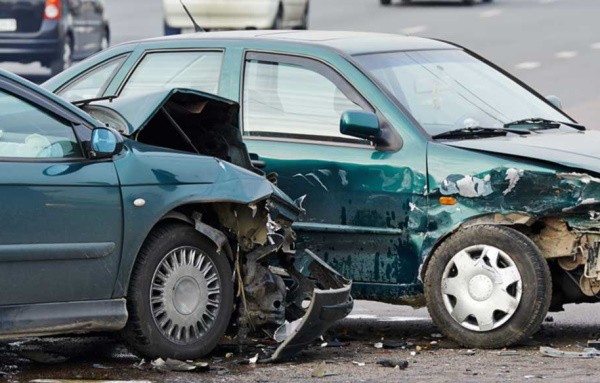
- Vehicle Damage: Document every vehicle involved, not just yours. Get close-ups of the damage and shots from a distance to show the points of impact. And don't forget the license plates.
- Skid Marks and Debris: Tire marks, broken glass, and other debris on the ground can help an accident reconstruction expert figure out exactly what happened. This evidence disappears fast, so it's a top priority.
- Your Injuries: Take pictures of any visible injuries you have—cuts, bruises, swelling—as soon as you can. Injuries change and fade, so an immediate record is invaluable.
- The Cause of the Accident: If you slipped and fell, get clear photos of the hazard itself, whether it's a spilled liquid, torn carpet, or an icy patch. If a faulty traffic light was involved, try to record a video of it malfunctioning.
A picture is worth a thousand words, but a video can be even better. A short walk-around video of the scene captures details and context that still photos might miss. You can even narrate what you're seeing to add more context later.
On-Scene Evidence Collection Checklist
The minutes after an accident are overwhelming. This checklist is a quick reference to make sure you capture the essentials before the scene is cleared.
| Evidence to Gather | How to Document It | Why It Helps Your Claim |
|---|---|---|
| All Vehicle Positions | Take wide-angle photos from all four corners of the scene. | Establishes final resting positions and helps reconstruct the collision sequence. |
| Close-Up Damage | Photograph dents, scratches, and points of impact on all vehicles. | Directly links the collision to the damage claimed and shows the force of impact. |
| Skid Marks & Debris | Get low-angle shots of tire marks, broken glass, or fluid leaks. | This transient evidence helps experts determine speed, braking, and direction. |
| Injuries | Photograph any visible cuts, bruises, or swelling immediately. | Creates a timestamped record of your physical condition right after the incident. |
| Hazardous Conditions | Capture photos/videos of wet floors, poor lighting, or obscured signs. | Proves that a dangerous condition existed, which is key in premises liability cases. |
| Witness Information | Get their full name, phone number, and a brief statement if they agree. | Provides third-party validation of your account of what happened. |
Having this documented proof can make all the difference in negotiations with insurance companies, who will look for any reason to challenge your version of events.
Documenting Environmental Factors
Beyond the obvious physical evidence, environmental conditions often play a huge role. Was the sun in the other driver's eyes? Was it pouring rain, making the roads slick? Was a stop sign hidden by an overgrown tree?
Make sure you document these elements, too. Take photos that show the weather, the time of day, and any road or property hazards that might have contributed. For instance, the Federal Highway Administration reports that a significant percentage of vehicle crashes each year are weather-related. Proving that poor conditions existed helps establish the full context for your claim. This careful and immediate safeguarding of evidence is your first and best step toward protecting your rights.
Securing Physical and Digital Proof for Your Claim
The photos you take right after an accident are a great start, but they’re just the beginning. The universe of evidence is much bigger than the crash scene itself—it includes physical items you own and digital trails you leave behind. Proper preservation of evidence is about understanding how everyday objects can become the most compelling storytellers in your personal injury case.
Let's start with the physical items. If you were in a car wreck, the clothes you wore should be set aside immediately, even if they look fine. If you were hurt by a defective product, that product is now the single most important piece of physical proof you have.
Don't wash the clothes. Don't throw the product away. Seal them in a bag or box where they won’t be touched. These items hold tangible clues about the force of an impact or the specific defect that caused your injury.
The Growing Importance of Digital Evidence
Our lives today create a digital footprint that can be just as powerful as physical proof. Text messages, emails, social media posts—all of it can create a timeline or add important context that backs up your version of events.
Think about it. You slip and fall in a grocery store and immediately text a friend: "Just fell hard at the store. Floor was soaked, no wet floor signs anywhere." That text, complete with a timestamp, is now a rock-solid piece of evidence. The same goes for an email you send to your boss explaining you can't work because of your injuries.
Here's what you need to lock down right away:
- Text Messages and Emails: Take screenshots of any conversations about the accident, your injuries, or your recovery process.
- Social Media Posts: While we always tell clients to stop posting on social media after an accident, save any relevant posts made by you or witnesses before an account gets locked down.
- Voicemails: If the at-fault party or a witness leaves you a voicemail, save that file immediately.
- GPS Data: Your phone’s location data can often pinpoint exactly where and when the incident happened.
Pro Tip: Create a dedicated folder on your computer or cloud drive and save every digital file related to your case. Keeping everything organized from day one will make building a strong, coherent claim much easier down the road.
A Real-World Example: The Truck Accident Scenario
Let’s look at a collision with a commercial truck. That truck is a goldmine of digital evidence. Most modern big rigs have an event data recorder (EDR), or "black box," that captures key data like speed, braking, and steering maneuvers in the seconds before a crash.
On top of that, trucking companies are required by federal regulations to keep detailed records, including:
- Driver logs (to prove compliance with hours-of-service rules designed to prevent fatigue)
- Vehicle inspection and maintenance histories
- The driver’s employment file and training records
This is the kind of proof that can vanish in a blink. Trucking companies are only required to hold onto these logs for a short period. If a formal legal request isn’t sent out fast, that data can be legally destroyed as part of routine business. This is why immediate action is so important for the proper preservation of evidence. You can find more practical guides like this in our Atlanta Personal Injury Resources.
Challenges in a Global Digital World
Securing digital proof is more involved than ever, with data often stored on servers thousands of miles away—sometimes in other countries. The global nature of data storage has raised the stakes. A report found that a majority of all criminal investigations now involve requesting electronic evidence stored across borders. This exact problem affects personal injury cases, too. Think about dashcam footage from a truck that's automatically uploaded to a server in another country.
For accidents here in Georgia, preserving this kind of digital evidence often requires specialized technical help. Services that handle Georgia data recovery can be essential. A skilled attorney knows they must act fast, sending legally binding notices to make sure this scattered but key data is saved.
Using Witness Statements and Medical Records Effectively
Beyond the wreckage and skid marks, the human side of the story is what truly drives a case. The two most powerful forms of this proof are witness statements and your own medical records. When you handle the preservation of evidence correctly in these two areas, you build a clear, undeniable narrative of what happened and how it has impacted your life.
What a neutral party saw and what your doctor documented can be the deciding factor. An independent witness has no financial stake in the outcome, which makes their account incredibly compelling. Similarly, your medical chart provides a professional, unbiased timeline of your injuries—a story told by a medical expert.
The Power of a Good Witness
At the scene of an accident, most people are willing to help. Your goal is to make it easy for them and to capture information that will hold up months or even years later. A name and number are a good start, but there’s more you can do to preserve their perspective.
When you talk to a witness, try to ask a few quick, specific questions:
- "Where were you standing or driving when it happened?" This establishes their vantage point and whether they had a clear view.
- "What was the first thing that caught your attention?" This helps pin down the sequence of events from their unique perspective.
- "Is there anything else you saw or heard that you think is important?" An open-ended question like this can uncover details you never would have thought to ask about.
Jot down their answers in your phone’s notes app or on paper right then and there. Memories fade fast, so locking in these initial thoughts is very important. This simple act can turn a bystander into your most persuasive ally.
A witness who says, "I saw the other car run the red light because I was stopped right next to them," is infinitely more valuable than someone who only heard the crash and looked up afterward. Details about their location and what they saw first are what give their testimony weight.
To truly lock in their story, you can formalize their account with a sworn statement like an Affidavit of Fact. This document, signed under oath, makes it incredibly difficult for a witness to change their story down the road.
Your Medical Records Tell Your Story
Your first priority after an accident is always your health. But seeking immediate medical attention does double duty—it starts your physical recovery and creates the most important piece of evidence for your claim. Every doctor's appointment, physical therapy session, and specialist visit adds a new entry to your medical file.
That file becomes the official story of your recovery journey. It’s not just about proving you were hurt; it’s about documenting the full extent of your injuries, the pain you’ve endured, and the treatment required to get better. Insurance companies will almost always argue that an injury was pre-existing or not as bad as you claim. A detailed medical record is your best weapon against these tactics.
Start a dedicated folder—physical or digital—and keep everything related to your medical care organized.
- Doctor's Notes and Summaries: These are the official records of your diagnosis, prognosis, and medical observations.
- Medical Bills and Invoices: This proves the financial cost of your injuries, from the ER visit down to prescription co-pays.
- Treatment Plans: Records from physical therapists or specialists show the long road to recovery.
- Mileage and Receipts: Keep track of your travel costs to and from appointments—these are often recoverable expenses.
This organized file creates an unshakeable timeline linking your injuries directly to the accident. This kind of careful evidence collection leaves no room for doubt and powerfully demonstrates the true impact the collision has had on your life.
Understanding Spoliation and the Georgia Preservation Letter
So far, we've walked through the evidence you can collect on your own. Now it’s time to shift gears and talk about the legal tools we use to secure proof when it's in someone else's hands. This is where the process gets a bit more formal, but the concept is simple—and it’s one of the most powerful ways to protect your claim.
We have to talk about a significant legal term: spoliation.
Put simply, spoliation is what happens when a party to a lawsuit destroys, loses, or messes with evidence they were supposed to keep. It doesn't matter if they did it on purpose or by accident. If evidence that should have been saved suddenly vanishes, it's a huge problem for their side.
Under Georgia law, the penalties for spoliation are steep. A judge can fine the party that destroyed the evidence. More importantly, they can give the jury something called an "adverse inference instruction." This is a game-changer. It tells the jury they are legally allowed to assume the missing evidence would have been bad for the other side's case.
Think about that for a second. Imagine a judge telling a jury, "You are permitted to assume the security footage the trucking company 'accidentally' recorded over would have proven their driver was negligent." An instruction like that can single-handedly win a case.
The Purpose of a Preservation Letter
So how do you stop spoliation before it starts? You put the at-fault party on formal notice with a preservation letter, sometimes called a spoliation letter.
This isn't just a polite request. It’s a formal legal document that officially informs the other party and their insurer of their legal duty to preserve every single piece of related evidence.
Sending this letter creates a clear legal obligation. After they get it, they can no longer play dumb and claim they didn't know they needed to save a driver's logbook, a store's maintenance records, or digital data from a truck's onboard computer. If they destroy anything after that notice, your argument for spoliation penalties becomes incredibly strong.
What Goes into a Preservation Letter
A truly effective preservation letter has to be specific. It’s not a generic form letter. A well-drafted notice from an attorney will always identify:
- The Parties Involved: It clearly states who you are and who they are.
- The Incident Details: It includes the exact date, time, and location of the accident.
- The Specific Evidence to Be Preserved: This is the most important part. It must list exactly what they need to lock down and save, such as:
- All video surveillance footage from the premises for a specific time window before and after the incident.
- Vehicle inspection, maintenance, and repair records.
- The driver's complete employment file, logs, and any post-incident drug or alcohol test results.
- All electronic data from a vehicle's "black box" or event data recorder (EDR).
- Any photos, internal incident reports, or emails related to what happened.
This flowchart gives you a sense of the early decision-making process for gathering initial evidence like witness info and medical records.
The steps you take personally, like those above, are the foundation. They lead directly into more formal legal actions, like sending a preservation letter to lock down the evidence you can't get to yourself.
Why an Attorney Should Send the Letter
Could you write a letter yourself? Technically, yes. But having an experienced attorney draft and send it carries far more legal weight.
When an insurance company or a corporate legal department receives a letter on a law firm's letterhead, it sends a clear signal: you're serious, you know your rights, and you're preparing a strong case. It also guarantees the letter is legally airtight and covers all the specific types of evidence relevant to your unique situation.
The consequences of failing to preserve evidence can be devastating. For example, the Innocence Project has detailed cases where efforts for justice failed because biological evidence had been lost or destroyed. While that’s a criminal justice example, the principle holds true in civil cases. When evidence disappears, your chance at justice can disappear with it.
An attorney knows exactly what to ask for and how to word the request to eliminate loopholes. It’s a foundational step in the personal injury lawsuit process that establishes a firm, professional tone from day one. Taking this step isn't just a suggestion—it's actively taking control of your case.
How a Personal Injury Lawyer Protects Your Evidence
While the evidence you gather at the scene is a great start, professional preservation of evidence is far more involved. Bringing in an attorney allows you to focus on your recovery while a legal professional systematically builds your case. We take the raw information you’ve collected and use it as the foundation for a formal legal argument.
This process is about more than just collecting photos. It involves establishing a formal chain of custody for physical evidence—a meticulous record tracking who handled each item, when, and why. This ensures that when we present something in court, like a defective product that caused your injury, its integrity is unquestionable.
Going Beyond What You Can Get Alone
One of the first things we do is use legal tools to get evidence you can't access on your own. A simple request from you for a store's security footage might be ignored. A formal request from our law firm, often followed by a subpoena, carries the full weight of the law.
These legal demands are essential for obtaining key evidence, such as:
- Internal Corporate Records: We can demand a trucking company's internal maintenance logs or a grocery store’s safety inspection history.
- Private Surveillance Footage: Businesses, apartment complexes, and even homes often have cameras that captured an incident but won't release the footage without a legal order.
- Employee Communications: Internal emails or messages about a known hazard can be powerful proof of negligence, but you'll never see them without a formal legal process.
From my experience, a company’s story often changes when we get access to their internal files. Suddenly, the "unexpected" spill on the floor is revealed to be a recurring problem that management knew about but failed to fix.
Bringing in Experts to Analyze the Data
Raw evidence is one thing; understanding what it means is another. We work with a network of trusted experts who analyze evidence and explain its significance in a way that is clear and persuasive to an insurance adjuster or a jury.
This often includes hiring professionals like:
- Accident Reconstructionists: These experts use photos, skid marks, and vehicle damage to create a scientific, computer-generated model of how a crash occurred.
- Medical Experts: We consult with specialists who review medical records to provide an expert opinion linking your specific injuries directly to the accident.
- Engineering Experts: If a faulty product or structural failure caused your injury, an engineer can analyze the object and provide an authoritative report on the defect.
In truck accident cases, for instance, we often hire specialists to download and interpret data from the truck's "black box." You can find out more about these situations in our guide to handling Smyrna truck accident claims.
Meeting the Jury's Expectations
Today's jurors, influenced by popular crime dramas, often expect a high level of scientific proof. A study by the National Institute of Justice found that jurors have developed an expectation to see scientific evidence in cases. This mindset absolutely carries over into personal injury verdicts.
It’s our job to turn your photos, medical bills, and witness statements into a polished, professional case that meets that high standard. We organize everything into a clear, chronological narrative supported by expert analysis and hard data. This thorough approach to the preservation of evidence ensures every piece is properly protected and powerfully presented.
FAQ: Common Questions About Preserving Accident Evidence
After a crash, it's natural to have a million questions running through your mind. When you're trying to heal, the last thing you want to worry about is a legal process like evidence preservation. We hear the same questions from clients all the time, so I wanted to answer the most common ones right here.
Think of this as your quick-reference guide for handling evidence after an accident in Atlanta.
How Long Should I Keep Evidence After an Accident?
This is a big one. The short answer is: you must keep every single piece of evidence until your personal injury case is officially and completely closed. That doesn't just mean a settlement has been reached—it means all the final paperwork is signed and the matter is formally resolved.
In Georgia, the general deadline to file a personal injury lawsuit is two years from the accident date. But filing the case is just the beginning. You can learn more about these important timelines in our guide to the Georgia statute of limitations for personal injury.
Key Takeaway: Do not throw anything away. This includes the obvious things, like a damaged vehicle, but also the small stuff like the shoes you wore during a slip and fall or your cracked cell phone. Wait for your attorney to give you the official all-clear.
What if the Other Side Ignores a Preservation Letter?
When we send a formal preservation letter, it’s not just a suggestion—it's a legal notice. If the other party destroys, alters, or conveniently “loses” evidence after receiving that letter, they have committed an act called spoliation. Georgia courts take this very seriously.
If this happens, your attorney can file a motion, and a judge has several options for imposing sanctions. These can include steep financial penalties.
Even more powerful is something called an "adverse inference instruction." This is where the judge tells the jury they are allowed to assume that the destroyed evidence would have been damaging to the other party's case. It's a massive blow to their credibility and can be a game-changer at trial.
Can I Get My Car Repaired Before My Case Is Over?
We know you need your car fixed to get back to your life. But your damaged vehicle is one of the most powerful pieces of evidence you have. It physically shows the force of the impact and tells the story of how the collision happened.
You should not repair your vehicle until your attorney says it's okay. Repairing it too soon is, legally speaking, the same as destroying evidence.
Before giving you the green light, your lawyer will make sure all important steps are completed:
- A full set of high-resolution photographs are taken, documenting the damage from every possible angle.
- The at-fault party’s insurance adjuster is given a chance to inspect the vehicle.
- An accident reconstruction expert examines the vehicle if your case requires it.
Once these inspections are done, your attorney will let you know when it’s safe to proceed with repairs without compromising your claim.
Should I Post About My Accident on Social Media?
The answer is an emphatic no. We advise every client to stop posting on all social media platforms while their case is active. You must assume that insurance adjusters and defense lawyers are watching your public profiles, looking for anything they can twist to their advantage.
A photo of you at a family barbecue could be used to argue you aren't in as much pain as you claim. A simple comment about "feeling better today" can be taken completely out of context. The safest play is to go dark until your case is over. Protecting the integrity of your claim means being vigilant about every detail, including the proper preservation of evidence in your digital life.
At Jamie Ballard Law, we understand that managing the aftermath of an accident is challenging. If you have more questions or need someone to take over the burden of protecting your rights and evidence, we're here to help. Reach out to us for a free, no-obligation case evaluation at https://jamieballardlaw.com.