If you’ve ever heard the term ‘slip and fall’ case, you’re already on the right track. But if you're asking, what is premises liability?, you're asking a much bigger and more important question. At its heart, it is a legal concept that holds property owners responsible for injuries that happen on their property due to unsafe conditions. This isn't about accidents that nobody could have predicted. It’s about a property owner's legal duty to protect people from preventable harm.
Understanding Premises Liability in Plain English
Think of it this way: if you were hosting a party at your house and knew a step on your porch was rotten, you would absolutely warn your guests, right? You would probably put up a sign or block it off entirely. That’s just common sense and being a good host.
Property owners—from massive retail chains to individual homeowners—have a similar, legally-backed obligation. They must either fix known hazards or provide a clear, adequate warning so visitors don’t get hurt. This responsibility is a fundamental part of owning or managing a property.
The Four Elements of a Premises Liability Claim
So, what does it take to build a successful claim? It’s not enough to just show you were injured on someone else’s property. Your case must be built on the foundation of negligence. This means proving the property owner failed in their duty to you.
Here is a quick summary of the four main components you generally must prove to have a valid premises liability claim.
| Element | What It Means in Simple Terms |
|---|---|
| Duty of Care | The property owner had a legal responsibility to keep the premises reasonably safe for you. |
| Breach of Duty | The owner failed to meet that responsibility by not fixing or warning about a hazard. |
| Causation | The owner's failure (the breach) directly caused your injuries. |
| Damages | You suffered actual harm, like medical bills, lost wages, or pain and suffering. |
Each of these four elements must be present. A missing piece can cause a case to fall apart, which is why documenting everything is so important.
What Does a Breach of Duty Look Like in the Real World?
A breach of duty isn't just a simple mistake. It's a failure to act reasonably.
Here are a few common examples:
- A grocery store manager knows a freezer is leaking but fails to put up a "wet floor" sign for hours, leading to a fall.
- An apartment complex owner ignores tenant complaints about a broken handrail on a staircase.
- A business fails to replace burnt-out lightbulbs in a dark parking garage known for criminal activity.
These are not just accidents; they are situations where a property owner’s carelessness created a dangerous environment. If you've been hurt in a similar scenario, understanding the role an Atlanta premises liability lawyer plays can clarify your next steps.
The key question in these cases is almost always this: Did the property owner know, or should they have reasonably known, about the hazard that caused the injury?
If the answer is yes, and they did nothing to fix it or warn you about it, they can likely be held accountable. These laws exist for a reason: to encourage property owners to be proactive about safety and to give injured people a path to justice. Knowing what is premises liability is the first step in protecting your rights.
How Your Visitor Status Affects Your Rights
In Georgia, when we talk about premises liability, the first question is always the same: why were you on the property? It might seem like a small detail, but it’s everything. The level of safety a property owner owes you is directly tied to your legal status as a visitor at the moment you were hurt.
Not everyone who steps onto someone else’s land is protected in the same way. Georgia law is very specific, sorting visitors into three groups. Figuring out which group you fall into is the first step toward understanding your rights and the strength of your potential personal injury claim.
The Three Visitor Classifications
The law creates these categories to set a clear, predictable standard for property owners. Each one comes with a different level of responsibility, and knowing the difference is vital.
Here’s how Georgia law breaks down visitor status:
-
Invitee: This is someone on the property for a mutual benefit, usually a commercial one. Think of a customer in a store or a client in an office. Invitees are owed the highest duty of care. The property owner has an active responsibility to inspect for hidden dangers and either fix them or warn you about them.
- Example: A shopper in a grocery store, a patient at a medical clinic, or a fan with a ticket at a concert.
-
Licensee: A licensee is a social guest. You’re on the property with the owner’s permission but for your own enjoyment or convenience, not for a business reason. The owner’s duty here is lower. They must warn you of known dangers they haven't fixed, but they aren't required to go looking for unknown hazards.
- Example: A friend invited over for a barbecue or a relative staying for the holidays.
-
Trespasser: This person is on the property without any legal right or permission from the owner. Generally, property owners owe no duty to keep a trespasser safe. The only obligation is not to willfully or wantonly injure them once you know they are there. However, the rules get more involved when children are involved.
This hierarchy forms the very foundation of a premises liability case.
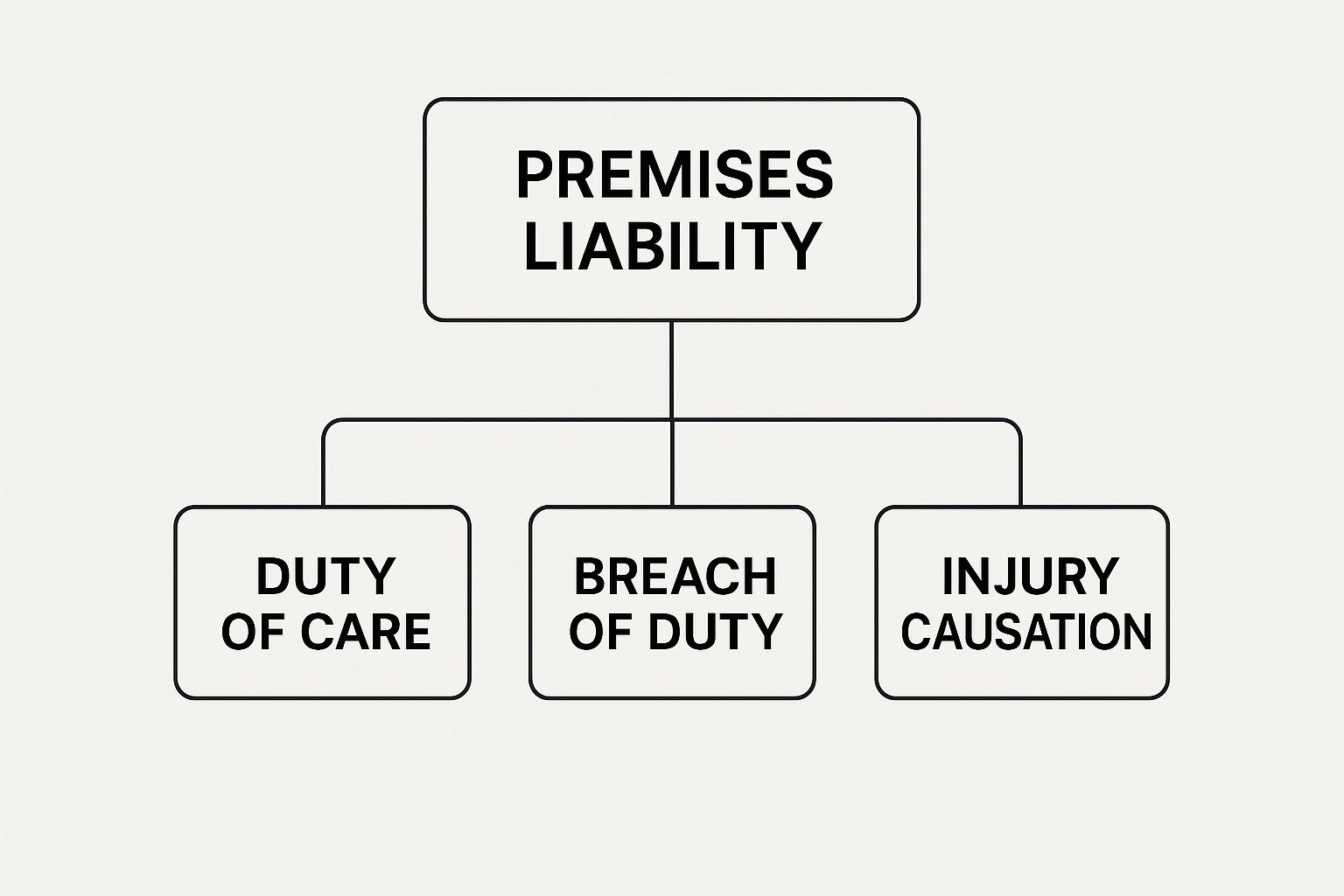
As the image shows, a strong case starts with the owner's duty, moves to a breach of that duty, and connects it directly to the injury you suffered.
Key Takeaway: The entire case hinges on the owner's failure to meet the specific legal duty owed to you based on your visitor status. An invitee receives the most protection under the law; a trespasser receives the least.
This legal distinction makes all the difference. For example, a puddle on a supermarket floor could easily lead to a valid claim for a shopper (an invitee). That same hazard in a friend's private garage might not be enough to hold them liable if you were visiting as a social guest (a licensee).
These duties aren’t just suggestions; they are spelled out in Georgia’s official state code. Understanding where you stand is the only way to determine if you have a case and what it will take to prove it.
Proving a Property Owner Was Negligent

Just because you were hurt on someone else's property doesn’t automatically mean you have a valid case. To win a premises liability claim, you have to do more than show you were injured—you must prove the property owner was legally negligent.
Think of it like building a case with four essential cornerstones. If even one is missing, the entire structure falls apart. The law puts the burden on you, the injured person, to establish that each of these four elements exists.
The Four Elements You Must Prove
To successfully hold a property owner accountable, you need to connect their actions (or lack thereof) directly to the harm you suffered. This requires proving all four of the following points:
- A Duty of Care Was Owed: First, you must show the property owner had a legal responsibility to keep you reasonably safe. As we covered earlier, the specific duty owed depends on your status as an invitee, licensee, or trespasser.
- The Duty Was Breached: Next, you have to prove the owner failed to live up to that legal responsibility. This is the breach of duty. A classic example is a grocery store manager knowing about a spilled drink in an aisle but failing to clean it up for hours.
- The Breach Caused Your Injury: This is known as causation. Here, you must draw a direct line from the owner's failure to your injury. Using our spill example, you need to show that because the spill wasn't cleaned up, you slipped, fell, and broke your arm.
- You Suffered Actual Damages: Finally, you must have measurable harm. In legal terms, these are your damages, which include things like medical bills, lost wages from missed work, and the pain and suffering you endured.
The heart of most premises liability cases is proving the property owner had "notice" of the dangerous condition. This means showing they either knew about the hazard or should have known about it if they were performing regular, reasonable inspections.
For a closer look at a property owner's legal obligations here in Georgia, the official state code provides specific language. You can review the law yourself in O.C.G.A. § 51-3-1.
The Role of Insurance and Time Limits
Many businesses carry general liability insurance specifically for these types of incidents, but you can't assume they all do. While the global liability insurance market is massive—around $290.5 billion—a startling 40% of small businesses operate with no insurance coverage at all. This can make recovering compensation much more challenging. You can explore more statistics on business liability coverage to get a better sense of this landscape.
It is also so important to act fast. Georgia has strict deadlines, or statutes of limitations, for filing a lawsuit. If you wait too long, you could lose your right to seek compensation forever. To ensure you don't miss this important window, you should learn more about the statute of limitations for personal injury in GA.
Common Scenarios Involving Premises Liability
When most people think of premises liability, the first thing that comes to mind is the classic slip-and-fall on a wet floor. While that's certainly a clear-cut example, a property owner's legal duty to keep you safe extends far beyond just mopping up spills.
At its core, premises liability law holds owners accountable when their negligence leads to an injury on their property. The key isn't the specific type of accident, but whether the owner failed to fix or warn you about a danger they should have known existed.
Everyday Examples of Premises Liability
So, what does this look like in the real world? The common thread in all valid claims is that the property owner knew—or reasonably should have known—about a hazardous condition but did nothing about it.
Here are some common situations where an owner's carelessness can lead to a lawsuit:
- Inadequate Security: A business in a high-crime area fails to install proper lighting, cameras, or security patrols in its parking lot, leading to an assault or robbery.
- Falling Merchandise: A big-box store stacks heavy items unsafely on high shelves, and they fall and strike a shopper.
- Swimming Pool Accidents: An apartment complex or hotel neglects to install a secure, self-latching gate around its pool, resulting in a tragic drowning or near-drowning.
- Dog Bites and Animal Attacks: A landlord is aware that a tenant owns a dog with a history of aggression but takes no action to protect other residents or visitors.
- Elevator and Escalator Malfunctions: Poor or infrequent maintenance causes an elevator to drop or an escalator to stop abruptly, injuring passengers.
- Exposure to Toxic Substances: A property manager ignores known issues like a chemical leak or a serious mold infestation, causing tenants to suffer long-term illness.
Negligent Security Is a Growing Concern
While physical hazards like wet floors are common, claims based on negligent security are becoming increasingly significant. A property owner’s failure to protect visitors from criminal acts is a serious breach of duty.
For instance, in a landmark Atlanta case, a jury awarded a man nearly $43 million after he was shot during a robbery in a pharmacy's parking lot. The Georgia Supreme Court later affirmed that the business was 95% at fault because it failed to implement reasonable security measures despite knowing the area was prone to crime.
A successful premises liability claim hinges on proving a direct line from the property owner’s negligence to the injuries you sustained.
Steps to Take Immediately After an Injury
The moments right after an injury are disorienting. It's tough to think clearly when you're in pain and everything feels chaotic.
But the actions you take right then and there are very important. They protect not only your health but also your ability to hold the property owner accountable later.
Your Immediate Action Plan
Think of this as a checklist for the scene of the accident. These steps help you gather the facts before evidence gets cleaned up or memories start to fade.
- Seek Medical Attention First. Your well-being is the top priority. If you are seriously hurt, call 911 or have someone do it for you. Even if you think you’re okay, a medical evaluation is a good idea. It creates an official record that connects your injuries directly to the incident.
- Report the Incident. Find the manager, property owner, or an employee on duty. Tell them what happened and insist they file an official incident report. Always ask for a copy before you leave—this is your proof that the event was documented.
- Document the Scene. Your smartphone is your most powerful tool here. Take photos and videos of everything from multiple angles. Get close-ups of the hazard that caused the fall, like a wet floor, broken stair, or dim lighting. Also, capture wider shots of the area and any visible injuries you have.
- Gather Witness Information. Did anyone see you fall? If so, politely ask for their name and phone number. An independent witness provides a powerful, unbiased account of the dangerous conditions that were present.
- Preserve Your Clothing and Shoes. The clothes and shoes you were wearing are evidence. Don't wash them. Seal them in a bag and set them aside. They can be used later to show how the accident happened.
- Watch What You Say. It's a natural reaction to say things like, "I'm sorry," or "I wasn't paying attention." Don't. Avoid apologizing or admitting any fault. When you report the incident, stick to the facts and never give a recorded statement to an insurance adjuster without speaking to an attorney first.
Following these steps is a key part of seeing what is premises liability in a real-world scenario.
How a Property Owner’s Legal Duties Are Changing
What was considered "reasonably safe" for a property yesterday might not be enough today. The legal duties of property owners are constantly evolving, and the core of what is premises liability is expanding right along with them. Today, it’s not just about cleaning up a spill; it’s about proactively identifying and fixing dangers before anyone gets hurt.
Public expectations for safety are higher than ever, especially in the wake of high-profile tragedies. Events like the Grenfell Tower fire sent shockwaves across the globe, forcing lawmakers and safety experts to rethink what we demand from building owners. As a result, owners, property managers, and even contractors are now held to a much stricter standard of care.
A Clear Shift Toward Proactive Safety
The legal landscape is moving away from a reactive model—fixing problems after an accident—and toward a preventive one. This means property owners have a duty to be vigilant. They need to actively look for hidden hazards like old wiring, unseen structural problems, or fire systems that aren't up to code.
We've seen a clear spike in claims related to building safety failures after major incidents. These claims aren't just targeting contractors anymore. They are increasingly aimed at property managers and surveyors who should have spotted issues like defective fire doors or poor smoke ventilation but failed to act. You can read more on how building safety claims have evolved for a deeper dive.
This trend highlights an important point: a property owner's job is never done. They have an ongoing duty to inspect, maintain, and upgrade their properties to meet modern safety standards. Simply fixing what’s obviously broken no longer cuts it. Understanding what is premises liability today means recognizing this growing responsibility to protect people from any and all dangers that can be reasonably foreseen.
Frequently Asked Questions About Premises Liability
After an injury, you're bound to have questions. The legal side of things can feel confusing, but getting clear answers is the first step toward feeling in control again. Here are some of the most common questions we hear from people trying to understand premises liability and what it means for them.
What if I Was Partially at Fault for My Accident?
This is a fantastic question because it gets right to the heart of how Georgia law works. Our state uses a rule called modified comparative negligence.
In plain English, this means you can still recover money for your injuries even if you were partly to blame, as long as a court finds you were less than 50% responsible. If your share of the fault is 50% or more, you are unfortunately barred from any recovery.
Let's say you were looking at your phone while walking and tripped over a crumbling, unmarked step. A jury might decide you were 20% at fault for not watching where you were going. If your total damages were $100,000, your final award would be reduced by your 20% of fault, leaving you with $80,000.
How Long Do I Have to File a Premises Liability Lawsuit in Georgia?
This is a non-negotiable deadline. In Georgia, the statute of limitations for personal injury claims, including premises liability, is two years from the date the injury happened.
There are almost no exceptions to this two-year rule. If you miss this deadline, your case will be dismissed, and your right to pursue compensation will be gone for good.
This strict time limit is why it's so important to explore your legal options as soon as you are able, long before the clock runs out.
Can I Sue the Government if I Was Injured on Public Property?
Yes, you can bring a claim against a city, county, or state government, but be warned: the process is completely different and far more demanding. These cases are governed by the Georgia Tort Claims Act.
This law imposes unique requirements, including much shorter deadlines to give the government formal written notice of your claim—sometimes as short as six or twelve months. You have to follow these procedural steps perfectly. Any misstep can get your case thrown out before it even begins.
If you were hurt in a city like Smyrna, understanding the specific duties of a Smyrna premises liability lawyer can give you the localized knowledge you need to handle these specific rules.