So, you’ve given your sworn testimony. Now what? From my experience as an Atlanta personal injury attorney, the biggest question on your mind is probably, "how long after a deposition is a settlement?" There’s no single, clean answer, but it's helpful to think of your deposition as a major turning point in your case. A deposition provides the key information both sides need to value the claim and decide the next steps.
For simpler, more straightforward cases, a settlement offer could show up within a few weeks. More tangled or high-stakes claims, however, might take several months to fully resolve. Ultimately, understanding what happens after you give testimony is the best way to estimate how long after a deposition a settlement may be reached.
The Waiting Game After Your Deposition
Your deposition isn't the finish line; it’s really the start of a new, highly analytical phase of your personal injury claim.
Once you're done, a court reporter meticulously prepares a word-for-word transcript of everything that was said. Both your legal team and the defense attorneys will pour over this document, searching for strengths, weaknesses, and any key statements that could shape the outcome of the case.
This transcript becomes the official, undisputed record. It's the foundation upon which both sides will build their final arguments. Based on how your testimony landed, your attorney will fine-tune your case strategy, while the opposing side is forced to reassess its actual risk of losing at trial. This in-depth review is what truly sets the stage for any meaningful settlement talks.
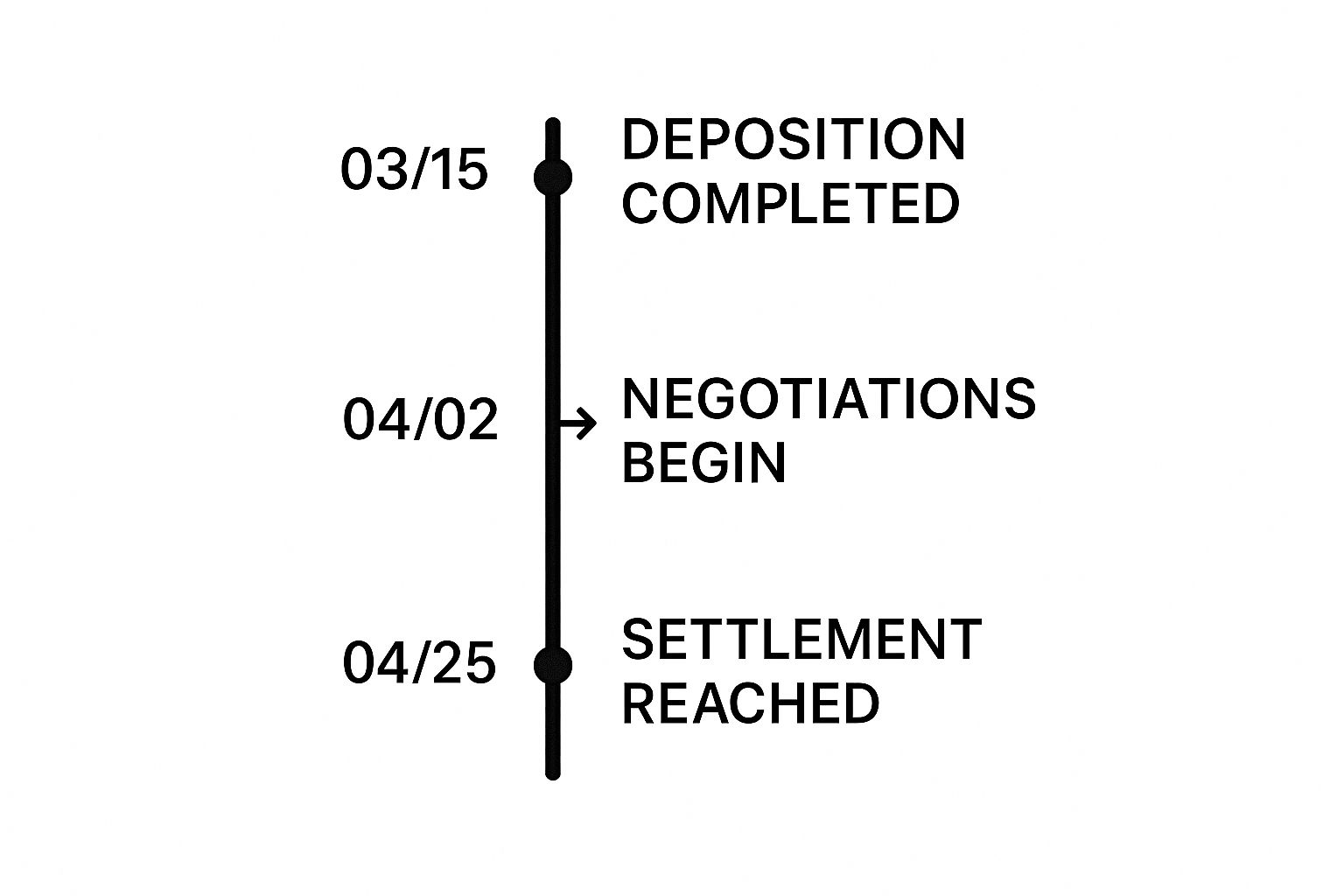
As you can see, getting through the deposition is what unlocks the serious negotiation phase—a necessary step before any settlement can be reached.
Understanding the General Timeline
The time it takes to get from a deposition to a settlement can vary wildly. It really depends on the specific facts of the case and, frankly, how motivated each party is to avoid a trial.
Generally speaking, many cases settle within a few weeks to a few months after the deposition. This window gives the attorneys enough time to review the transcript, size up the strength of the evidence, and negotiate the terms of a potential deal.
However, some situations can stretch this timeline out considerably. Cases with ongoing medical treatments or complicated liability arguments can sometimes take a year or more to settle after depositions conclude. You can learn more about the complete personal injury lawsuit process in our detailed guide.
To give you a clearer picture, here’s a breakdown of what you might expect.
Typical Post-Deposition Settlement Timelines
| Case Simplicity | Typical Settlement Window |
|---|---|
| Clear Liability, Minor Injuries | 30 to 90 days |
| Disputed Fault, Moderate Injuries | 3 to 6 months |
| Complex Liability, Severe Injuries | 6 months to over a year |
Keep in mind, these are just estimates. Every case has its own unique rhythm and set of challenges.
Ultimately, your deposition provides the clarity both sides need to move forward with their eyes open. It’s a moment that often injects a sense of reality into the process, accelerating the journey toward a final resolution for your specific claim.
What Happens Right After Your Deposition
Finishing your deposition is a huge step, but it’s definitely not the end of the road. If you're wondering how long it takes to get a settlement offer after this, the answer starts with what happens next. Your case now moves into an analysis phase.

As soon as you’re done speaking, a court reporter gets to work creating a word-for-word transcript of everything that was said. This isn't just a formality; it’s now the official record that both your lawyer and the defense will pick apart.
Reviewing the Transcript and Adjusting Strategy
Both legal teams will pore over this transcript, hunting for strengths, weaknesses, and any key statements that could make or break the case at trial. This document becomes hard evidence, forming the bedrock for final arguments and, more importantly, settlement talks.
Here’s a quick breakdown of what that looks like:
- Your Attorney's Review: Your lawyer will read every word, pinpointing the most powerful parts of your testimony and assessing how well it stood up to questioning.
- The Defense's Analysis: The other side is doing the exact same thing but looking for the opposite—any inconsistencies or weak points they can use for leverage to lowball an offer.
- Fine-Tuning the Game Plan: Armed with this concrete evidence, your attorney will sharpen your case strategy, preparing for the next move.
This is also the moment the other side seriously reconsiders its risk of going to trial. A deposition where you come across as strong, consistent, and credible puts immense pressure on the insurance company. They'd much rather make a fair settlement offer than face a compelling witness like you in front of a jury.
Your sworn testimony, now down in black and white, forces everyone to get realistic about the case's value. This is often the push that gets a stalled case moving toward real negotiations.
This careful, strategic review is a non-negotiable step before any serious offers hit the table, and it’s a major factor in determining the timeline for a potential settlement.
Key Factors That Influence Your Settlement Timeline
So, why do some personal injury cases here in Atlanta settle just weeks after a deposition, while others seem to drag on forever? It really comes down to a few key ingredients that set the pace. Understanding them is important for setting realistic expectations about how long you might be waiting for a settlement.

Think of the deposition as a spotlight on your entire case. The clearer the picture that spotlight reveals, the faster everyone can agree on a resolution.
Clarity of Liability
One of the biggest drivers of the timeline is how clearly your deposition establishes who was at fault.
If your testimony was consistent, credible, and left little room for doubt that the other party was negligent, their insurance company has a powerful incentive to settle the case quickly. They know a jury will likely see it the same way.
On the other hand, if the deposition muddied the waters or brought up conflicting stories, expect a longer fight. The insurance adjuster will seize on any uncertainty to delay the process or justify a lower offer.
Severity and Stability of Your Injuries
Another major piece of the puzzle is the nature of your injuries. If you've already made a full recovery, it's much simpler to calculate your total damages—medical bills, lost wages, and pain and suffering—which can speed things up considerably.
However, if your injuries demand ongoing medical care or your long-term prognosis is still up in the air, it’s almost always better to wait. Settling too soon could leave you paying for future treatments out of your own pocket. Because of this, claims involving severe or permanent injuries nearly always take more time to resolve. Keep in mind, there are strict deadlines, which you can learn more about in our guide to the statute of limitations for personal injury in GA.
The Insurance Company’s Approach
Finally, the insurance company's own tactics play a massive role. Some insurers will negotiate in good faith once a deposition proves their client’s liability and the damages are clear.
But other companies are notorious for using delay tactics. They drag their feet, hoping to wear you down until you accept a lowball offer out of sheer frustration. An experienced attorney knows how to counter these strategies, but it can still add months to the settlement timeline.
The Demand Letter and Negotiation Process
Once your lawyer has thoroughly reviewed the deposition transcript and has a complete accounting of your damages, the next step is to send a formal demand letter. This is the document that officially starts the settlement negotiations.
This detailed legal summary is sent to the insurance company or their attorney. It outlines the facts of your case, references key evidence from your deposition, and includes a comprehensive breakdown of your financial losses. This covers everything from medical bills and lost wages to projected future care costs.
The letter ends with a specific monetary demand required to settle the claim. The insurance company will then assess the demand and, almost always, respond with a lower counteroffer. This response formally begins the back-and-forth negotiation.
The Back-and-Forth of Negotiation
This negotiation stage is where a skilled attorney’s expertise becomes indispensable. They will manage the entire exchange, pushing back against lowball offers and strategically using the evidence from your deposition as leverage.
The objective is to close the gap between their initial offer and your demand. This often involves several rounds of offers and counteroffers that can play out over weeks or months. Your lawyer handles all these communications, fighting for your best interests while keeping you updated every step of the way. You can learn more about what these types of personal injury claims involve in our detailed guide.
Think of this negotiation as a strategic conversation where the facts are the currency. A strong deposition provides your attorney with the powerful talking points needed to secure a fair settlement.
Ultimately, how this process unfolds is central to answering the question of how long after a deposition is a settlement, as its length directly impacts the overall case timeline.
Using Mediation to Find Common Ground
So, what happens if both sides are dug in and miles apart on a settlement number after your deposition? Before anyone starts prepping for a full-blown trial, most personal injury cases in Atlanta will head to mediation. Think of it as a structured, formal negotiation session guided by a neutral professional known as a mediator.

The mediator's role isn't to declare a winner. Instead, their entire job is to help both parties find a path to a voluntary agreement. Typically, you and your lawyer will be in one conference room while the defense team is in another. The mediator shuttles back and forth, carrying offers and counteroffers and providing a realistic, unbiased take on the strengths and weaknesses of each side's arguments.
The Mediation Process Explained
This entire process is confidential and has become an incredibly effective tool for resolving cases without the time, expense, and sheer stress of a courtroom fight. In the negotiation phase that follows a deposition, lawyers from both sides are dissecting testimony and evidence to build strategies that maximize their outcomes while avoiding trial. Settlement talks, whether direct or through a mediator, are a give-and-take where being firm has to be balanced with flexibility to get a deal done. You can find more details about post-deposition negotiations on amicuslegalgroup.com.
When mediation is successful, it often ends with a signed settlement agreement that very same day. This provides a resolution far faster than waiting months or even years for a trial date.
Ultimately, mediation offers a powerful alternative to letting a lawsuit drag on. It directly impacts how long after a deposition a settlement is reached by creating a focused, high-stakes opportunity to find common ground and finalize the case.
Finalizing the Settlement and Receiving Your Funds
Once a settlement amount has been verbally agreed upon, you're on the home stretch. But a handshake deal isn't enough—that agreement must be put into a formal, legally binding document known as a Settlement Agreement and Release.
You and your attorney will go over this document with a fine-tooth comb. It's important to ensure every term matches what was discussed, with no surprises. After you sign, the defense team processes the payment. By law, those funds are sent directly to your attorney’s client trust account.
From there, your lawyer acts as the administrator, paying off any outstanding medical bills or liens attached to your case. After all those obligations are cleared, the remaining funds are disbursed directly to you.
This final stage usually takes a few weeks to a month. It brings a conclusive end to the question of how long after a deposition is a settlement actually paid out, letting you finally close this chapter. You can find more information on how client funds are protected by reviewing the Georgia Rules of Professional Conduct for trust accounts.
Common Questions After a Deposition
After you've given your deposition, your mind is likely racing with questions. That's completely normal. Here are some straightforward answers to the concerns we hear most often from our Atlanta clients.
Can My Case Settle on the Day of the Deposition?
While it is technically possible, a same-day settlement is extremely rare. This only tends to happen if a party's testimony is so damning or one-sided that the defense knows they have no path forward.
In almost every case, both legal teams need to order and analyze the official transcript. Serious negotiations don't begin until they've had time to review your sworn testimony word-for-word.
What If I Don't Get a Settlement Offer?
If the defense doesn't make a settlement offer—or if the offers they make are unacceptably low—your case simply proceeds toward trial. This isn't a bad thing. It signals to the other side that you are serious and prepared to see the case through.
Often, the act of preparing for trial is the very thing that brings the insurance company back to the negotiating table with a realistic, fair offer.
Does a Deposition Mean My Case Will Settle?
A deposition significantly increases the likelihood of a settlement. It’s the first time both sides get a clear preview of how a witness will perform in front of a jury. This helps everyone evaluate the strengths, weaknesses, and true value of the case.
During this stage, you'll hear many legal terms. Our firm offers a helpful legal dictionary to explain what these terms mean in plain English.
Because a deposition lays all the cards on the table, a significant number of personal injury cases in Georgia reach a settlement agreement shortly after the key depositions are completed.
Answering the question of how long after a deposition is a settlement often comes down to which of these common paths your case follows.
At Jamie Ballard Law, we guide you through every step of this process and make sure you understand what’s happening with your case. If you've been injured and need help, contact us for a free, no-obligation case evaluation. Visit us at https://jamieballardlaw.com.