hit and run in atlanta georgia incidents can leave crash victims uncertain about next steps. Acting quickly can help preserve evidence and improve the chances of identifying the driver. Whether you’re managing medical care, insurance, or law enforcement, a clear approach makes all the difference in an Atlanta hit-and-run case. If you follow these guidelines, you’ll be better equipped to handle a hit-and-run in atlanta georgia.
Immediate Actions After A Hit And Run
Your first priority is safety. Move your vehicle out of traffic if you can and turn on your hazard lights.
Once you’re clear of danger, pick up your phone and dial 911 to report the collision and a fleeing driver under Georgia law. Meanwhile, set out reflective triangles or cones to warn oncoming traffic.
For detailed accident reporting requirements, check the Georgia Department of Public Safety’s reporting rules.
- Check yourself and passengers for injuries, even those not easily noticed.
- Shift your car to the shoulder or a nearby parking area to keep the roadway clear.
- Note vehicle details: make, model, color and any partial plate numbers.
Document Scene Details
Your smartphone is your best ally here. Snap shots of debris, broken glass, license plate fragments and all visible damage.
- Use date and timestamp overlays in your camera settings so every photo is officially documented.
- Back up original images straight to a secure cloud folder.
- Look for traffic-signal cameras or surveillance at nearby businesses that might have captured the hit-and-run.
When you upload or share files, include metadata to help Atlanta Police Department detectives via the APD official site.
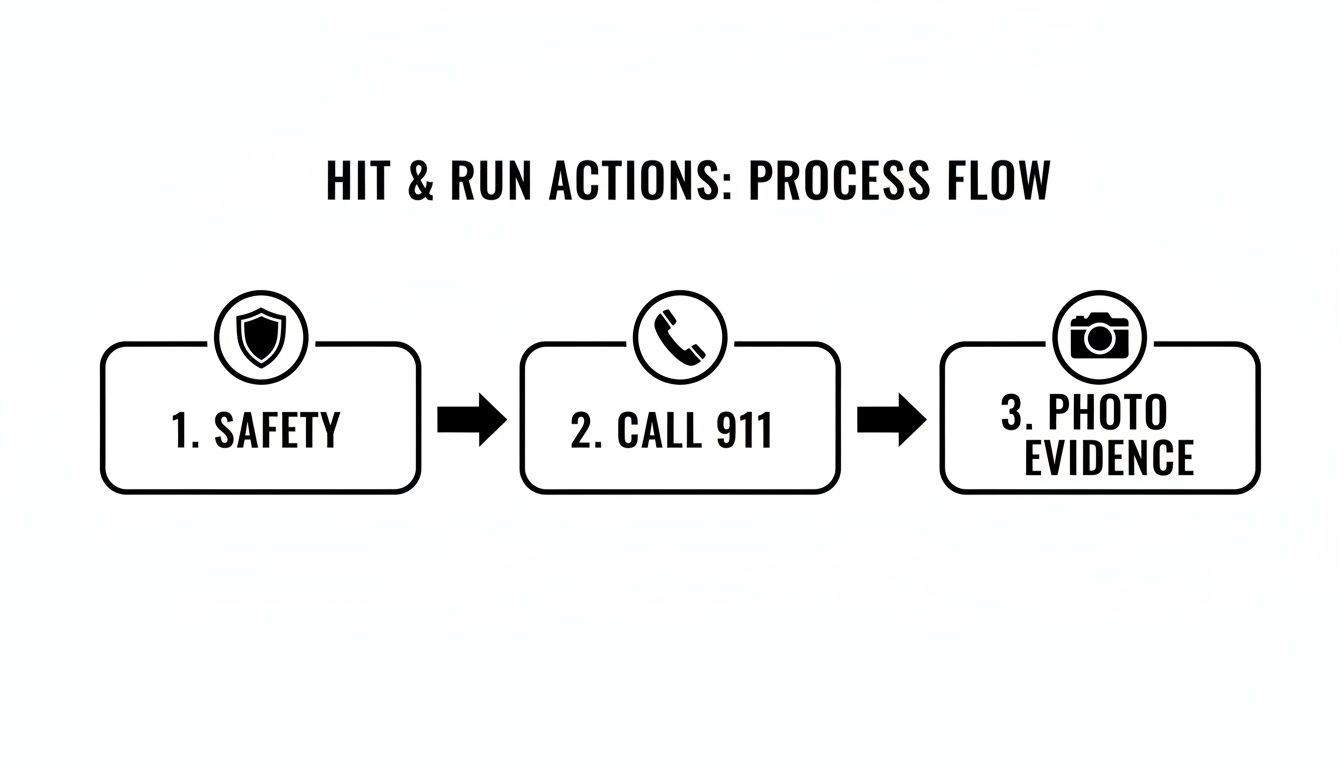
Immediate Steps To Take
Key actions to secure your safety and collect evidence after a hit and run
| Action | Why It Matters | Tools To Use |
|---|---|---|
| Secure Scene | Prevents further injury or traffic hazards | Reflective triangles |
| Call 911 | Creates an official record and sends help | Phone |
| Capture Photos | Preserves visual proof of damage and debris | Smartphone camera |
| Collect Witness Info | Generates leads for law enforcement | Notepad or notes app |
| Stay at Scene Until Cleared | Avoids legal violations under O.C.G.A. § 40-6-270 | Vehicle safety lights |
Common mistakes include leaving before you’ve captured damage photos or overlooking witness contacts.
In one Midtown Atlanta example, a dash cam caught an SUV speeding off after impact—and within hours, police had a suspect in custody.
Next Safety Tips
- Stay on the line with dispatch if they advise you to do so.
- Keep your doors locked and hazards flashing until help arrives.
- Even if you feel fine, get checked by a medical professional to document any hidden injuries.
These actions not only protect you but also bolster any future claims. Prompt reporting cuts down on headaches with insurers and keeps you ahead of important deadlines.
For more information on legal steps, review the Jamie Ballard Law Contact Page.
Understanding The Surge Of Hit And Run Accidents
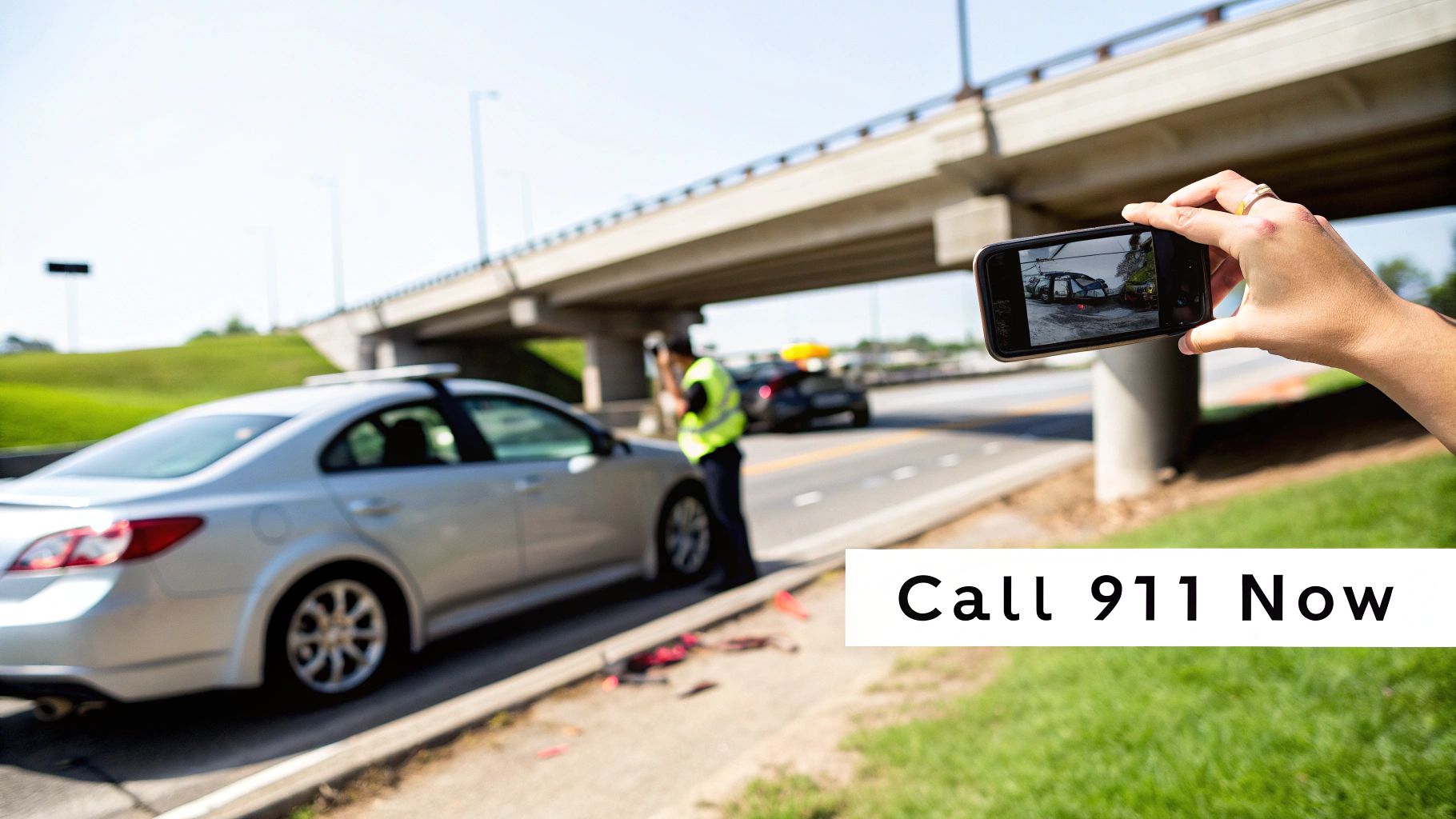
Atlanta’s growing traffic has come hand-in-hand with a rise in hit-and-run collisions. Recent studies show a 25% increase in drivers fleeing the scene since 2019, underscoring a serious public‐safety concern.
Urban planners point to speeding, distracted driving, and impairment as top contributors. Add in dimly lit residential streets and bumper-to-bumper congestion, and you’ve got the perfect storm for hit and run collisions in Atlanta.
For a deeper dive into this trend, see these findings from Patrick Trial Law.
Key Factors Fueling Driver Flight Include:
- Speeding on highways and surface streets, which slashes reaction time and magnifies impact
- Distraction from smartphones or advanced in-car systems
- Impairment by alcohol or drugs, often followed by panicked escapes
- Poor lighting and sparse surveillance in quieter neighborhoods
- Overcrowded roads that push frustrated motorists into hasty decisions
High Risk Zones
Certain corridors light up on the map with hit-and-run reports. The I-285 outer loop logs 40% more incidents than the inner loop, for instance.
Downtown arteries like Peachtree Street see repeated pedestrian strikes where drivers vanish before help arrives. Nearly every metro county saw a surge through 2022 in at-fault motorists taking off.
Crash Stats Comparison in Metro Atlanta
| Year | Total Crashes | Fatal Crashes | Pedestrian/Cyclist Fatalities |
|---|---|---|---|
| 2019 | 52,000 | 530 | 95 |
| 2020 | 48,500 | 590 | 110 |
| 2021 | 55,200 | 620 | 130 |
| 2022 | 60,300 | 680 | 150 |
“Drivers fleeing the scene often come from a half-mile radius of the crash site, showing how local familiarity sometimes breeds riskier choices,” notes a city planner.
Most hit-and-runs happen on weekend nights or during rush-hour peaks. Low visibility and congested lanes give some drivers the belief they can slip away unseen. Staying alert to these patterns can help you report vital details right away.
Emerging Patterns
The Georgia Department of Transportation data reveals suburban stretches—like Buford Highway—saw over 15% more hit-and-runs between 2020 and 2022. For a street-by-street breakdown, visit the GDOT crash map.
- In 2021, a three-crash spree on Northside Drive all involved drivers abandoning the scene.
- A late-night collision near Lindbergh Avenue went cold until nearby CCTV surfaced days later.
- Midtown’s blend of pedestrian traffic and stop-and-go lanes creates unique flight-from-scene risks.
If you witness a hit-and-run, every detail counts. Noting direction, vehicle make, and other identifiers can make or break the investigation.
- Snap time-stamped photos of the vehicles, damage, and surroundings
- Relay witness names and contact info to the 911 operator immediately
- Check for and document skid-mark patterns to aid in crash reconstruction
By watching for these warning signs and capturing key evidence, you’ll be ready to support law enforcement the moment an incident occurs.
Protecting Yourself And Gathering Evidence At The Scene
A hit-and-run can leave you in shock, wondering what to do first. Flick on your hazard lights right away and, if it’s safe, steer your car out of traffic. This not only keeps you out of harm’s way but also preserves the crash scene for investigators.
Next, dial 911 to summon medical help and law enforcement. Georgia law requires a police report for hit-and-runs. While you wait, set out reflective warning triangles or flares to warn other drivers.
- Stay calm and check for injuries in yourself and any passengers
- Note your exact spot using GPS or nearby landmarks
- Leave skid marks or debris untouched unless they pose a hazard
Sketching And Photographing Scene
Once the area feels secure, make a quick diagram of where vehicles stopped, skid lines, and nearby objects. A simple sketch can clarify angles of impact when professionals reconstruct the crash.
- Use your smartphone’s timestamp feature on every photo
- Snap wide shots of the overall scene, then focus in on damage
- Photograph street signs, traffic controls, and security cameras
Key Insight
Victims who preserved unedited image files in the cloud saw their photos accepted by APD without dispute.
Keep original image files in at least two secure locations. That way, metadata remains intact for both police and insurance adjusters.
Using Digital Tools To Strengthen Your Case
Your phone can become a mini forensic lab with a few smart apps:
- Glympse for sharing your live position with a friend or family member
- Timestamp Camera to burn date and location onto each photo
- Dropbox or Google Drive for automatic, secure backups
In one incident, a cyclist uploaded dash-cam footage within minutes. The clear timestamp revealed the fleeing car’s license plate and path, leading straight to an arrest.
Real Life Case Study
In Midtown Atlanta, a pedestrian took quick action after a hit-and-run by noting GPS coordinates and recording voice notes. Less than 24 hours later, nearby traffic-cam footage synced perfectly with the victim’s account, helping police zero in on the suspect’s vehicle.
| Evidence Type | Benefit |
|---|---|
| Audio Notes | Verbal account with precise time logs |
| GPS Coordinates | Pinpoints the exact crash location |
| Traffic Camera Video | Objective visual proof of impact |
Combining these elements turned a bleak situation into a solvable case. Always:
- Timestamp your voice logs with clear descriptions
- Share initial evidence with someone you trust
This layered approach gives you stronger leverage when filing claims.
Documenting Vehicle Damage
Don’t overlook minor scrapes or chipped paint. Jot down every scratch, dent, and panel misalignment—no matter how small. If your engine stalled or a tire blew out, note that too. Small details often link your car to the hit-and-run.
Collecting Witness Statements
Approach bystanders with a calm, courteous tone. Ask for names, contact info, and a quick description of what they saw. A solid witness statement can fill gaps when the driver disappears.
Backing Up Digital Files
After you’ve collected photos, audio, and videos, move everything into a secure online folder. A time-stamped cloud backup shows insurers you acted promptly.
Learn more about personal injury claims in our comprehensive guide on personal injury claims.
Reporting To Police And Meeting State Filing Rules
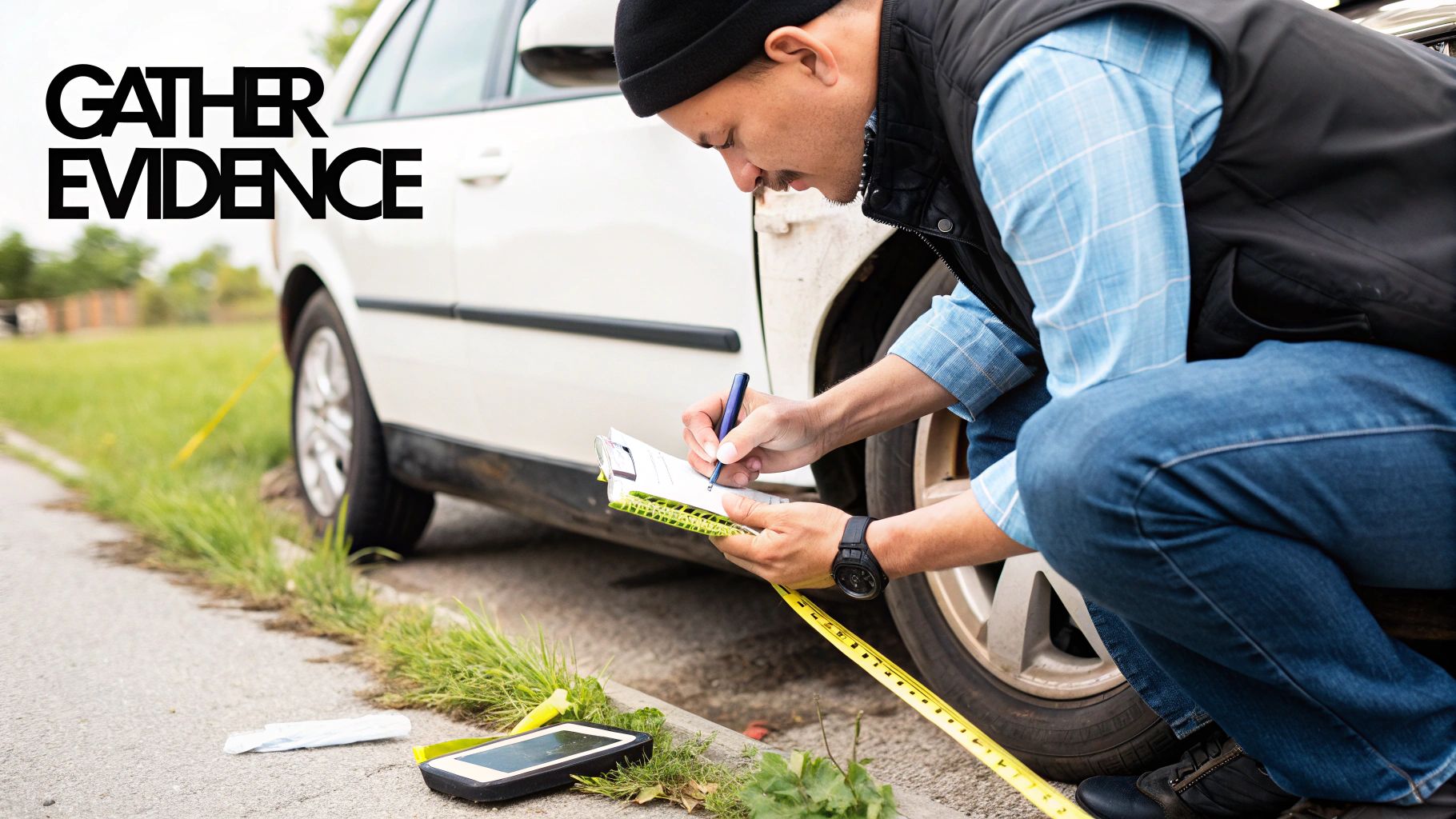
If you find yourself the victim of a hit-and-run in Atlanta, moving quickly can be the difference between identifying the driver or hitting a dead end. Getting an official report on file with the Atlanta Police Department locks in the details—location, time, witness statements—before they vanish.
Before you head to a precinct, round up these essentials:
- Driver’s license (copy or clear photo)
- Vehicle registration card
- Insurance policy number and provider name
- Photos of the scene or any witness contact notes
On Scene Reporting With Atlanta Police Department
Once everyone’s stable, dial 911 or call the closest precinct. Be ready to share:
- Exact crash location (for example, “Peachtree and 10th Street”)
- A brief description of the fleeing vehicle
- How many people were hurt, if anyone needs medical help
An officer on scene will gather witness accounts and try to secure nearby CCTV footage or traffic camera clips.
Key Insight
Even scraps of a license plate or the direction the car took can breathe life into an investigation.
For an overview of APD resources, visit the official Atlanta Police Department site: atlantaPoliceDepartment.
Completing The SR-13 Crash Form
After the officer clears you to leave, request or download the SR-13 crash report from the Georgia Department of Public Safety. Make sure to include:
- Your full name, address, and vehicle information
- Date, time, weather conditions, and crash description
- Witness names with accurate contact details
Double-check spelling and phone numbers—mistakes here create follow-up headaches.
Get the fillable PDF straight from the SR-13 crash report form portal: SR-13 Form Download.
Meeting Georgia State Four Day Deadline
Georgia law demands your SR-13 be filed within 4 days of the incident. Miss that window and you risk fines—or worse, losing your uninsured motorist claim.
For context on local crash trends, see Attorney Stephen T. Labriola’s blog: Atlanta Car Accident Statistics.
Make sure your completed SR-13 reaches the precinct or gets submitted online before time runs out.
Following Up On Your Report Status
If you don’t hear back within a week, pick up the phone and call the precinct where you filed. Have these details ready:
- Report number and the date you filed
- Officer name and badge number on your copy
- Any new witness info you’ve gathered
Officers can look up your entry in APD’s digital logs and let you know if anything’s missing.
| Follow-Up Steps | Purpose |
|---|---|
| Phone Precinct Call | Confirm report receipt |
| Email GBI Crash Unit | Check state-level filing |
| Attend Brief Hearing | Address any omissions in person |
Hearing schedules vary by zone—see the Georgia Bureau of Investigation’s traffic page for details: GBI Traffic Services.
Precinct Contacts And Filing Options
Calling the right office the first time avoids misrouting your SR-13.
- Midtown Precinct: 2020 Marietta St NW, (404) 555-1234
- Zone 5 Precinct: 2400 Cascade Rd SW, (404) 555-5678
- Zone 1 Precinct: 1545 Clairmont Rd, (404) 555-2468
Tips To Expedite Your Report
A quick proofread can save days. Missing or illegible info is the most common setback.
One driver faxed their SR-13 at midnight and by dawn APD had it processed—no delays.
Resource Links For Reporting
Need more detail? These official portals will guide you:
- Georgia Crash Report FAQ on the GDPS site: GDPS Crash FAQ
- APD online filing options: APD e-Reporting
- State-level accident resources: GBI Traffic Services
Filing Insurance Claims And Using Uninsured Motorist Coverage
After a hit-and-run in Atlanta, victims often scramble to cover medical bills and repair costs. At this point, your auto policy can feel like a lifeline. Knowing how to claim uninsured and underinsured motorist (UM/UIM) coverage makes all the difference.
Gather your paperwork as soon as possible. Your insurer will need detailed records of medical treatments, towing expenses, and repair estimates.
- Keep original medical bills and itemized invoices in one folder.
- Note dates for doctor visits, prescriptions, therapy sessions, and tests.
- Archive timestamped photos of damage alongside repair-shop estimates.
- Log every call with adjusters—document dates, times, and representative names.
Well-organized files strengthen your negotiating position.
Filing Your First Claim
Start by contacting your insurance agent or opening the carrier’s mobile app. Have your policy number and incident details at the ready.
- Report the hit-and-run within 24 hours of the crash.
- Provide the Atlanta Police Department report number plus any witness statements.
- Upload injury and damage documents via the insurer’s portal or email.
- Request written confirmation of your claim submission.
A prompt notification prevents policy lapses and needless delays.
Insurance Coverage Comparison
Here’s a quick look at how liability, uninsured motorist, and underinsured motorist policies differ under Georgia’s minimum standards.
| Coverage Type | Bodily Injury Limit | Property Damage Limit | Underinsured Availability |
|---|---|---|---|
| Liability | $25,000 per person | $25,000 per crash | N/A |
| Uninsured Motorist | $25,000 per person | $25,000 per crash | Sometimes offered |
| Underinsured Motorist | Varies by policy | Varies by policy | Commonly available |
Keep these limits in mind when reviewing your declarations page.
This snapshot highlights Georgia’s $25,000/$50,000 bodily injury baseline and how coverage tiers vary.
Leveraging Underinsured Motorist Benefits
Underinsured Motorist (UIM) coverage bridges the gap when the at-fault driver’s policy falls short.
- Covers the difference between the at-fault limits and your total costs.
- Pays for non-economic damages like pain and suffering.
- Only applies if the other driver carried minimal liability insurance.
Review your policy to confirm you didn’t waive UM/UIM benefits. If you did, address this gap in your demand letter or call your agent to upgrade.
When UM/UIM isn’t available, the Georgia Crime Victims Compensation Fund can help eligible victims:
- Medical expenses up to $15,000 per incident
- Lost income reimbursement up to $2,000
- Counseling services for trauma recovery
Apply through the Georgia Office of Victim Services at victim.georgia.gov.
Tips For Follow-Up Calls
Keeping a detailed log of every adjuster interaction protects you down the road.
- Prepare questions on coverage limits and next steps.
- Ask for claim or reference numbers with each update.
- Follow up your calls with email summaries to create a paper trail.
Key Takeaway: A consistent paper trail speeds up settlements.
Sending A Demand Letter
A clear, well-documented demand letter often nudges your insurer toward a quicker settlement. One Atlanta client secured a $10,000 advance simply by:
- Detailing all medical bills, rental car costs, and repair estimates
- Stating the accident date, location, and that the other driver fled
- Summarizing injuries with dates and treating providers
- Setting a 30-day response deadline
If you haven’t heard back within two weeks, place a follow-up call.
For extra guidance, learn more about filing a car accident claim in Atlanta in our detailed guide.
Persistent follow-ups often unlock better settlements.
Real-World Settlement Example
An Atlanta driver leaned on UM coverage after a hit-and-run and walked away with an $18,500 payout. Her attorney navigated policy nuances, waived the deductible, and secured funds for future therapy.
These success stories prove that with the right UM coverage and timely actions, you can protect yourself after a hit-and-run in Atlanta.
Exploring Legal Options And Key Deadlines Under Georgia Law

When a hit-and-run leaves you picking up the pieces in Atlanta, the decisions you make in the first hours and days shape your entire recovery. Georgia law not only defines criminal penalties for fleeing drivers but also draws hard lines on how long you have to file claims.
Felony Penalties For Fleeing Drivers
Under O.C.G.A. § 40-6-270, driving off after causing serious bodily harm is a felony.
Convictions carry 2 to 10 years in prison plus restitution orders covering medical treatment, therapy, and lost wages.
- Failing to stop and render aid after serious injury triggers felony charges
- Causing only property damage is a misdemeanor, still punished with fines and license suspension
- When a death results, penalties stiffen and license revocation periods lengthen
Civil Lawsuits For Crash Victims
If you track down the at-fault motorist, you can pursue a civil case for full compensation. Common damage categories include:
- Medical bills (past and projected)
- Lost income and diminished earning capacity
- Pain, suffering, and emotional distress
Georgia courts recognize that a crash ripples through your life—physically and mentally—so non-economic awards are often part of a fair settlement.
Understanding Statutes Of Limitation
Miss a filing deadline, and your case could be dead on arrival. Here’s the window you need to know:
| Claim Type | Filing Deadline |
|---|---|
| Personal Injury | 2 years |
| Property Damage | 4 years |
| Wrongful Death | 2 years |
For more on personal injury timelines, see Georgia’s statute of limitations for personal injury guide.
Preserving Your Right To Sue
Strong evidence isn’t an afterthought—it’s your lifeline. From day one:
- Snap and timestamp scene photos, then upload them to secure cloud storage
- Request nearby security camera footage before it’s overwritten
- Create a dedicated folder for medical records, repair bills, and witness statements
Being organized from the start gives you leverage in negotiations—and if it goes to trial, you’ll thank yourself later.
Key Takeaway
Missing a single document or deadline can seriously weaken your claim.
Working With Experts
Technical details can sway a jury. That’s where specialists come in:
- Accident reconstructionists map skid marks and impact angles
- 3D models illustrate how collision forces match your injuries
- Police reports and measurements add official weight to your version
Expert testimony turns dry data into compelling visuals.
When To Hire A Lawyer
Certain red flags mean you shouldn’t go it alone:
- The other driver is unknown or uninsured
- Your insurer denies or delays uninsured/underinsured motorist coverage
- Medical bills keep climbing beyond initial estimates
- Liability hinges on conflicting eyewitness accounts
An attorney handles filings, deadlines, and tough insurer negotiations so you can focus on healing.
“Legal counsel secured my full settlement when the insurer offered pennies on the dollar,” recalls an Atlanta victim.
Approaching Settlement Negotiations
Don’t kick off talks too soon—wait until your treatment plateaus. Then, your demand letter should include:
- Itemized medical summaries and future care projections
- Repair estimates, rental car receipts, and other property damage documents
- A clear deadline for insurer response, backed by Georgia law
Follow up in writing, archive every message, and be ready to pursue a lawsuit if counteroffers fall short.
Early action, airtight evidence, and smart legal guidance are your best bet after a hit-and-run in Atlanta.
FAQs On Hit And Run In Atlanta Georgia
A hit-and-run can leave you scrambling to figure out your next move. You may wonder how long you have to file a report, what counts as solid evidence, or whether you’ll ever track down the other driver.
Collecting clear details at the scene—like witness info, timestamped photos, and accurate measurements—can make or break your case. I once worked with a teacher who grabbed a quick video of the suspect’s taillight, and that clip proved decisive in her uninsured motorist claim.
Common Questions
- What should I do if the at-fault driver is never located?
- How many days do I have to file an APD report?
- Can I claim uninsured motorist benefits?
- When is it time to consult an attorney?
If the other vehicle remains a mystery, Georgia law requires you to submit the SR-13 crash form within 4 days via the Georgia Department of Public Safety portal. Once you’ve done that, your uninsured motorist (UM) claim stays protected.
Insurance Claim Timeline
- Notify your insurer within 30 days of the accident.
- Provide your APD report number and any witness contact details.
- Submit medical bills and repair estimates before your policy’s deadline.
“Uninsured motorist coverage is your best route when the other driver disappears,” says a crash investigator.
Key Resources
| Resource | Purpose |
|---|---|
| Georgia DPS SR-13 Form | Official crash reporting |
| APD e-Reporting | Online police report submission |
| Victim Services Program | Help for victims without UM coverage |
Additional Steps
- Save every medical record and invoice.
- Note each call or email with your insurance company.
- Follow up with the Atlanta Police Department if the report stalls.
If you only suffered minor property damage, your insurer might waive your deductible once you share a valid APD case number. UM claims often take several weeks, so check in regularly.
By walking through these FAQs, you’ll have a clearer view of deadlines and next steps after a hit-and-run in Atlanta, Georgia.
For detailed legal resources, visit Jamie Ballard Law.
hit and run in atlanta georgia