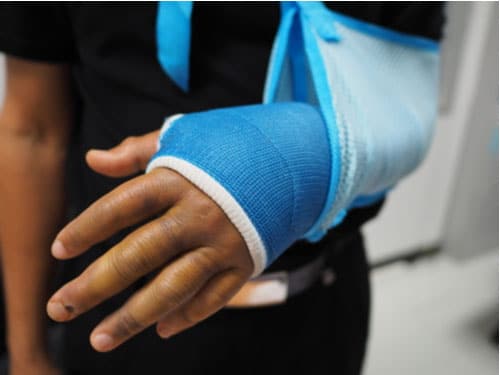
The seconds after a collision are a blur of adrenaline and confusion. It’s tough to think straight, but your first moves are so important. Knowing what to do after a car accident starts with one non-negotiable rule: prioritize safety above everything else. Securing the scene and getting help are the first steps toward protecting yourself, your passengers, and your future claim. I'm an Atlanta personal injury attorney, and my goal here is to provide 100% helpful information, not a sales pitch.
Your First Moves at the Accident Scene
The shock of an impact can make it hard to focus. Take a deep breath. Your immediate goal is simple: create a safe environment and make sure everyone gets the help they need.
Before anything else, check yourself for injuries. Adrenaline is a powerful painkiller, so you might not feel the full extent of an injury right away. If you think you're seriously hurt, stay put and wait for paramedics.
Securing the Area to Prevent Further Harm
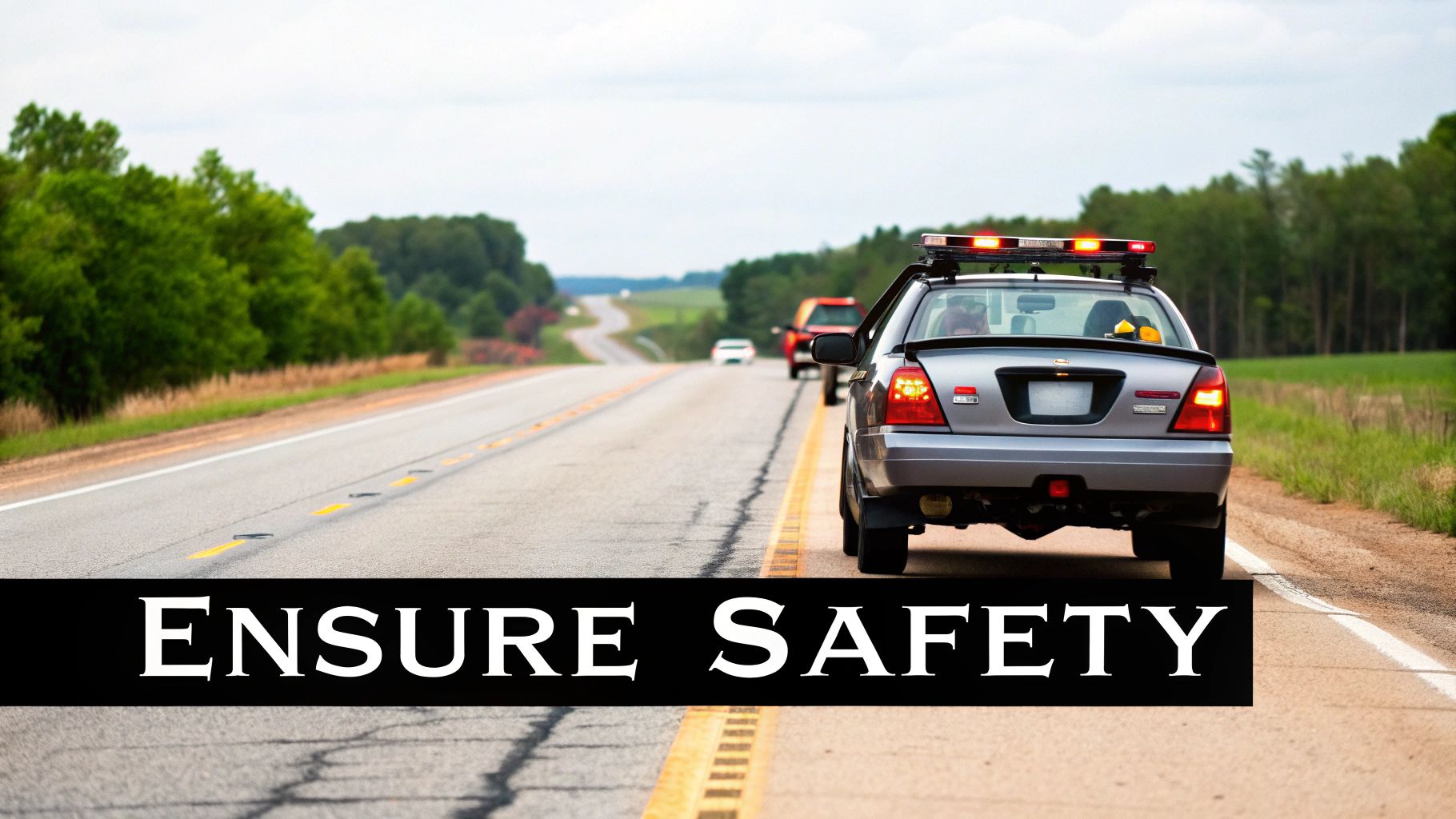
If your vehicle is blocking traffic on a busy Atlanta road, your first instinct should be to move it. The Georgia Department of Transportation actually has a "Steer It and Clear It" policy for minor crashes with no serious injuries. Moving your car to the shoulder can prevent a dangerous secondary collision.
But there are times you absolutely should not move your vehicle:
- If anyone is seriously injured.
- If the car is leaking fluid, smoking, or seems unsafe to operate.
- If moving it would create an even more dangerous situation.
Once you’re in a safer spot, hit those hazard lights. If you have reflective triangles or flares, now is the time to use them. Place them well behind your vehicle to give oncoming drivers plenty of warning.
Calling for Emergency Assistance
Always call 911. Even for what seems like a minor fender-bender. A police report is an official, unbiased record of the accident, and it’s one of the most important documents you'll need for your insurance claim.
When you call, be ready to give the dispatcher clear, simple information:
- Your exact location: Use cross-streets, mile markers, or landmarks.
- What happened: A quick summary, like "a two-car accident."
- Any injuries: Let them know if anyone is hurt so they can dispatch medical help immediately.
If your car isn't drivable, this is also when you'll want to think about calling for roadside assistance services.
The immediate aftermath of an accident is chaotic, but a clear plan can make all the difference. This checklist breaks down the most important first steps.
Immediate Post-Accident Safety Checklist
| Action Item | Why It's Important | Helpful Tip |
|---|---|---|
| Check for Injuries | Adrenaline can mask pain. A self-check is the first priority. | If you are seriously hurt, do not move. Wait for medical personnel to arrive. |
| Move to Safety (If Possible) | Prevents secondary collisions, which are common and often severe. | Georgia's "Steer It and Clear It" rule applies to minor, non-injury accidents. |
| Turn on Hazard Lights | Increases visibility to other drivers, especially at night or in bad weather. | If you have them, also place reflective triangles or flares on the road. |
| Call 911 | Creates an official police report, which is essential for insurance claims. | Provide a clear location, number of vehicles, and any known injuries. |
Following these steps methodically helps ensure everyone’s safety and lays the groundwork for a smooth claims process later on.
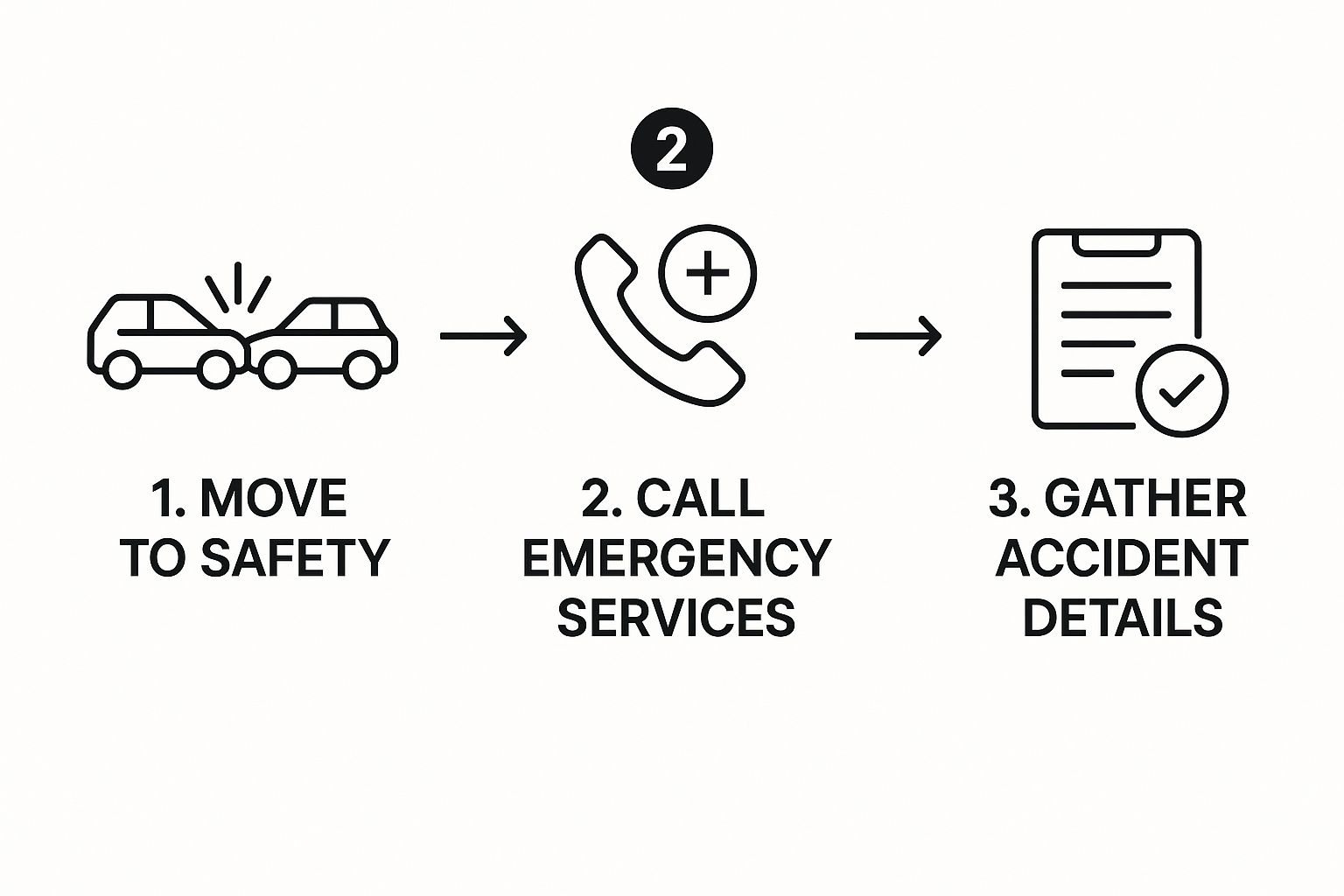
These aren't just suggestions; they are proven actions that save lives. According to the World Health Organization, road traffic accidents cause approximately 1.19 million deaths globally each year. Millions more are left with injuries that can lead to long-term disabilities.
Taking the right steps from the very beginning is the most important part of knowing what to do after a car accident. It protects your health and your legal rights.
Gathering Key Information and Evidence
After you’ve confirmed everyone is safe and called 911, your next job is to become a fact-gatherer. The minutes immediately following a crash are your only opportunity to capture the scene exactly as it is. Evidence disappears fast—vehicles get moved, and memories fade. What you collect right now forms the foundation of a successful insurance claim.
Think of yourself as an investigator at a scene. Your smartphone is your most important tool. The photos and notes you take can make a massive difference later. Don’t just rely on the other driver or even the police to document everything. Your own records are your best protection.
What to Get from the Other Driver
Swapping insurance cards is a good start, but it's not enough. You need to politely ask for and photograph the other driver’s documents and get their direct contact information. A little extra effort here will save you from major headaches down the road.
You need to know exactly who was involved. Make sure you get:
- Full Name and Contact Information: Get their full name, current address, and a good phone number.
- Driver's License: Take a clear, readable photo of their license. This captures the license number, expiration date, and confirms their address.
- Insurance Details: Snap a picture of their insurance card. Make sure the policy number, the insurance company's name, and their phone number are all visible.
- Vehicle Information: Note the car’s make, model, color, and license plate number. It’s also a good idea to photograph the Vehicle Identification Number (VIN), which you can usually see on the dashboard through the windshield.
If the driver's name doesn't match the name on the registration or insurance card, ask them what their relationship is to the vehicle's owner. Be calm and courteous. Most people will cooperate if the exchange is respectful.
Documenting the Scene with Your Smartphone
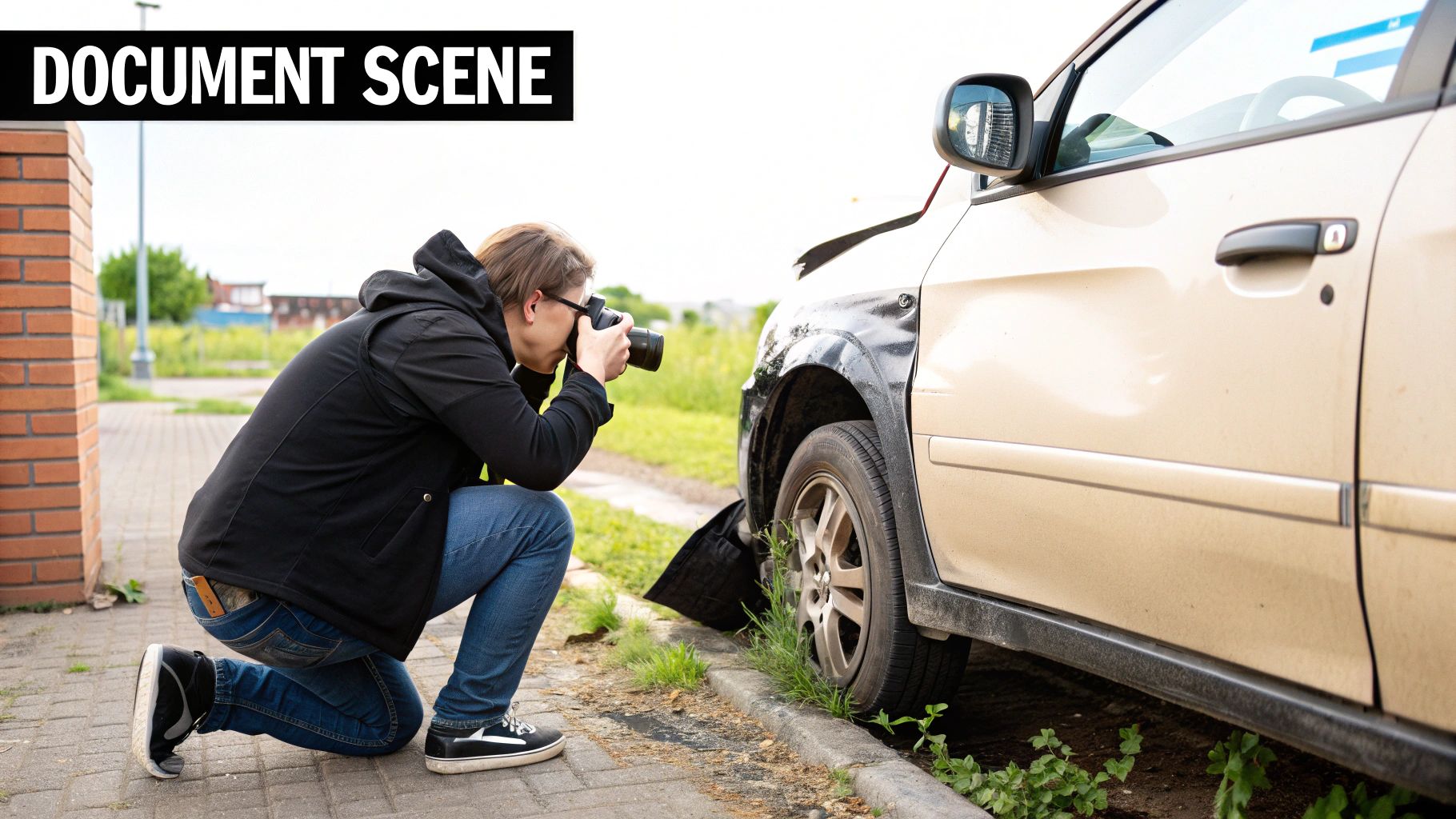
A picture is truly worth a thousand words. Photos and videos create an unbiased, visual record that can be invaluable for your claim. Don't just take a few quick shots of the dents on your car; you need to be thorough and capture the full context of the collision.
Your goal is to tell a complete story with your photos. Imagine someone who wasn't there trying to understand exactly what happened based only on the images you take.
Here’s a checklist for what to photograph:
- The Overall Scene: Take wide-angle shots from multiple viewpoints. For example, if you're at an intersection, shoot from all four corners to show the final resting positions of the vehicles.
- Vehicle Damage: Get close-up photos of the damage to all vehicles involved, not just your own.
- Skid Marks and Debris: Capture any tire marks on the pavement, broken glass, or other debris left by the collision. This physical evidence helps accident reconstruction experts piece together what happened.
- Road Conditions and Signage: Photograph any relevant traffic signals, stop signs, and speed limit signs. Document the weather conditions, too—like wet pavement from rain.
- Visible Injuries: If you have any visible cuts, bruises, or scrapes, take pictures of them immediately.
Talking to Witnesses
Independent witnesses can be incredibly helpful. If anyone stopped to help or saw the crash, politely ask for their name and phone number. People are often willing to share what they saw if you just ask.
Avoid putting them on the spot by asking them to take sides. A better approach is to say something like, "I'm a little shaken up. Would you mind sharing your contact information in case the insurance companies need to speak with you?" This is non-confrontational and usually works well.
If the other driver becomes uncooperative or aggressive, do not engage. Wait for the police to arrive and let the officer handle the information exchange. Your safety comes first.
This organized approach to gathering evidence is a fundamental part of the process for all types of Atlanta personal injury claims and sets the stage for a fair outcome. Remembering this is a key part of what to do after a car accident.
Interacting With Police and Filing a Report
Seeing flashing blue and red lights can make anyone's heart race, even when you're the one who called for help. When law enforcement arrives, remember their job is to secure the scene, document the facts, and create an official record of the accident.
Your interaction with the police is a very important step. Stay calm, be cooperative, and stick to the facts you know for certain. This is not the time to guess or speculate about who was at fault.
What to Say to the Responding Officer
When the officer starts asking questions, your answers need to be clear, concise, and truthful. It's important to avoid statements that could be twisted into an admission of fault later on. Even a simple "I'm so sorry" can be used against you by an insurance adjuster.
Instead, focus on objective information. Here’s how to handle that conversation:
- Describe what happened from your point of view. Stick to the sequence of events as you recall them. For example, "I was traveling east on Peachtree Street when the other car pulled out from the side street."
- Don't guess about speeds or distances. If you aren't sure, it's far better to say, "I'm not certain" than to give an inaccurate estimate.
- Report any pain or physical symptoms. Even if it seems minor, tell the officer if your neck is sore or if you have a headache. This creates an immediate record connecting your symptoms to the crash.
Your conversation with the police is a formal statement. Answer the questions asked, but do not volunteer extra information or opinions. The goal is a factual, unbiased report.
Following proper post-crash procedures saves lives. According to the U.S. National Highway Traffic Safety Administration (NHTSA), traffic fatalities saw a significant decline in a recent year. This progress is partly due to better enforcement and public awareness about correct actions like calling 911 and documenting the incident. You can read the full NHTSA report on recent traffic fatality trends.
The Official Police Report and Its Importance
The officer will create what's known as a Georgia Motor Vehicle Crash Report. This document is a powerful piece of evidence because it's an impartial account from a trained professional. It will contain important details, including:
- The date, time, and exact location of the collision.
- Driver contact and insurance information for everyone involved.
- Statements from drivers and any witnesses.
- A diagram of the accident scene.
- The officer's initial assessment of what contributed to the crash.
While this report isn't always the final word on fault, insurance companies give it significant weight when determining liability. You'll need a copy for your records. In our area, you can typically request one online from the relevant agency, like the Fulton County Police Department, a few days after the incident.
Having this official document is also vital for legal reasons. The information it contains is essential if you need to file a claim before the deadline. You can learn more about the statute of limitations for personal injury in Georgia in our detailed guide. Understanding these timelines is a key part of knowing what to do after a car accident.
Why You Should See a Doctor, Even if You Feel Fine
After a car crash, your body is flooded with adrenaline. It's a survival mechanism that can completely mask pain for hours or even days. You might walk away from the scene feeling a bit shaken but otherwise okay, only to wake up the next morning with debilitating stiffness and pain.
This is exactly why getting a medical evaluation is a non-negotiable step, no matter how minor the collision seemed. Feeling "fine" in the moments after an accident is not the same as being uninjured.
The Danger of Injuries That Show Up Late
Some of the most common and serious injuries from car accidents don't present immediate symptoms. Your health is the absolute priority, and brushing off potential problems can easily lead to chronic pain and long-term complications.
We see these delayed-onset injuries all the time in our cases:
- Whiplash: This neck injury is caused by the violent back-and-forth snapping of your head. Key symptoms like neck pain, stiffness, headaches, and dizziness often take 24 hours or more to fully appear.
- Concussions and Traumatic Brain Injuries (TBIs): You don’t have to hit your head to suffer a concussion. The jarring force of the impact alone is enough to cause your brain to strike the inside of your skull. The signs can be subtle—confusion, fogginess, or a new sensitivity to light.
- Internal Bleeding: Damage to internal organs is a life-threatening condition that may not have obvious external signs. Deep muscle bruising can also develop over time, causing significant pain.
The CDC provides a clear overview of concussions and their symptoms, which is a must-read for anyone involved in a collision.
As the graphic shows, a concussion is a TBI that disrupts normal brain function. It is a serious medical issue that requires a professional diagnosis.
Create an Official Medical Record of Your Injuries
Beyond protecting your physical well-being, seeing a doctor creates an essential piece of evidence for your case. The medical professional's report officially links your injuries to the date of the accident, establishing a clear cause-and-effect relationship that is so important for your insurance claim.
If you wait days to see a doctor, the insurance adjuster has an easy opening to argue your injuries weren't caused by the crash but by something else that happened afterward. Don't give them that opportunity.
The value of following established post-accident procedures is clear when you look at global safety data. Following proven steps, like seeking immediate medical care, improves health outcomes and strengthens your legal and insurance position. You can find more information in these global traffic safety statistics.
Where to Go for a Medical Evaluation
You have a few solid options for getting checked out. The right one depends on how you're feeling.
- Emergency Room (ER): Go straight to the ER for any severe symptoms. This includes loss of consciousness, suspected broken bones, heavy bleeding, or intense pain.
- Urgent Care Clinic: For less severe but still pressing concerns, an urgent care clinic is a good choice for a fast evaluation.
- Your Primary Care Physician: If your injuries aren't an emergency, make an appointment with your regular doctor. They know your medical history and can oversee your recovery.
No matter which you choose, the most important thing is to get seen. It's also just as important to follow through with the entire treatment plan your doctor prescribes. Go to all your follow-up appointments and physical therapy sessions. This diligence not only helps your recovery but also shows you're taking your injuries seriously—a key factor in any future claim.
Reporting The Accident To Your Insurer The Right Way

Most insurance policies require you to report a collision promptly, but how you handle that first phone call can make or break your claim. Knowing what to do after a car accident means managing this conversation with care. Your goal is to give your insurer the facts they need without accidentally saying something that undermines your own case.
That initial conversation sets the tone for everything that follows. Remember, even the adjuster from your own insurance company has a job to do: evaluate the claim from a financial perspective. They are taking detailed notes, and anything you say can—and will—be used in their assessment.
Stick To The Facts You Know For Sure
When you make the call, the adjuster will ask you to describe what happened. This is where you need to be precise and avoid guessing at all costs. If you aren't certain about something, like the exact speed you were traveling or the distance between vehicles, it’s not just okay to say, "I'm not sure"—it's the smartest thing to do.
Have this essential information ready before you dial:
- Your policy number.
- The date, time, and location of the accident.
- A simple, factual account. For example: "I was stopped at a red light on Ponce de Leon Avenue when my car was hit from behind."
- The names and insurance information of the other drivers.
- The police report number, if available.
It's completely normal to feel shaken or emotional after a wreck, but keep those feelings out of your official statement. Steer clear of phrases like "I feel so guilty" or "I should have seen them coming." These can easily be twisted into an admission of fault, even if you didn't mean it that way. Just stick to the what, when, and where.
The golden rule when speaking to any insurance adjuster is to be truthful but brief. Give them the facts they need and nothing more. Never speculate on who was at fault, the severity of your injuries, or the cost of repairs.
Dealing With The Other Driver's Insurance Company
It won’t be long before you get a call from the at-fault driver's insurance company. You must understand that this adjuster's primary loyalty is to their employer, which means their goal is to pay out as little as possible.
You are not obligated to give them a recorded statement. In fact, it's almost always in your best interest to politely refuse. Adjusters are trained to ask leading questions designed to get you to say something that weakens your claim. You can simply state, "I will not be providing a recorded statement at this time."
Do's and Don'ts When Speaking to Insurance Adjusters
Handling these conversations is very important. This table breaks down how to approach your insurer versus the other party's.
| Guideline | What to Do (Your Insurer) | What to Avoid (Other Party's Insurer) |
|---|---|---|
| Provide a Statement | Give a brief, factual statement. Avoid opinions or admissions of fault. | Politely decline to give a recorded statement. |
| Discuss Injuries | State that you are seeking medical evaluation. Do not downplay or guess the severity. | Do not discuss your injuries in detail. |
| Accepting an Offer | Do not accept a quick settlement offer until you know the full extent of your damages. | Be extremely wary of early offers designed to close the case for a low amount. |
Properly managing these calls is a huge part of protecting your rights. For a closer look at the entire process, our guide on how to file a car accident claim in Atlanta offers more detail.
After notifying the insurance companies, your focus will likely shift to your vehicle. Understanding the simple steps for car repairs after an accident will help you with that part of the process. By handling each step with intention, you build a solid foundation for your claim and know exactly what to do after a car accident.
When to Consider Speaking With an Attorney
Not every minor fender-bender means you need to hire a lawyer. In fact, many smaller claims can be settled directly with your insurance company without any trouble. But knowing what to do after a car accident also means recognizing when you're in over your head.
Some crashes create a tangled mess of legal and financial problems that are best handled by someone with experience. The goal isn't to be confrontational; it's to ensure your rights are protected and you're treated fairly.
Clear Signs You Should Seek Legal Advice
Certain situations are immediate red flags. If you find yourself in any of these scenarios, it's time to at least schedule a free consultation with an attorney.
- Significant Injuries: If you or a passenger suffered injuries requiring a hospital stay, surgery, or long-term medical care, you should speak with a lawyer. Calculating the true cost of these injuries—including future medical needs and lost earning capacity—is something we are trained to do.
- Disputed Fault: Is the other driver blaming you for the crash? Is the police report unclear about who was at fault? An attorney can investigate what really happened and build a case to establish liability.
- A Low Settlement Offer: Insurance companies often make a quick, lowball offer, hoping you'll take it before you understand the full extent of your damages. If an offer seems too low to cover your medical bills and lost wages, it almost certainly is.
An attorney’s job in these situations is to level the playing field. We manage all communication with the insurance companies, gather the necessary evidence, and calculate the full value of your claim—something that goes far beyond just adding up medical bills.
Understanding the Role of a Personal Injury Attorney
A personal injury lawyer does a lot more than just file paperwork. We become your advocate, working to make sure the financial and emotional burdens of the accident don't fall unfairly on your shoulders. This includes accounting for things like your lost income and the pain and suffering you've been forced to endure.
For example, we might bring in accident reconstruction experts or medical specialists to strengthen your case. The claims process can be a headache, but understanding the typical car accident lawsuit process can give you a much clearer picture of what to expect.
Ultimately, hiring an attorney is a personal choice. But it’s an important one to consider when you're facing serious injuries or a difficult insurance company. Knowing your options is a key part of knowing what to do after a car accident.
Common Questions After a Car Accident in Atlanta
Once the shock of an accident subsides, the questions start flooding in. Getting clear, direct answers to some tough questions is part of the process. Here are a few of the most common concerns we hear from drivers in and around Atlanta.
What If the Other Driver Is Uninsured?
It's a frightening thought, but it happens more often than you'd think. If the driver who hit you has no insurance, your own policy becomes your lifeline.
This is exactly what your Uninsured Motorist (UM) coverage is for. It's designed to step in and cover your medical expenses and other losses, right up to your own policy limits.
How Long Do I Have to File a Claim in Georgia?
Georgia law sets strict deadlines, known as the statute of limitations. For a personal injury lawsuit, you generally have two years from the date of the wreck to file.
The timeline is a bit longer for property damage—like getting your car fixed—where you usually have four years. But don't wait. Acting quickly is the best way to preserve evidence and build a strong claim.
Should I Get My Car Repaired Right Away?
One of the first things people want to know is when they can get their car back on the road. Before you rush off to find comprehensive auto repair services, you need to pump the brakes.
The insurance company has a right to inspect the damage first. If you get it repaired too soon, you could seriously jeopardize your property damage claim.
Before any work begins, make sure you:
- Notify your insurer and give them a chance to send out an adjuster.
- Get a formal, written estimate from the auto body shop.
- Take your own detailed photos of all the damage from multiple angles.
The insurance adjuster's assessment is a very important piece of the puzzle. For more official guidance on insurance rules, the Georgia Office of Commissioner of Insurance and Safety Fire is a solid state resource. Following these steps is a non-negotiable part of knowing what to do after a car accident.